Agra 2 Day Itinerary: Taj Mahal, Agra Fort & Beyond
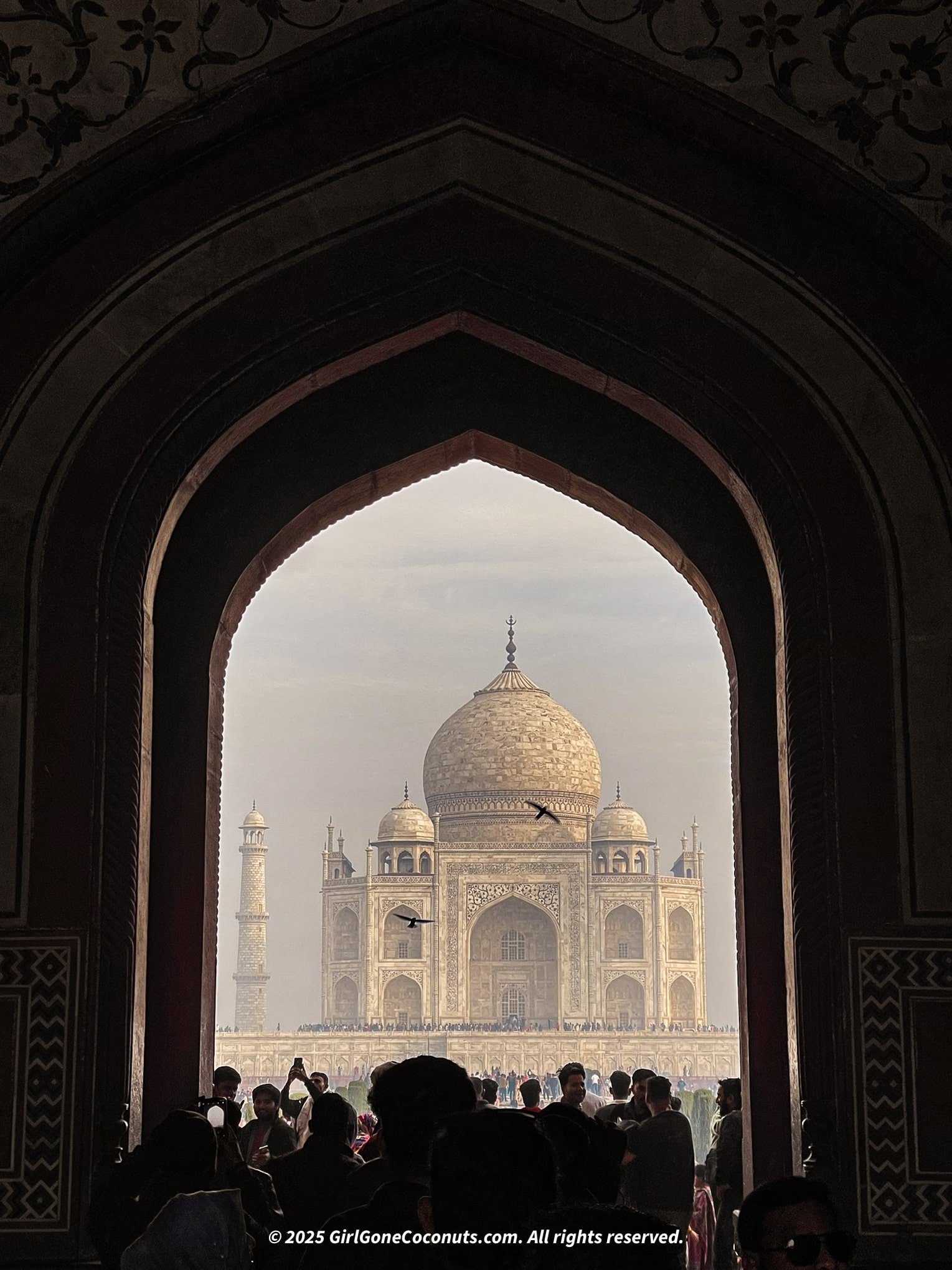
Welcome to India!
Agra and the Taj Mahal are on every traveler’s bucket list, and for good reason. This UNESCO World Heritage Site and one of the New Seven Wonders of the World is truly a once-in-a-lifetime experience. To make the most of your visit, planning is key. This Agra 2-day itinerary is designed to help you experience this epic, jaw-dropping monument in all its glory at sunrise, sunset, and from the best rooftop views.
I will share my honest opinion on what is worth your time in Agra and what is not, along with all the travel tips you need before you go. I was lucky enough to be the first in the park at sunrise, which gave me endless photos of the Taj Mahal with no one photo-bombing, a rare experience you will want to plan for.
Follow this Agra travel guide, and you will see the highlights without feeling rushed while also discovering Agra from angles most travelers miss.
Oh & as always practice sustainable tourism while traveling please :)
Disclaimer: This post contains affiliate links. If you click through and make a purchase, my blog may receive a commission at no additional cost to you.
2 days in Agra, India: itinerary & Travel Tips

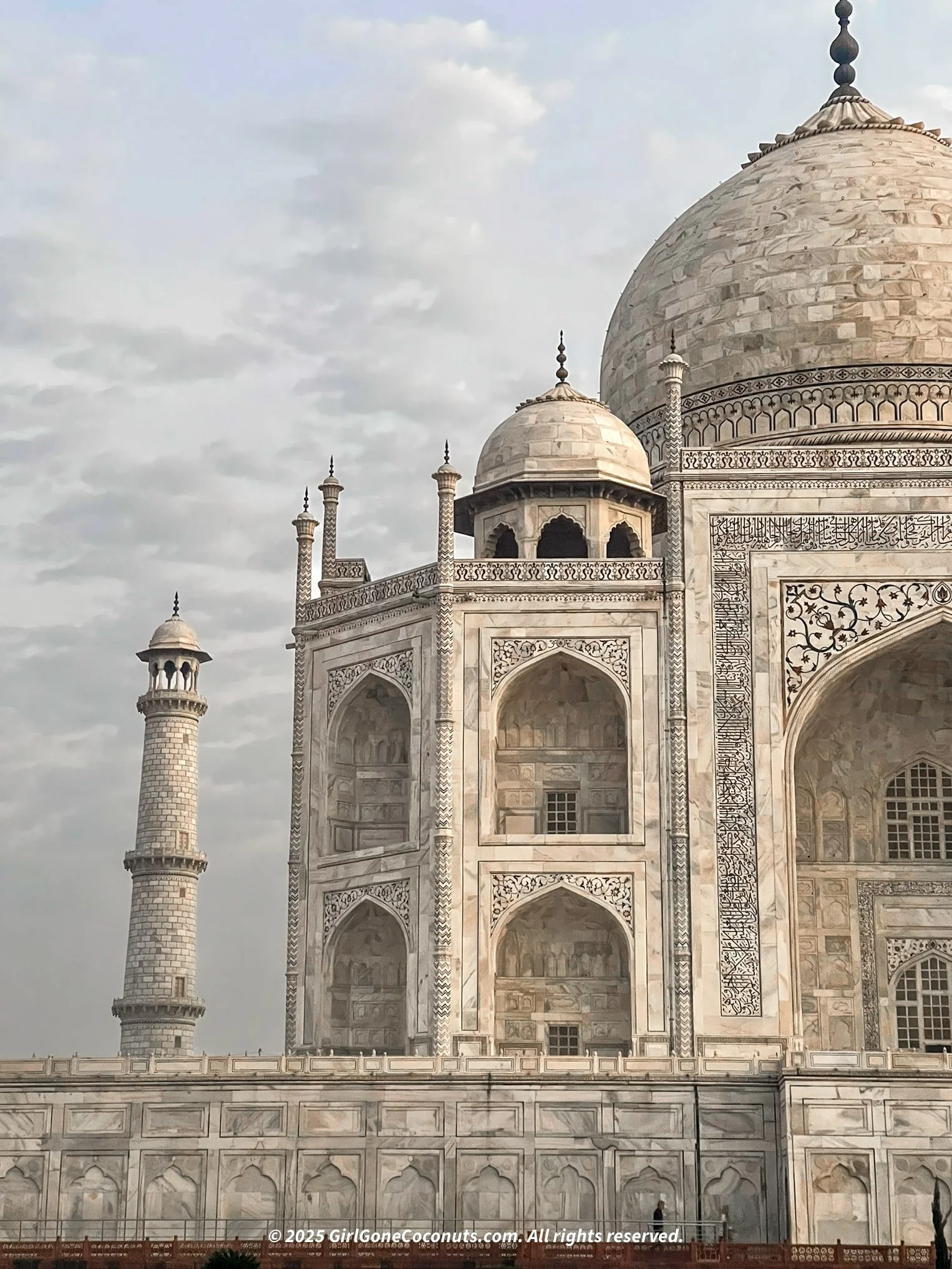
Sunrise at the Taj Mahal. The perfect start to any Agra 2 days itinerary in India.
Why Visit Agra in 2 Days
People often ask me, “How long do you need to visit Agra? Is 2 days enough?” Honestly, while I loved India, I did not fall in love with Agra. Apart from the Taj Mahal (which is even more impressive than you imagine), the city felt a bit underwhelming, especially compared to places like Jaipur. That said, I genuinely think 2 days is more than enough time in Agra to get a real taste of the city.
I suggest spending 1–2 days and 1 night in Agra. This gives you enough time for an early morning visit to the Taj Mahal, a stop at Agra Fort, and maybe a few other unique spots, all at a relaxed pace. Looking back, my ideal plan would have been to spend day 1 traveling from Jaipur to Agra, followed by a sunset dinner with a view of the Taj Mahal.
On day 2, you could explore the Taj Mahal at sunrise, then visit the Baby Taj and Agra Fort, before heading on to your next destination. By the end of the second day, I was completely “tombed-out” and ready for something new.
If you want to see everything in Agra in 2 days, follow this itinerary exactly as laid out. But if your travel style is more like mine, you could easily skip day 2 entirely and split day 1 however you like, keeping things relaxed and enjoyable.
Best Time to Visit Agra
Monsoon: July to September | Hottest Months: April to June (can exceed 105°F / 40°C)
The best time to visit Agra is from November to February, which is also the peak tourist season. During these months, daytime temperatures range from 68–86°F (20–30°C), making it comfortable for sightseeing. I visited Agra in mid-February, and the temperatures were ideal for me. Cool enough to explore without feeling overheated. Mornings, I wore a light jacket, and by midday, I had it tied around my waist.
Unless you are visiting during the hottest months, I recommend packing layers. Early mornings and evenings can be chilly, while midday can be quite warm. Layers make it easy to adjust to the temperature without having to return to your accommodation to change.
If you want fewer crowds, avoid Agra during major holidays like Diwali and Independence Day…it gets pretty hectic.
How to Get to Agra
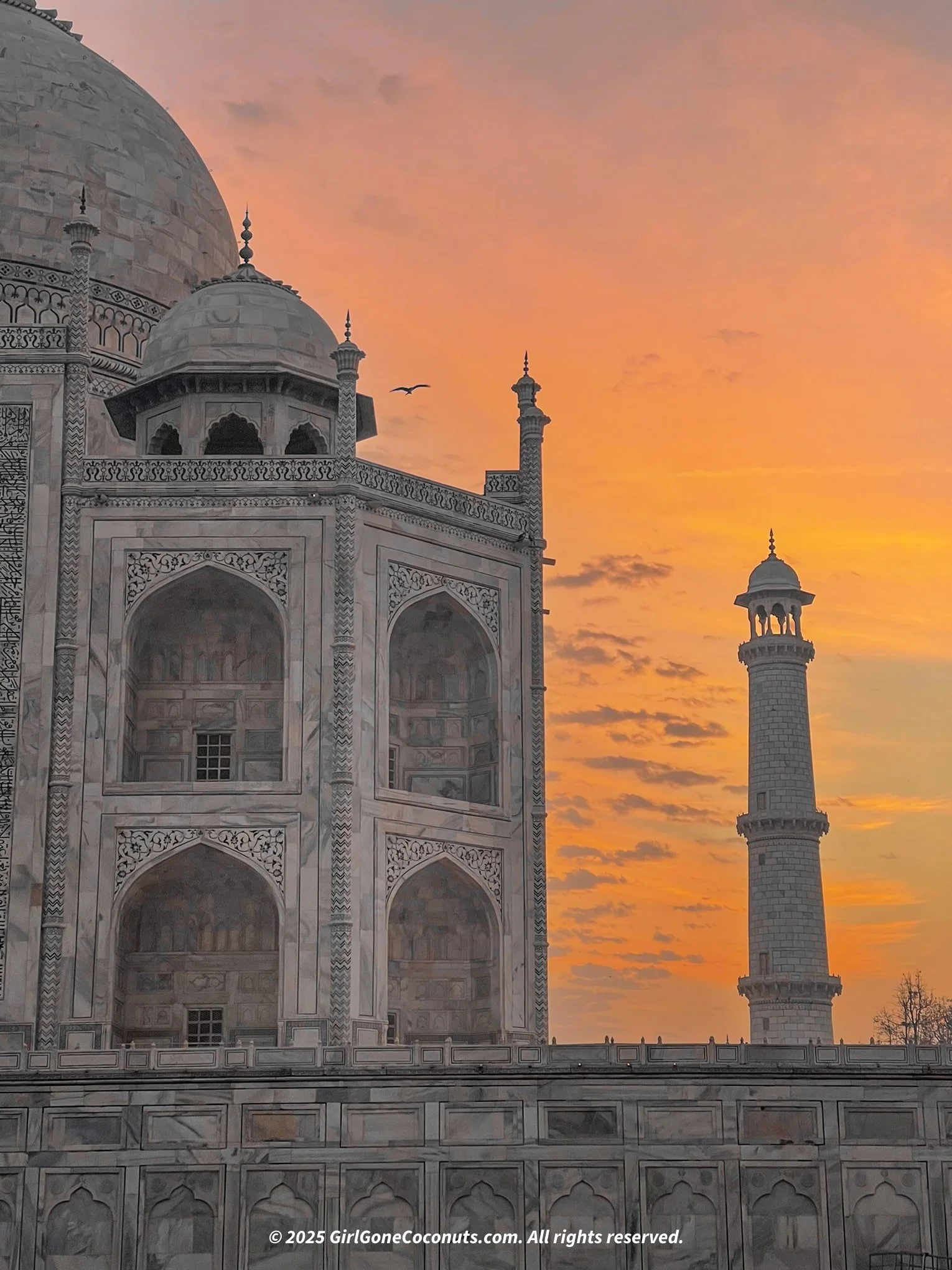
A glowing sunrise over the Taj Mahal; small moments like this make an Agra 2 days itinerary unforgettable.
Getting to Agra is easier than you might think. Here are the best ways to do it…
Flying into Agra (AGR):
You can fly domestically into Agra Airport (AGR), but with limited flights, mainly on IndiGo from cities like Mumbai, Bengaluru, Hyderabad, and Ahmedabad. In some cases, this is a great option if coming from further away, but schedules can be sporadic, so most travelers skip this option (including myself).
From Delhi or Jaipur (The Best Way)
The easiest and most reliable option is to fly into Delhi (DEL) or Jaipur (JAI), then continue to Agra.
By Train: This is the fastest option and still budget-friendly. Trains like the Gatimaan Express, Shatabdi Express, and Vande Bharat Express run from Delhi to Agra in about 1.5 to 2.5 hours. You can purchase tickets with 12GoAsia!
By Private Car or Taxi: I suggest hiring a taxi through your accommodation (if you like them), getyourguide, or Uber to reach Agra. If you hire a taxi or Uber, keep all your valuables on you or securely locked up during the drive, especially if you make any stops.
Jaipur to Agra Distance: 238 KM (148 miles), around 4-5 hours. Many people choose to add a stop to Fatehpur Sikri along this route. My ride was around 2500-3000 Indian rupees with the stop.
Delhi to Agra Distance: 232 KM (144 miles), around 3-4 hours. My ride was around 2500 Indian rupees with the stop.
I have done both routes, and it is a straightforward drive on one main highway.
By Bus: This is likely the cheapest option (around 5–20 USD), but it can take 3–5 hours depending on traffic.
Tips for the Journey
Trains are usually your best bet if you want fast and easy.
A private car is the most comfortable option if you want flexibility.
Keep valuables with you or locked up if you make stops along the way.
Book trains through trusted platforms (or ask your accommodation for help) to avoid scams.
India Tourist Visa: Apply for your 30-day - 1-year tourist visa online here!
How To Get Around Agra
The best way to get around Agra is by Uber or tuk-tuk. Taxis and tuk-tuks will almost always be more expensive if you try to get one outside of Uber. You can also hire a private driver for the day if you do not want to have to worry about waiting around for your Uber to accept and arrive.
I recommend walking when you can between places, though this is a bit more difficult in Agra compared to other cities, with destinations being quite spread out. You will likely need some form of transport for most of the main sights.
India also uses Ola, a ridesharing app similar to Uber. The only catch is that you need an Indian phone number to register, so for most travelers, Uber is the easiest option.
Always be sure your phone is connected to the internet. I recommend getting an eSIM like Airalo to stay connected.
When using Uber, be sure to always check if your driver has ended the ride in the app once you are at your destination. I had one driver try to continue to drive around to make our trip longer and therefore cost more. Luckily, it was easy to report this to Uber and get our money back.
Pro Tip: Traffic can get hectic near the Taj Mahal, and vehicles are not allowed directly up to the entrance gates. Be prepared to walk a short distance or hop in a shared electric shuttle to reach the entrance.
Where To Stay In Agra:
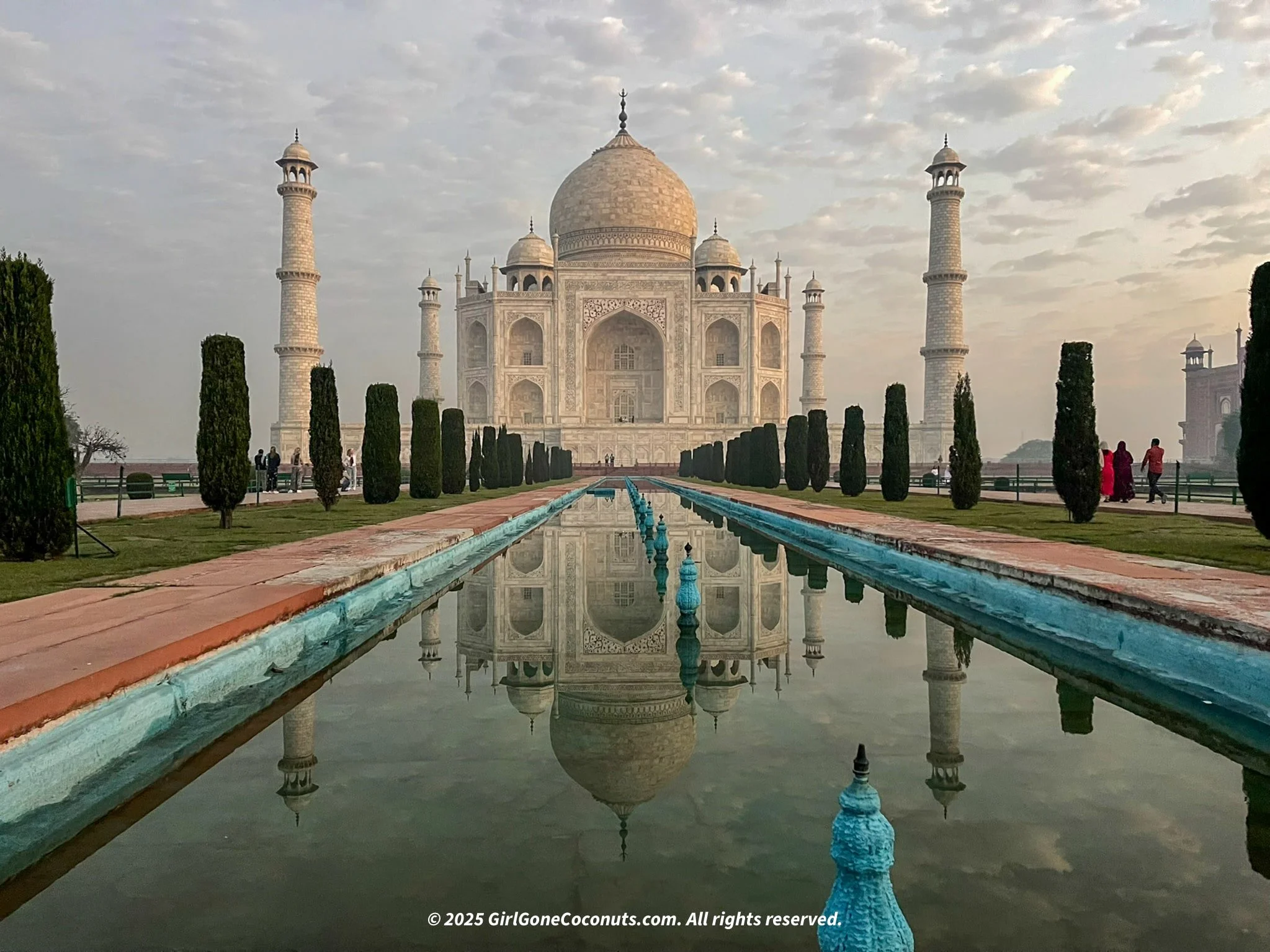
An incredible Taj Mahal sunrise view with its reflection in the water…reason enough to plan 2 days in Agra, India to be sure you catch this epic moment.
The best area to stay in Agra, in my opinion, is near the Taj Mahal East Gate or the area known as Taj Ganj.
Important Note: Many accommodations throughout India will not accept foreign travelers and instead only accept Indian citizens. Keep this in mind when booking, and be sure to triple-check that foreigners are allowed. The accommodations below accept foreign travelers.
You can help support my blog by booking directly through the links below at no additional cost to you!
Best Accommodations In Agra For Every Traveler:
Backpacker/Hostel Option: Taj Street Hostel
Best Low-Budget: The Orchid Retreat
Best Mid-Budget: Aman Homestay
Best High-End Budget: Trident Agra
Best Luxury Budget: The Oberoi Amarvilas Agra
You can also find hotel deals at Agoda and Hostel World!
Agra 2 Days Itinerary
This 2-day Agra itinerary covers all the top sites and the best things to do while you are in the city. If you are heading to Jaipur next or continuing in that direction, you can follow this itinerary exactly as laid out. However, if you are heading toward Delhi, I recommend reversing the two days so the flow makes more sense geographically.
Day 1: Taj Mahal, Baby Taj, & Agra Fort
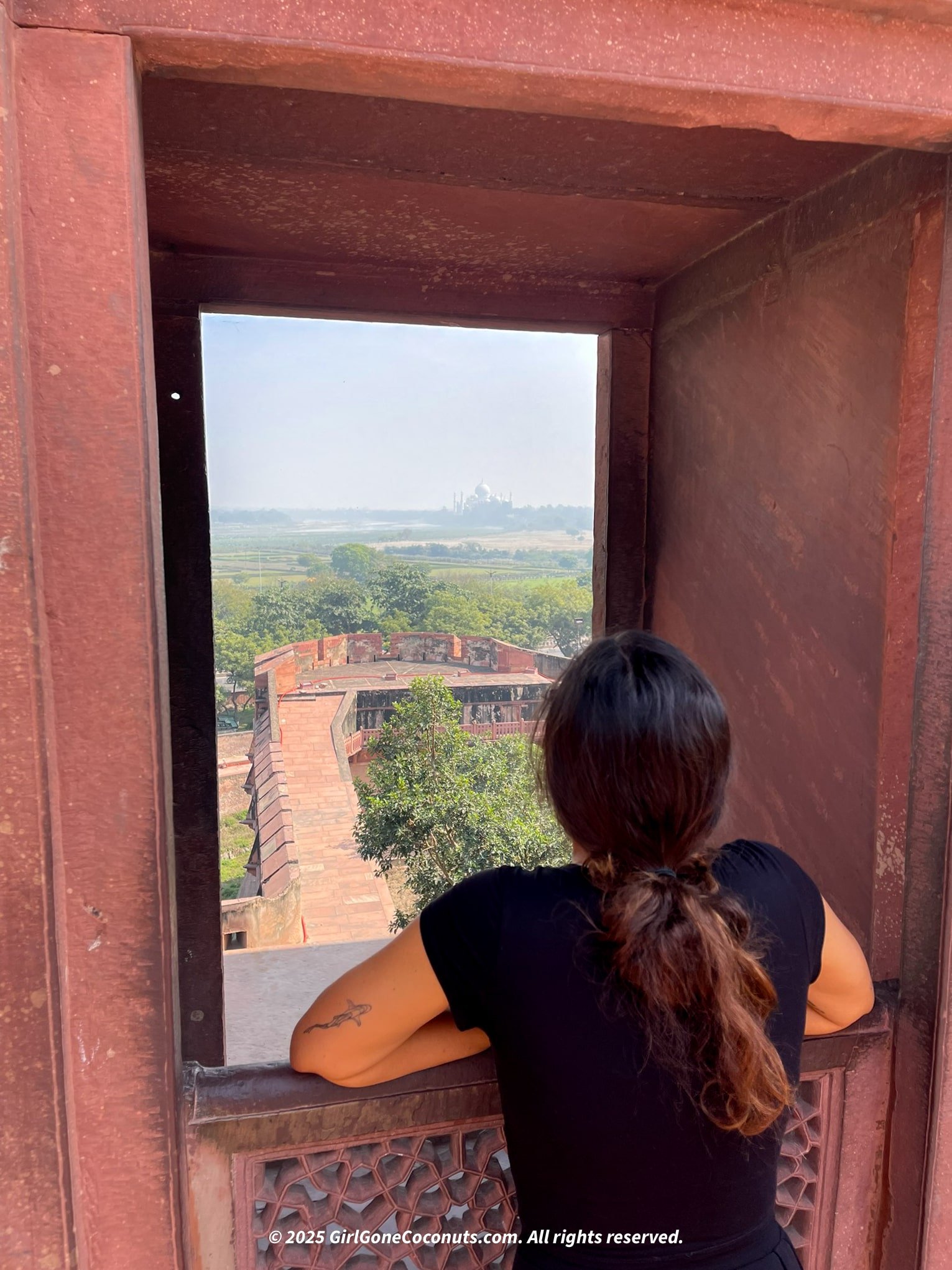
Peering at the Taj Mahal from a window of Agra Fort, a must-see moment on any Agra 2 days itinerary.
Stop #1: Taj Mahal Sunrise
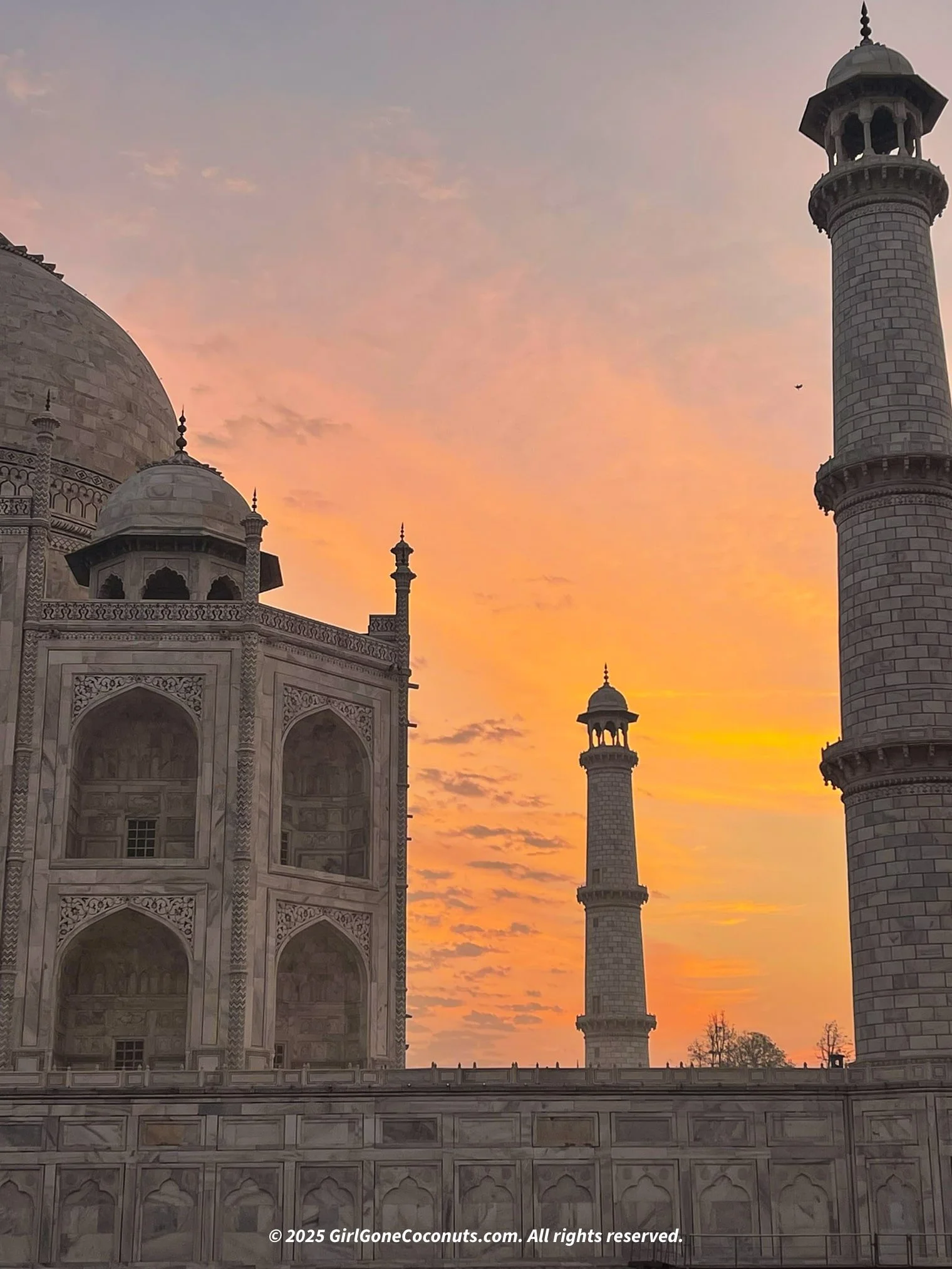
Taj Mahal glowing in the orange sunrise with birds flying above, Agra India.
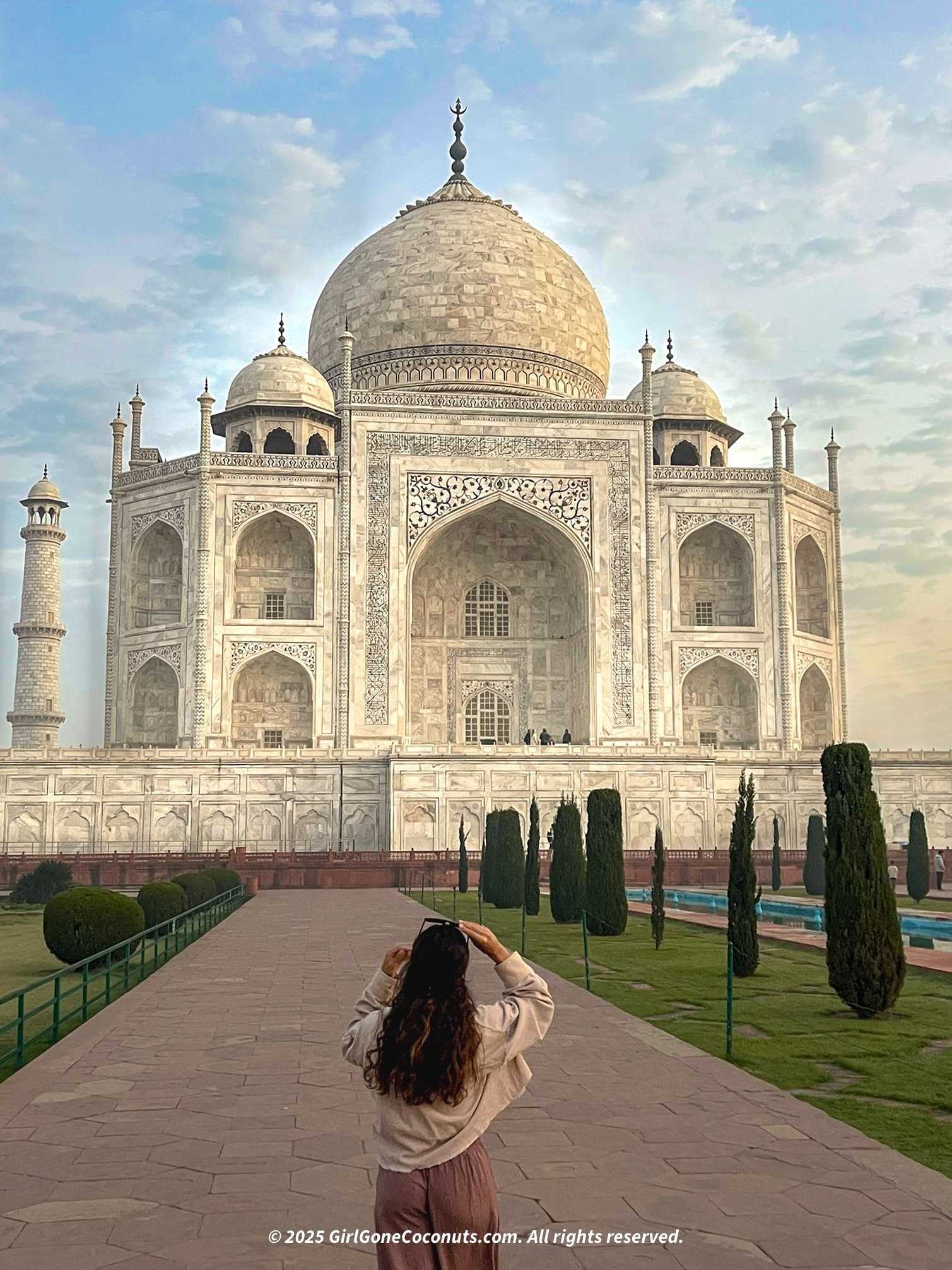
Walking up close to the Taj Mahal at sunrise; the best way to begin an Agra 2 days itinerary.
The Taj Mahal is a 17th-century white marble mausoleum in Agra, India, built by Emperor Shah Jahan in memory of his wife Mumtaz Mahal, and it is recognized as a UNESCO World Heritage Site.
A trip to Agra would not be complete without visiting the incredible Taj Mahal, and let’s be honest, it is probably the main reason you came to the city. It was definitely my reason for visiting. I had always dreamed of seeing this New Seven Wonder of the World ever since I was little. And truthfully, seeing it in person did not disappoint. It was even more impressive than I could have imagined. From the moment I stepped through the arched doorway, my jaw was on the floor. I simply could not get enough.
What made it even better? I was THE first person in. Like, what? The eerie quietness and lack of crowds made the experience even more incredible.
So how did I manage that? Quite simply, I got in line at 5:15 AM on a Monday in February. The gates are said to open 30 minutes before sunrise, and I had heard they sometimes open an hour early at the East Gate, but that was not the case. On this day, I walked through the gates around 5:30 AM with sunrise at about 6:00 AM. I was lucky. I spent a few hours wandering, soaking up the Taj Mahal from every angle, and watching the sky light up behind it. I also went into the Mausoleum. It costs only 200 Indian Rupees, and while it is not essential, I figured, why not…when in Agra. By the time I left, the place was absolutely packed. Thousands of people, long lines for photos, and not a quiet corner in sight. That is why sunrise is everything here. Get in line early, and you will have the Taj Mahal at its most magical.
If you look at my first photo on this blog, the one of the Taj Mahal framed through the entrance archway, you can catch a glimpse of just how many people were there by the time I was leaving.
Taj Mahal Location: Here!
Taj Mahal Hours: Saturday-Thursday— 30 minutes before sunrise-30 minutes before sunset. Closed on Fridays.
Taj Mahal Entrance Fee: 1100 Indin Rupee for foreigners plus 200 for entrance into the Mausoleum (inside the Taj Mahal). The total is around 15 USD.
No entry fee for children below 15 years.
50 Indian Rupees for Indian residents.
I suggest purchasing tickets online. You can find all of the information you need here.
Taj Mahal Tips:
How Long Do I Need Here? 2-3 hours, depending on interest.
Do I Need A Tour Guide? No, not unless you want a guided tour and some historical background.
Best Tour: You really do not need one :)
But you can hire a tuk-tuk with a guide for the day here.
Skip the long line and join a private day tour, which includes a guide, here.
Taj Mahal day tour from Delhi.
Taj Mahal & Agra Tour from Jaipur.
Dress Code: There really isn’t a strict dress code, but I suggest dressing modestly since you are visiting a mausoleum. Cover your shoulders and knees to stay comfortable and respectful.
Identification: You must carry your passport or an official ID.
Water: Water bottles are not allowed inside the monument, but you will receive a small bottle with your ticket.
Shoes: Shoe racks are available just below the main mausoleum, free of charge. Shoe covers are also provided for entering.
What to Bring: You cannot bring any liquids like mosquito repellent, sunscreen, or hand sanitizer, or any food or drink. No lighters or cigarettes. Just bring your camera or phone, your ticket, and yourself. I am always hungry, so I brought a snack to eat in line quickly before going in. There are also a couple of shops open selling coffee and snacks near the entrance line.
Photography: The guards are strict about professional photography and videos. I had read that selfie sticks were not allowed. Drones are not allowed.
Extra Tips:
Try to visit at sunrise to avoid crowds and get the best light.
Bring a small bag that fits easily through security. Large backpacks are not allowed.
Keep your belongings close, as the lines for security can get long.
Wear comfortable shoes since you will be walking a lot around the gardens and the mausoleum.
→Well, now that you have ticked that bucket list sight off, how about some breakfast and coffee? You can check the map above for a few of my favorite food spots. After that, make your way to stop two on the itinerary, Agra Fort. From the Taj Mahal, you can either walk the 30 minutes to Agra Fort or hop in a tuk-tuk. The cost will be around 1-2 USD (100-175 Indian Rupees).
Stop #2: Agra Fort
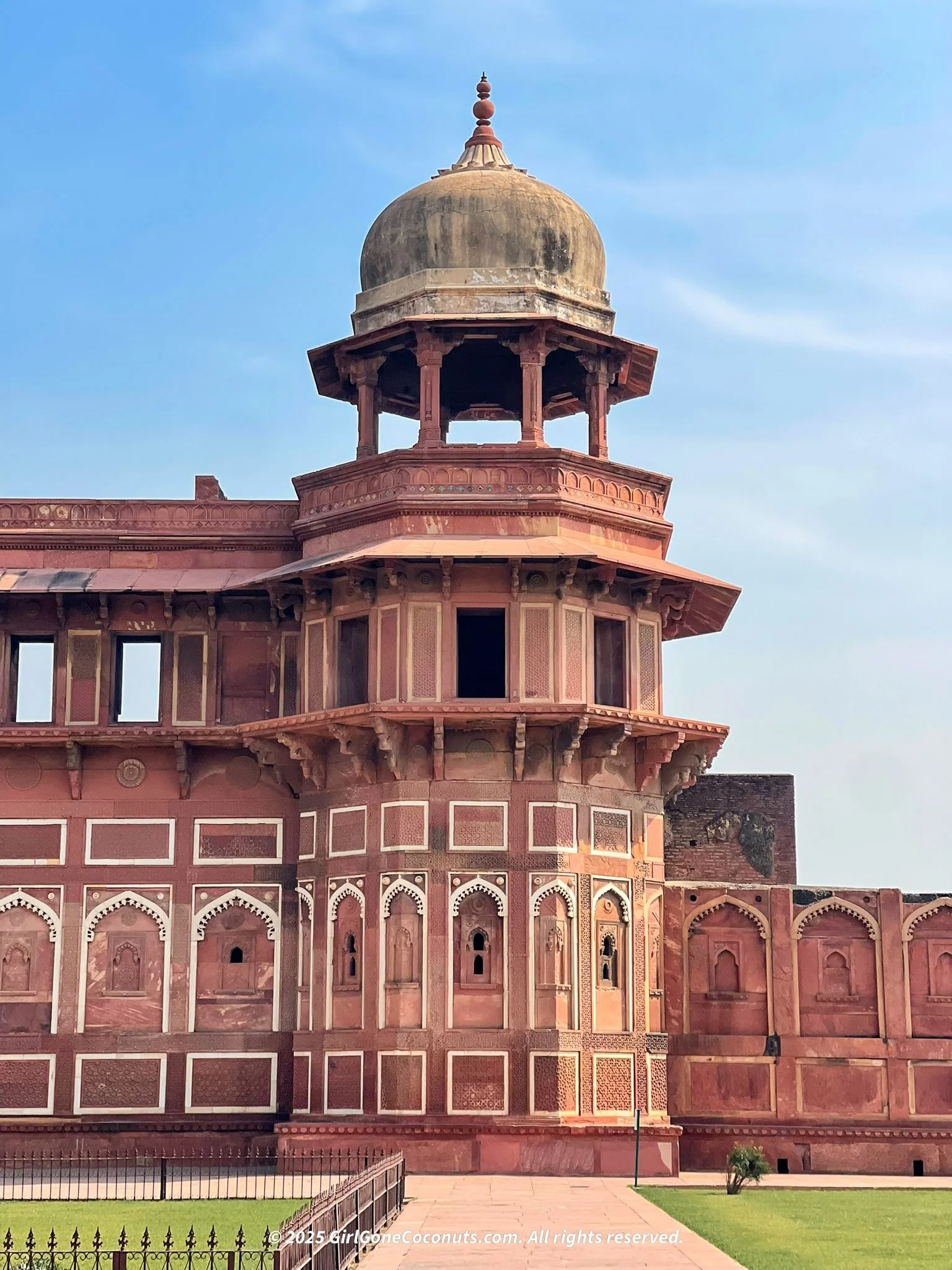
A closer look at the details of Agra Fort, one of the highlights of any Agra 2 days itinerary.
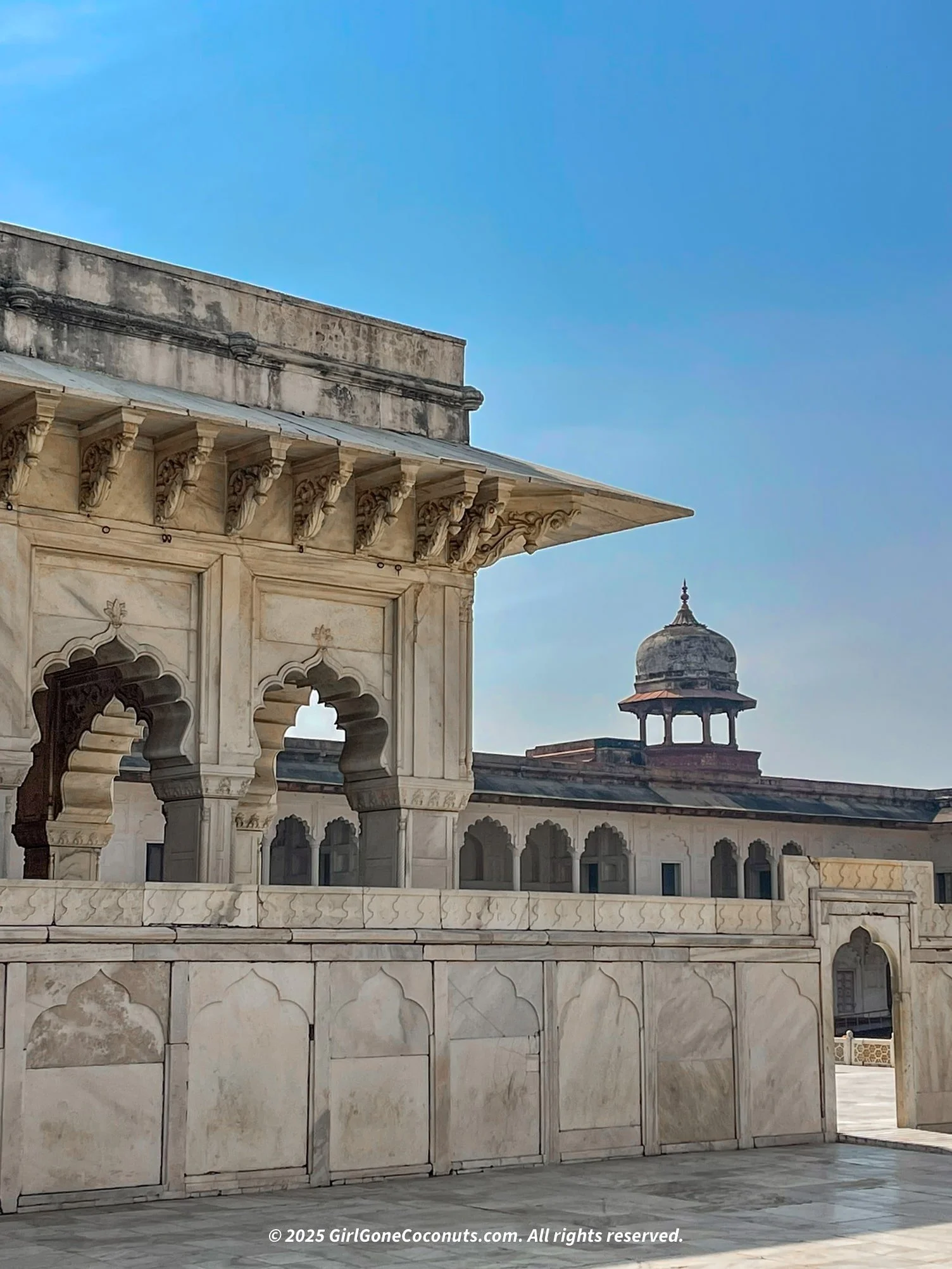
Exploring the stunning arches and details of Agra Fort, a must-see stop on any Agra 2 days itinerary.
Agra Fort is one of the top places to visit in Agra and a massive red sandstone fortress that was once the main residence of the Mughal emperors. Today, it is a UNESCO World Heritage Site and offers some incredible views of the Taj Mahal, which was my favorite part.
Agra Fort really is beautiful, with impressive architecture and plenty of details to notice as you wander through. That said, I was so on cloud nine from finally seeing the Taj Mahal that I could barely focus on anything else in Agra. I did not feel much of a personal connection to the fort, probably because I visited without a guide and did not fully understand the history as I walked through. I had also just come from Jaipur, which has three incredible forts of its own, so by the time I got to Agra Fort, I think I was a bit “forted out.” If you have not explored one of India’s forts yet, then this one is definitely worth it, but if you are mainly here for the Taj, like I was, Agra Fort might feel more like a quick stop than a highlight. Regardless of whether you want an in-depth tour or a quick exploration, it is still a worthy place to visit in Agra!
Location: Here!
Hours: Sunrise to Sunset
Entrance Fee: Tickets can be bought online or at the gate, and they are separate from the Taj Mahal ticket. There are many tour guides as you enter the Fort; it can be overwhelming. Just kindly decline unless you have previously hired one. If you want a guide, I suggest booking one ahead of time.
Foreign Tourist: 650 Indian Rupees | Friday - 600 Indian Rupees (around 7 USD)
SAARC/Indian Citizen: 50 Indian Rupees | Friday 40 Indian Rupees (less than 0.50 USD)
Tips for Visiting:
How Long Do I Need Here? 2-3 hours depending on speed and interest. I believe I spent 2 hours here.
Do I Need A Tour Guide? I actually do wish I had a guide for Agra Fort. I think it would have given me more historical context and an understanding of what I was seeing throughout the Fort.
Best Tour:
Dress Code: No, there is no dress code at Agra Fort, but similar to the Taj Mahal, I recommend dressing modestly out of respect for the culture. Agra is a fairly conservative place overall.
→Hungry for some lunch? Check out the Google Map above to find some of my favorite restaurants in Agra. Good Vibes Cafe was one of my go-to spots while I was in town.
Stop #3: tomb of i’timAd-ud-daulah (baby taj)
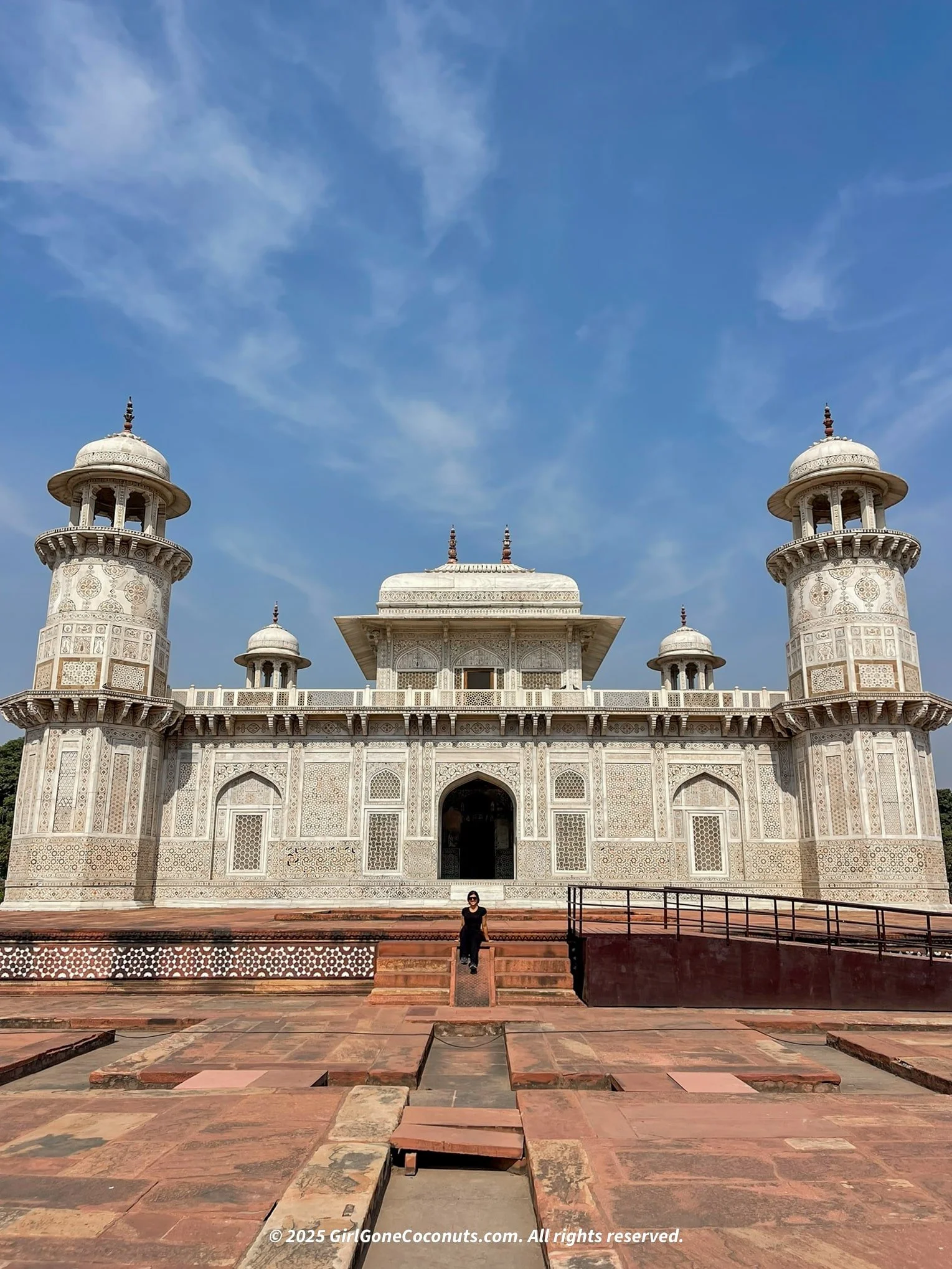
Sitting in front of the Baby Taj (Itimad-ud-Daulah), a must-see stop on any Agra 2 days itinerary.
I’timād-ud-Daulah, also called the Baby Taj, is a much smaller (definitely “Gina size,” if you will) marble tomb in Agra that feels like a mini version of the Taj Mahal. It was built in the early 1600s by Empress Nur Jahan to honor her father. You can find some beautiful tilework as you explore inside the tomb.
I would set aside around 30 minutes or so to explore the Baby Taj. It is a fun little spot to explore if you have extra time in Agra. I would not call it a must-do if you are short on time, but if you love architecture and want a peaceful break from the crowds, it is a great little addition to your day.
Location: Here
Hours: Supposedly, they are open sunrise to sunset, but on
Entrance Fee:
310 Indian Rupees (3.50 USD)
Children under 15 may enter for free
SAARC and Indian residents: 30 Indian Rupees.
Tips for Visiting:
Do I Need A Tour Guide? I do not think so. This Mausoleum is much smaller than the Taj Mahal and is easy to explore on your own.
Dress Code: No, there is no dress code, but I recommend dressing modestly out of respect for the culture. Agra is a fairly conservative place overall.
Also nearby is Chini Ka Rauza, but I skipped this one as I felt I had seen enough mausoleums and monuments for the day and was ready for dinner and bed after an early morning.
Mehtab Bagh, the famous park across the Yamuna River from the Taj Mahal, is often recommended as a spot for great views. I decided to skip it, though, because I had heard it could be a bit sketchy, and honestly, the views I got from the Taj Mahal itself and from Agra Fort were already far better. However, if you do not want to enter the Taj Mahal, this is a good alternative.
→Finish your first day in Agra with a delicious dinner. My favorite spot was Good Vibes Cafe, but if you want a sunset meal with a view of the Taj Mahal, try The Hippie Cafe or The Salt Cafe. All of these spots are saved within the Google Maps above.
Day 2: Fatehpur Sikri & More
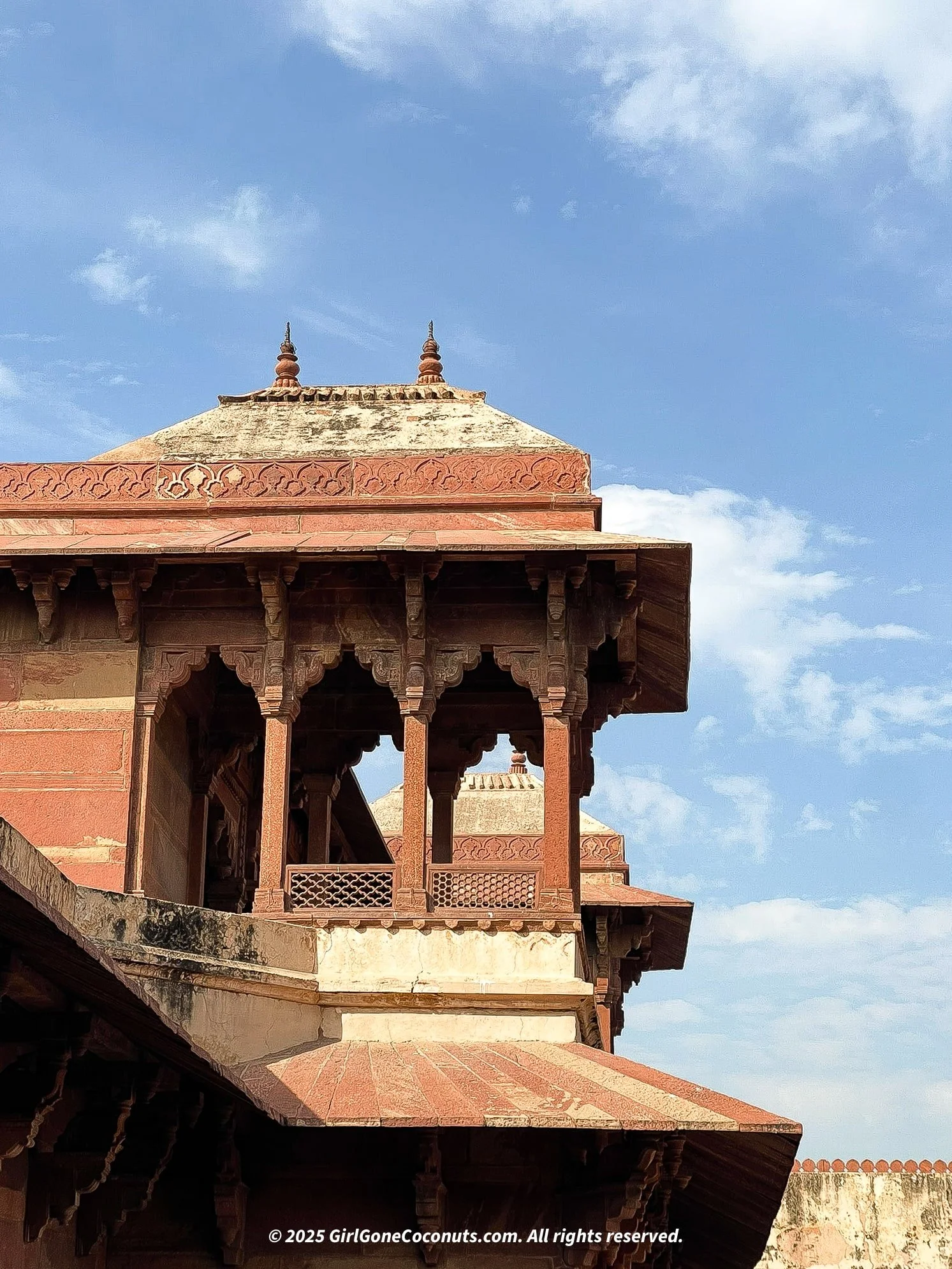
A closer look at the stunning architectural details of Fatehpur Sikri.
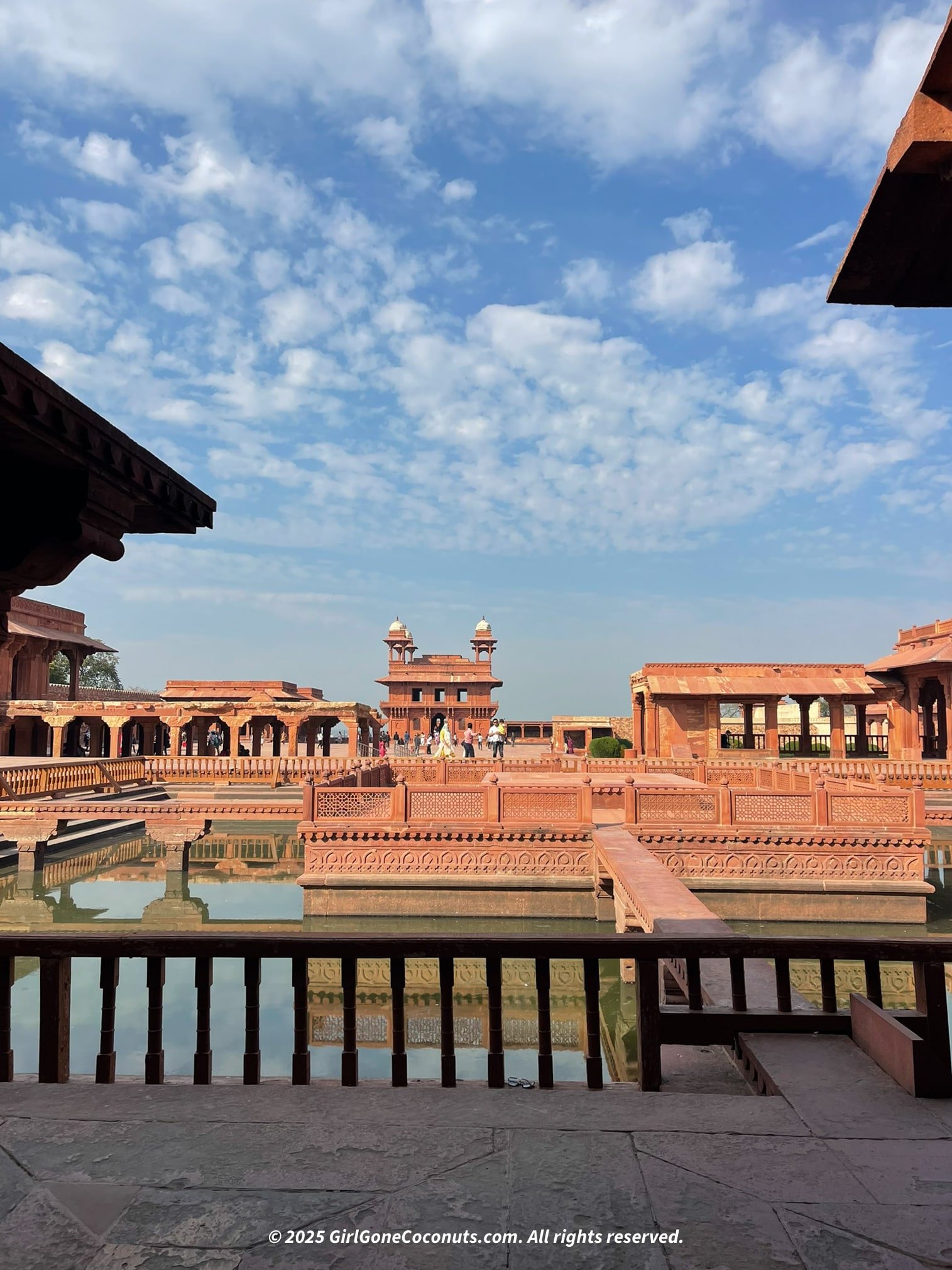
Exploring Fatehpur Sikri, a stop not too far from Agra, perfect for a 2 day itinerary.
Fatehpur Sikri is a 16th-century walled city built by Emperor Akbar, one of the most famous rulers of the Mughal Empire in India. It is full of beautifully crafted red sandstone buildings, courtyards, and palaces that display Mughal architecture. For most people, the highlight of this city is the Tomb of Salim Chishti, a beautiful white marble mausoleum tucked inside the complex.
Inside the Tomb of Salim Chishti, visitors traditionally tie a thread to the marble screens while making a wish, believing that the saint buried here, Salim Chishti, will grant blessings, good fortune, or the fulfillment of their prayers. It is considered a sacred ritual, and many people come here seeking a meaningful, personal moment of reflection.
If you are heading to Jaipur next, Fatehpur Sikri makes a perfect stop along the way. Plan to spend around an hour or so exploring the complex. You can also visit the Delhi Gate and the tombs of Akbar and Mariam-UZ-Zamani if those interest you, though I skipped them myself…I was ready to move on from Agra by that point.
Location: Here.
Hours: Sunrise until sunset.
Entrance Fee:
610 Indian Rupees (7 USD)
Children under 15 may enter for free
SAARC and Indian residents: 50 Indian Rupees.
Tips for Visiting:
Do I Need A Tour Guide? Honestly, I would say yes, and I recommend hiring a guide before you arrive. Otherwise, you will be surrounded by people offering tours at the entrance, which can be completely overwhelming. You can ask your accommodation to arrange a guide, or if you are heading to Jaipur next, you can book your taxi from Agra to Jaipur with a stop at Fatehpur Sikri and include a guide. (I did this, but from Jaipur to Agra.) Otherwise, here are some good tour options…
Dress Code: Technically, there is no strict dress code at Fatehpur Sikri, but I highly suggest dressing modestly while exploring the site. Your shoulders and knees should be covered, and if you plan to go inside the Tomb of Salim Chishti, where people make wishes, your head must also be covered with a scarf. Women should ensure their arms and legs are covered, and shoes must be removed before entering the tomb. Comfortable shoes are a must since there is quite a bit of walking around the complex.
When visiting the Tomb of Salim Chishti, it is customary to tie a thread to the marble screens inside the tomb to make a wish. Many guides will bring you over to a mat on the floor, sitting you in front of a vendor. The vendor will likely then attempt to pressure you into “making a donation” / buying cloth offerings or giving a donation before you are allowed to make your wish. It is extremely awkward, forceful, and uncomfortable. Please know that this is entirely optional. You do not need to give any money— we had to decline the vendor over and over again until he finally gave up on us. Politely decline if anyone tries to pressure you. Your experience should be personal and peaceful, without any stress or coercion. I will say, this experience really made my visit here unpleasant, and I was ready to leave right after.
After visiting Fatehpur Sikri, you are ready to move on to your next destination in India. Honestly, you could easily see Agra just for the Taj Mahal and Agra Fort and then continue on. While the Taj Mahal was even more incredible than I imagined, I personally preferred other cities like Jaipur over Agra. But every traveler is different, and that is just one person’s experience.
Agra Travel Tips
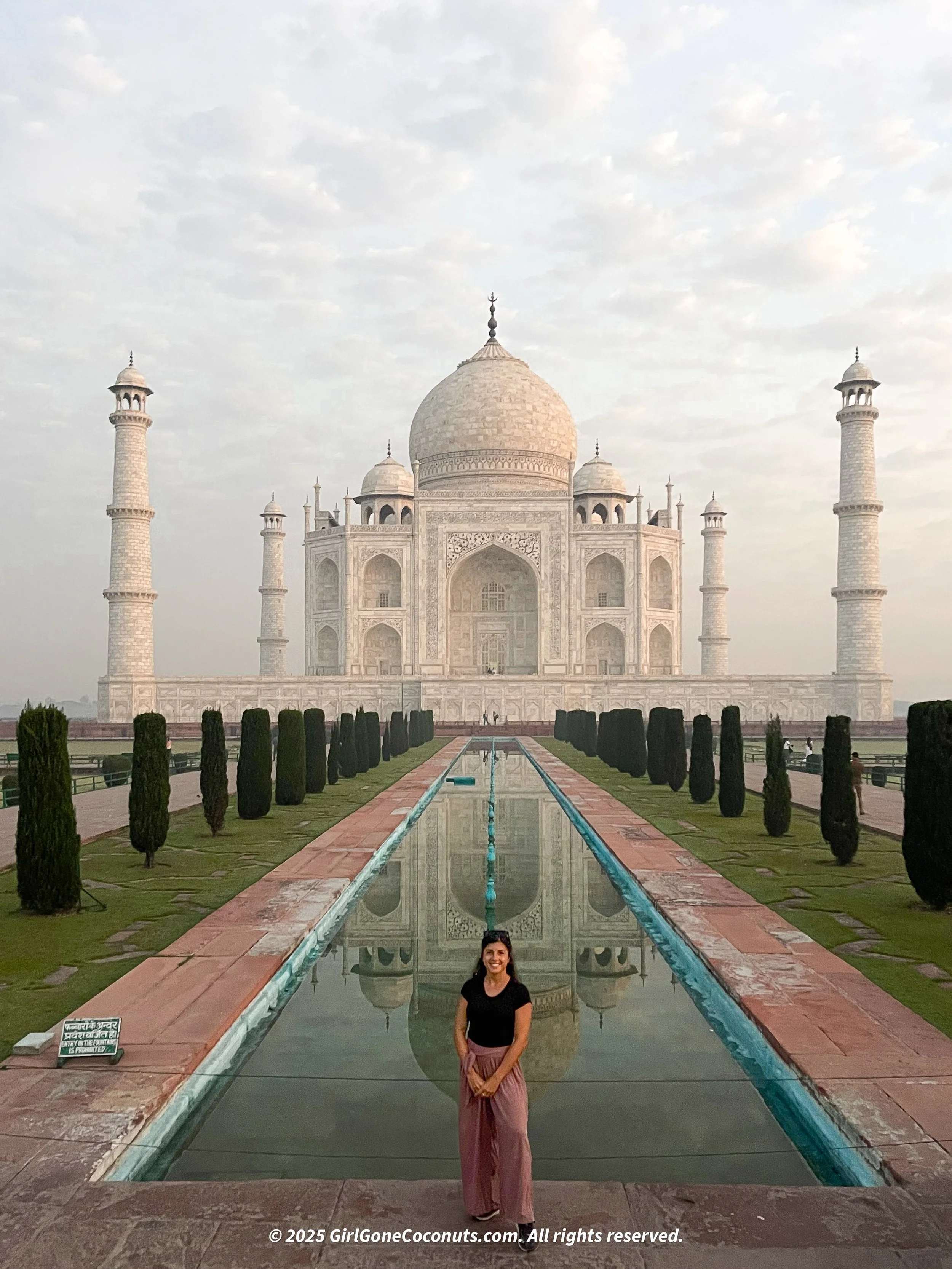
Imagine being the first person in to see the Taj Mahal? Head there bright and early and you could be like me!
Bring Cash for the entrance fees to attractions and restaurants. Many places do not accept cards.
Beware of unofficial guides: At popular attractions like the Taj Mahal, you will probably run into people claiming to be official guides. Some even show fake IDs, and they often try to charge more than the usual rate. They might even tell you a guide is required, but trust me, it is not. The safest bet is to hire a guide ahead of time through the official ticket office or a reputable company like GetYourGuide.
Purchase travel insurance— I recommend always having some form of travel medical insurance. Safety Wing is by far the best travel medical insurance I have used.
Download an eSIM to your phone—so you have data for maps and ride-hailing apps like Uber. I always use Airalo.
What to Pack for Agra:
Bring a reusable water bottle to keep hydrated, especially in the hotter months. Most attractions have refill stations, so you can top up and help cut down on plastic. Just remember, they are not allowed in the Taj Mahal. Pack a few small snacks too, fresh fruit or nuts from a local market will keep you going while you are walking around (post Taj Mahal).
Sunscreen or a hat is essential when visiting exposed spots like the Taj Mahal and Agra Fort.
Your camera! Agra is insanely photogenic, so do not forget your camera or phone.
The dry climate can be a bit harsh, so bring eye drops and lip balm to stay comfortable. I did not notice too many mosquitoes, but a little spray never hurts, especially with dengue around.
Layers: The weather can vary, so packing layers is a good idea. A light jacket or shawl can be useful in the evenings.
Modest clothing: While there is no strict dress code, dressing modestly is recommended out of respect for local customs. Loose-fitting clothes that cover your shoulders and knees are advisable.
Comfortable footwear: You will be walking on uneven surfaces at sites like the Taj Mahal and Agra Fort.
Be smart and aware: Be cautious of scams, such as false claims that the Taj Mahal is closed or offers of discounted tickets. Always purchase tickets from official counters. I felt like I was constantly dealing with people trying to scam me in Agra.
Note: It is quite common for people to ask for photographs with tourists because they do not often see foreigners. Do not be afraid to say no, like I did; it made me feel uncomfortable. However, my boyfriend was always happy to jump into the photo with them. Although he did get overwhelmed by the end of our trip in India, and began politely declining.
Frequently Asked Questions
How far is Agra from Delhi, and how do I get there?
Delhi to Agra/Taj Mahal is around 233 KM or 145 miles. By private taxi, it usually takes 3 to 4 hours along the one main highway. The train can get you there in 1.5 to 2.5 hours. Buses are the cheapest option, but they take around 3 to 5 hours, depending on traffic. For more specific information, check out my section above on how to get to Agra. J
What is the best way to see the Taj Mahal and Agra Fort in 2 days?
This is actually quite easy to do, and 2 days is more than enough time for it. I would suggest heading to the Taj Mahal for opening time on your first day in Agra to help avoid heat and crowds. On your second day, I would do the exact same thing for Agra Fort— wake up early and head there for opening time.
What is the best time of day or year to visit Agra?
The best time to visit Agra is from November to February, which is also peak tourist season. The best time of day to visit Agra and the Taj Mahal is early in the morning. This will help avoid excessive heat and crowds.
What to do in Agra besides the Taj Mahal?
Agra Fort
Akbar’s Tomb (or Tomb of Akbar)
Tomb of Mariam-uz-Zamani
Chini Ka Rauza
Tomb of I’timād-ud-Daulah (Baby Taj)
Fatehpur Sikri (day trip from Agra)
Did you feel safe in Agra?
I felt pretty safe in Agra, but I was also traveling with my boyfriend and was not venturing out after sundown. With that being said, everyone has their own experience, so I recommend staying up to date with your country’s travel advisories. Follow basic rules of safety while traveling, in addition to:
Be careful walking around and keep your personal belongings either on your own or in a safe in your room.
If you hire a driver, do not leave valuables in the car; take them with you. We had a couple tell us how their driver stole their Japanese Yen and Indian rupees worth over 150 USD from their wallets.
Be cautious when trying to cross the street; driving is quite chaotic here.
Always triple-check vaccination requirements and recommendations for countries. One potential illness is Typhoid.
Pack mosquito spray to protect yourself from common mosquito-borne illnesses like Dengue.
Be extra careful with the street dogs in India. Most were friendly and sweet, but rabies is much more prominent here.
DO NOT drink the tap water. Keep your mouth closed in the shower and even use bottled water for toothbrushing, especially if you have a sensitive stomach like me!
Mistakes can happen, especially when traveling, so I recommend always having some form of travel medical insurance. Safety Wing is by far the best travel medical insurance. It has saved me numerous times by covering hospital visits when I was sick during my travels in Asia.
Get an eSIM—so you do not get lost navigating your way. I always use Airalo for my eSIM.
Emergency Contact Number: Police: 100 | Fire: 101| Ambulance: 102 | Tourist Helpline: 1363
You can find a complete list of India’s Emergency #’s here.