10 Days Sri Lanka Itinerary: Exploring the Best of the South Coast
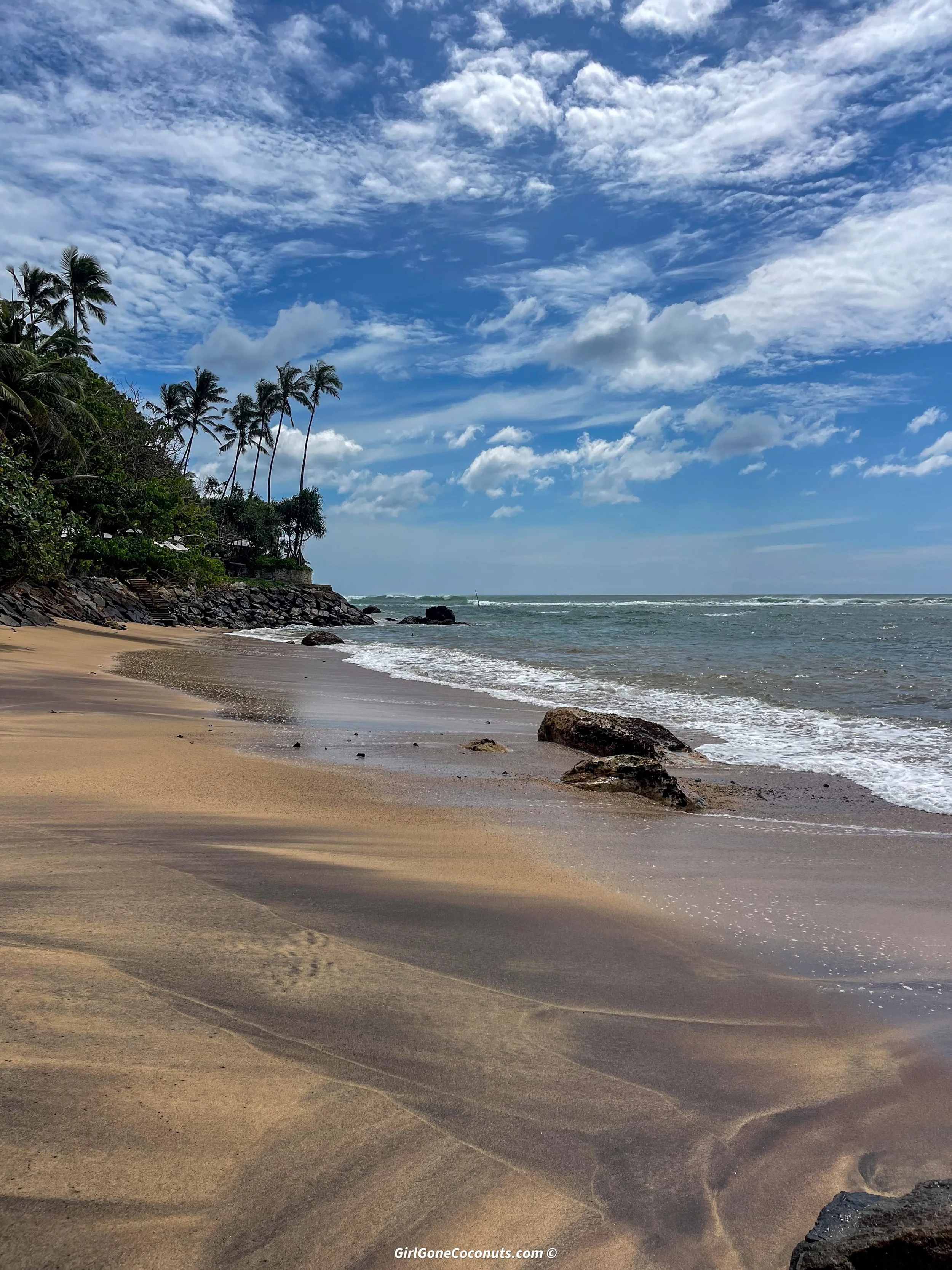
Planning your first trip to Sri Lanka can feel overwhelming, with so much to see and do, and everything being spread out. If you are looking for a mix of soft sandy beaches, charming towns, incredible wildlife, and a touch of Sri Lankan cuisine, the south coast is the perfect place to start. Over 10 days, you can explore multiple coastal towns, spot elephants and leopards in the wild, surf some of the country’s best beginner waves, and relax on some of the most beautiful beaches in the world.
My 10-day(s) Sri Lanka itinerary is built with a balance of adventure and relaxation in mind, letting you see it all without feeling rushed. Whether you want to spend extra time at a beach, add an extra safari, or explore a different nearby town, it is flexible enough to fit your travel interests. By focusing on the south coast, you can travel efficiently and still get a true taste of what Sri Lanka has to offer.
Oh & as always practice sustainable tourism while traveling, please :)
Disclaimer: This post contains affiliate links. If you click through and make a purchase, my blog may receive a commission at no additional cost to you.
10 Days Sri Lanka Itinerary & Travel Guide
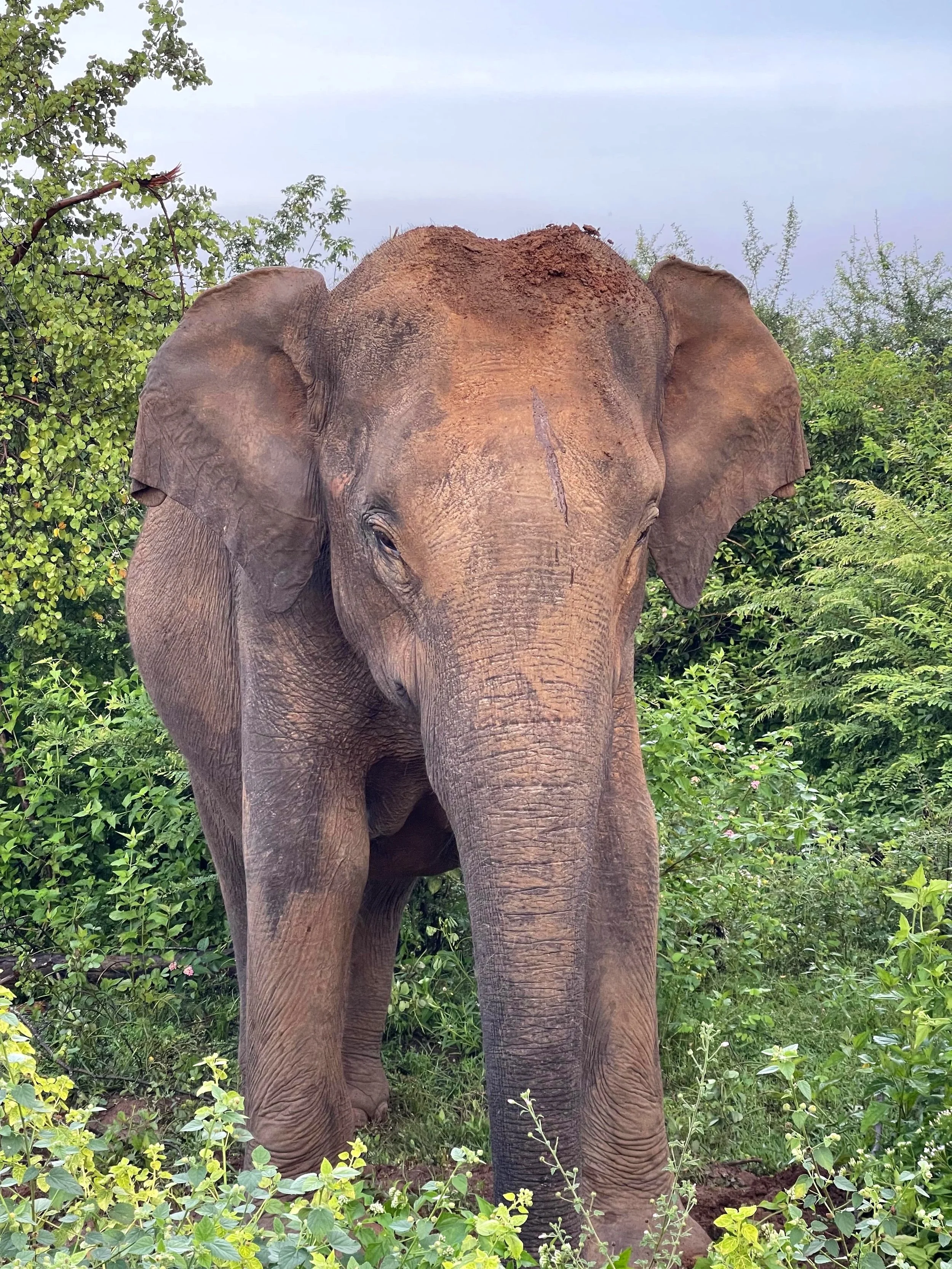
An elephant from my safari in Udawalwe National Park, Sri Lanka.
Pin it & save it for later!
Why Visit the South Coast of Sri Lanka
If you love tropical weather, soft sandy beaches with turquoise waters, surfing, Sri Lankan cuisine, or want to see a wild elephant or leopard, this itinerary is for you. The south coast of Sri Lanka is the perfect introduction to the country, offering a taste of everything it has to offer. Traveling between destinations in Sri Lanka is easier if you focus your trip on one region. There is simply too much to see in a single visit— unless you are determined to do it all at once. If that is the case, you can add other itineraries onto this one. But if you prefer a slower pace to really experience each place, then you are a lot like me, and this itinerary is ideal.
The plan is simple and flexible, allowing you to add or remove days depending on your interests. Not interested in Mirissa and prefer a day trip instead? Try Weligama or Ahangama. Only want one safari? Skip the other and consider adding Ella or spending more time in another spot. Hopefully, this itinerary can guide your trip, or simply inspire you to build your own!
Map of This 10-Day Sri Lanka Itinerary
How to Get Around Sri Lanka
For traveling around Sri Lanka, you have a few options: public bus, train, taxi, tuk-tuk rentals, or on foot (this, of course, is mostly for within one town).
By Bus:
Although buses can be chaotic and crowded (especially during peak hours), I actually prefer them as my main way of getting around Sri Lanka. They are cheap, efficient, and surprisingly easy to navigate. Every town has a few bus stops, and along the south coast, you will often find yourself taking Bus 350 for most journeys. When you want to exit the bus, you simply press a button to alert the driver that your stop is coming up.
Buses run frequently along the main roads, often every 15–30 minutes, so you rarely need to book or plan far ahead. You pay in cash directly on the bus, usually to a conductor who will come to your seat. Do not be surprised if you have to stand for part of the journey, especially during busy times (work travel hours).
There is limited luggage space, with a small compartment at the back, so as long as you have just one suitcase or backpack, you should be fine.
Always check with your accommodation for the most up-to-date routes and prices.
By Train:
The train is another option, often offering long coastal rides between destinations. It can be a good choice for longer distances, but I personally have not had much luck with it. I often found myself on delayed trains or sitting on the floor for the ride. Some trains have a first-class carriage with air conditioning and assigned seating, but I never had the chance to experience it.
You can purchase tickets on 12GoAsia ahead of time or buy them directly at the station. Prices vary depending on class, time of day, and availability. First-class tickets are not always offered, and even if you book one, there is a chance the train will change last minute to one without a first-class carriage. Most travelers end up in second or third class.
Second class has fans and padded seats, while third class is more basic, with bench seating and no fans. Neither has assigned seating, so during busy times, you may have to stand or sit on the floor. Trains can be oversold and feel very crowded, especially during peak hours.
The only luggage storage is either on the floor or in small overhead racks, which are not very secure for loose or heavy items. Windows open in both second and third class, which helps with airflow, but it can still get uncomfortably hot.
I recommend bringing your own food and water. Some stations have carts selling snacks, nuts, and drinks, but options are limited. As for restrooms, there were none on the train I took, or if there were, I never found them.
Ride-Share, Taxis, & Rentals:
Local ride-sharing apps and taxis are another option, but they can be costly in Sri Lanka. I tried ordering an Uber once, but it was overpriced and not much faster than the bus or train. PickMe, a popular local app, was no better. Drivers would accept the ride, start heading my way, and then try to negotiate a higher fare (no, thank you). I have found it easier to arrange a private taxi through my accommodations when traveling between destinations. Prices vary but often fall between 10,000–15,000 LKR.
You can also rent your own tuk-tuk, which can be a fun option for shorter distances. Be aware that you will need to get a local driver’s permit and take a short lesson first. Tuk-tuks are best for short trips between towns along the southern coast, not long-distance travel. While it can be a great way to explore at a slower pace if you have more time, for a 10-day itinerary, it is not practical. I also do not recommend booking a tuk-tuk through Uber for long trips (for example, Mirissa to Udawalawe), as it will often double your travel time.
Unfortunately, scams do happen with ride-sharing and taxis. Here are a few common ones to watch out for:
Drivers asking for more money upon arrival, even though the fare was set in the app.
Taking unnecessarily long routes to increase the fare.
Charging separate toll fees when they are already included in the app price (common with Uber).
Not ending the trip after drop-off, which causes the fare to continue rising in the app.
Pro Tip: If you need a taxi for a longer trip, try to agree on a fixed price in advance (in writing or via text) to avoid surprises.
I will go over which transport option I think works best between each destination in the itinerary for you.
Sri Lanka Entry Requirements
For U.S. citizens (& many others), you must obtain an Electronic Travel Authorization (ETA) before arriving in Sri Lanka. This is a tourist visa with double entry allowed for over 30 days. I believe you can extend it, but I have not done so myself. I have heard that as of July 2025, Sri Lanka has waived the usual 50 USD processing fee for travelers from 40 countries, including the U.S., to encourage tourism recovery. You can apply online and receive a decision within 3–7 business days.
You do need round-trip flights for the visa and proof of sufficient funds.
Your passport should be valid for at least 6 months from your intended date of arrival in Sri Lanka and have at least one blank page for entry stamps.
If you arrive from a country with a risk of yellow fever transmission, you will need a yellow fever vaccination certificate.
Upon entrance, if you are carrying over 10K USD in any currency, you must declare it upon entry.
As per most places in the world, bringing in animal products, fresh fruits, veggies, seeds, or plants of any kind is strictly prohibited. This includes marine shells and certain types of coral.
I always reference the US government website for the most up-to-date information. The CDC offers the most relevant information for anything health-related to traveling to any country. The usual vaccines are suggested for Sri Lanka: Typhoid, Hepatitis A&B, Rabies, etc.
The 10 Days Sri Lanka Itinerary

How my trip in Sri Lanka started, and ended— on the train floor.
Day 1: Colombo → Mirissa
Mirissa is about 156 kilometers (roughly 97 miles) from Colombo, Sri Lanka. The journey takes around 2.5 hours by car, 4 to 5 hours by train or bus (depending on the type of service and number of stops), or 4.5 to 6 hours by tuk-tuk.
If you are arriving at Bandaranaike International Airport (CMB) in Negombo and planning to travel to Mirissa or anywhere along the southern coast, you will first need to make your way to Colombo Fort Railway Station for the train, or the Colombo Central Bus Stand in Pettah for the bus. Most long-distance trains and buses depart from one of these. You can either take Bus 187 or a taxi from the airport to the railway station. The bus is around 110 LKR, while a taxi is around 5500+ LKR.
For the full picture, from dodging taxi scams to understanding train and bus options, my Colombo to Mirissa guide has everything in one place.
Traveling By Train:
Once you have arrived at Fort Railway Station, catching the train from Colombo to Mirissa is fairly straightforward. The harder part is the journey itself, especially if your train ends up delayed.
Departure Station: Fort Railway Station, Colombo
Arrival Station: Mirissa Railway Station
Pro Tip: There are not many food options around Colombo Fort Railway Station aside from a few small carts selling nuts, fruit, and local snacks. I recommend grabbing your food and drinks from a grocery store before the long journey ahead.
Traveling By Bus:
The best bus to reach Mirissa is the Colombo–Matara route, which departs from the Colombo Central Bus Stand or Pettah Station. There are plenty of departures throughout the day, and the trip takes between 4 and 5 hours, depending on stops and traffic. You pay fares in cash onboard to the driver, so bring smaller bills. One-way ticket prices range from 410 to 750 LKR (approximately 1.36 to 2.50 USD).
Find a more detailed explanation on navigating the bus here.
Travel By Taxi:
If you prefer traveling in a private car from Colombo to Mirissa, I recommend either sticking with Uber or asking your accommodation to arrange a ride for you ahead of time. Just be sure to agree on the final price before you get in. I did not take this option myself, but I was quoted around 12,000+ LKR (about 40+ USD) for a mini car.
You can find a more detailed explanation on navigating taxis here.
Day 1 Itinerary (Post Travel):

A local Sri Lankan dish created freshly from Hey Mama in Mirissa, Sri Lanka.
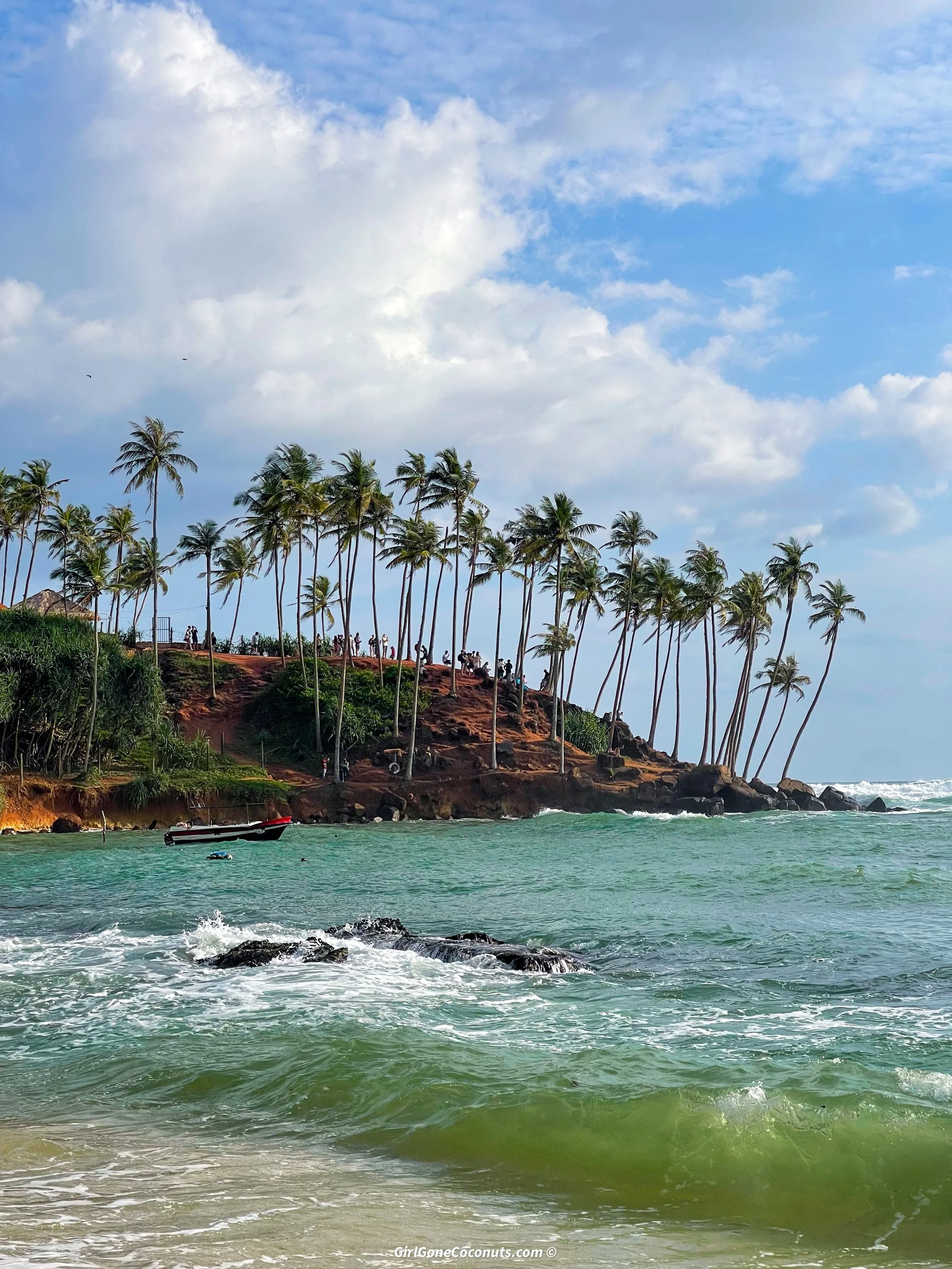
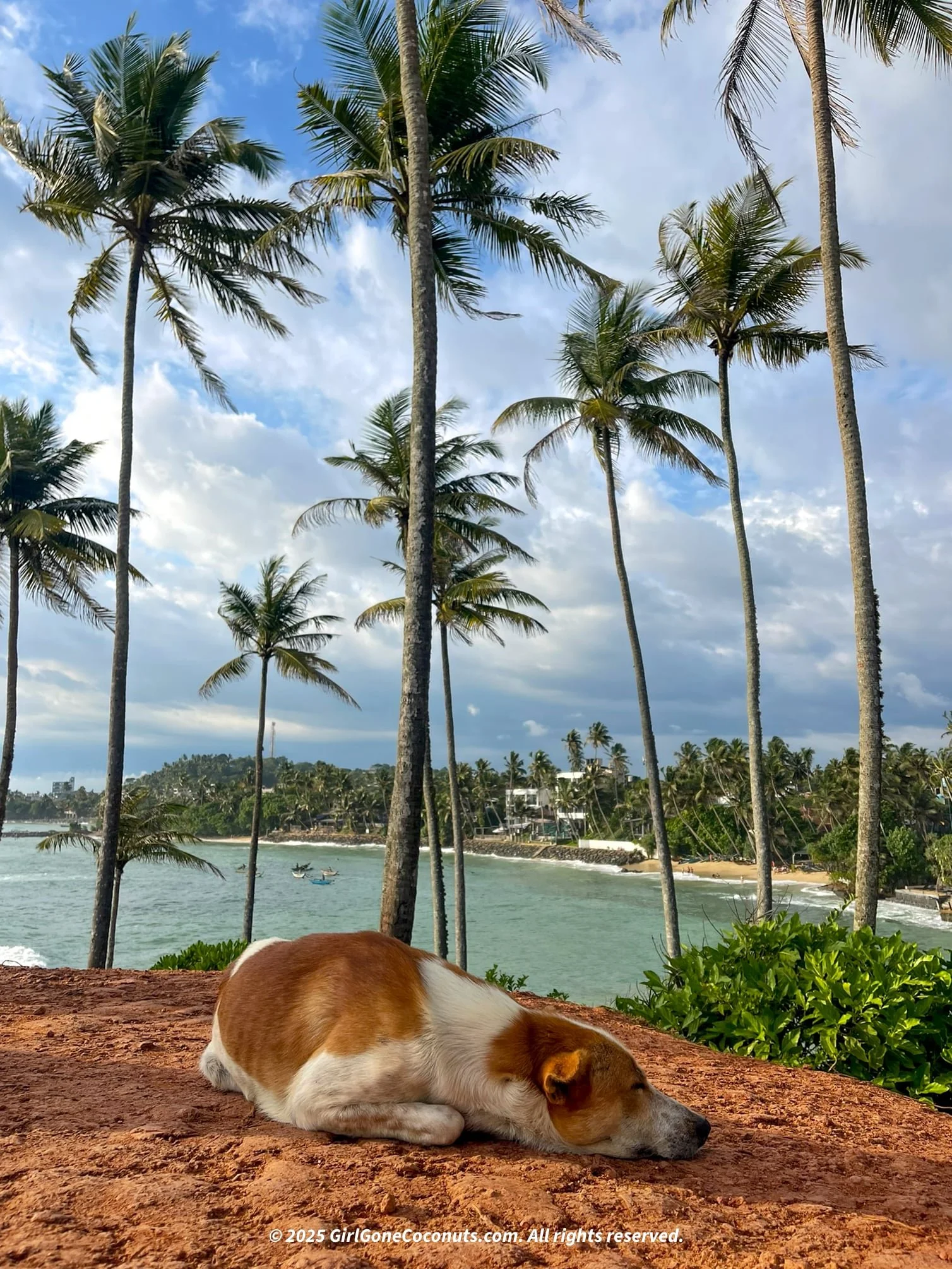
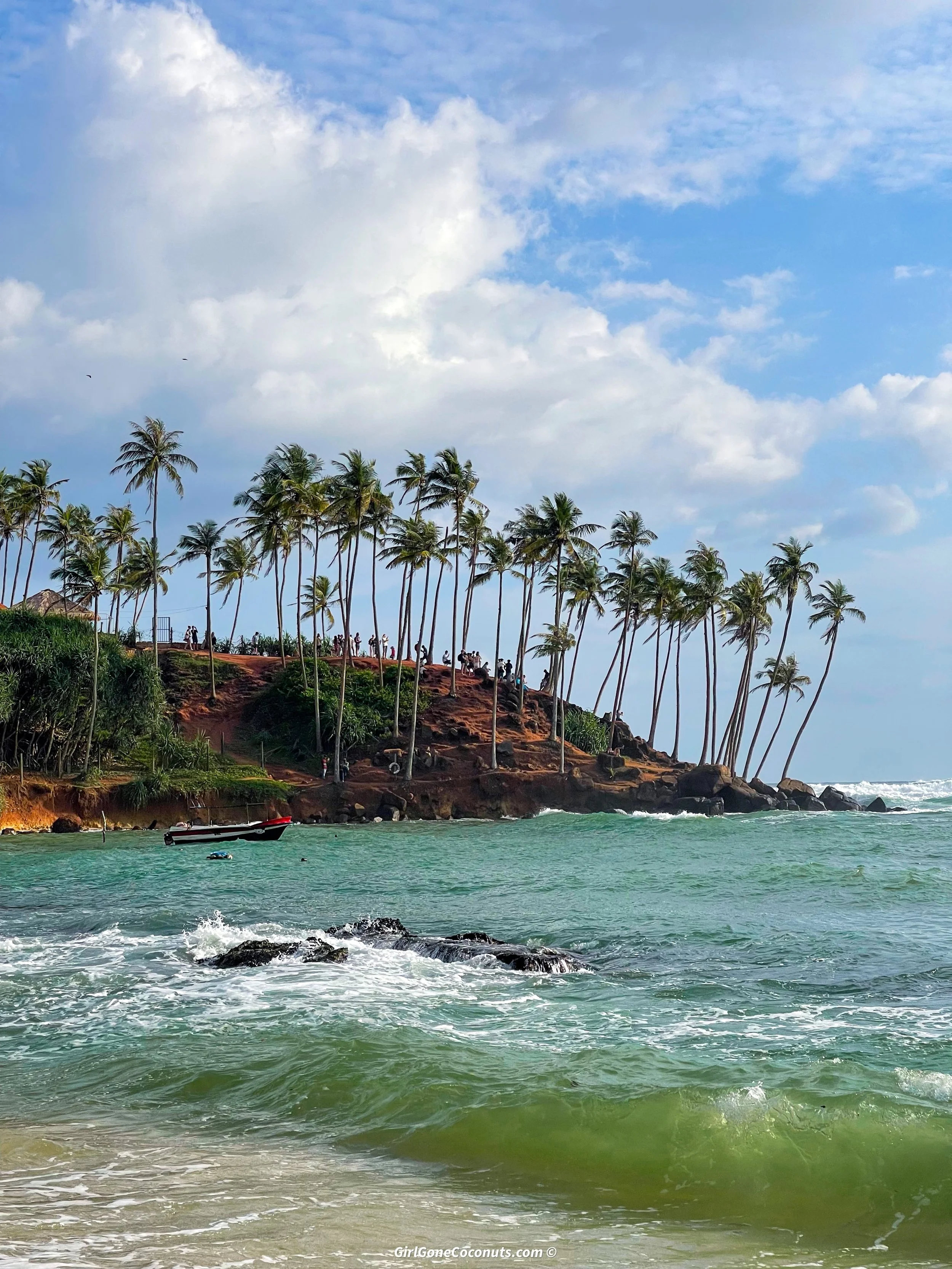
Coconut Tree Hill, perhaps your first stop on your 10 days Sri Lankan itinerary.
Assuming you will arrive in Mirissa in the evening, I suggest unpacking, decompressing from your travels, and heading out for sunset, followed by dinner. The best spots for sunset are either Parrot Rock or Coconut Tree Hill. Both can get busy, so keep this in mind when planning your arrival. I will go into more detail about each of these spots later in the blog, but for now, Parrot Rock is exactly what it sounds like, a rock said to be shaped like a parrot (accessible only at low tide), and Coconut Tree Hill is a hill covered in coconut trees that juts out slightly farther into the water. Whichever you pick, you will not be disappointed.
For dinner, I suggest heading to Hey Mama for some delicious and clean local food that can be catered to gluten-free and vegan diets. For some other good options, you can head to my article here!
Day 2-3: Mirissa
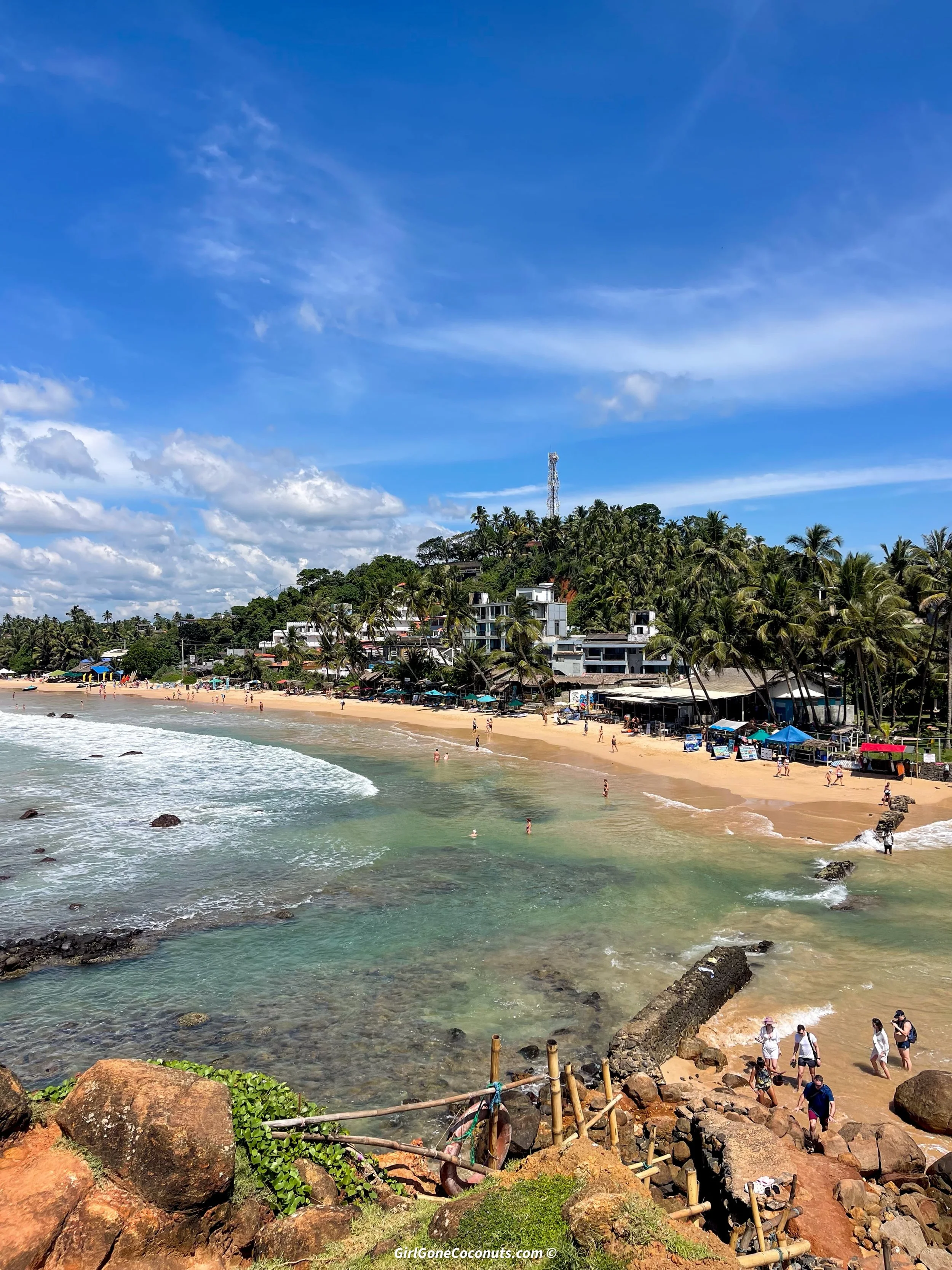
A view of Mirissa Beach from Parrot Rock— a must-do for your 10 days Sri Lankan itinerary!
Day 2 in Mirissa…
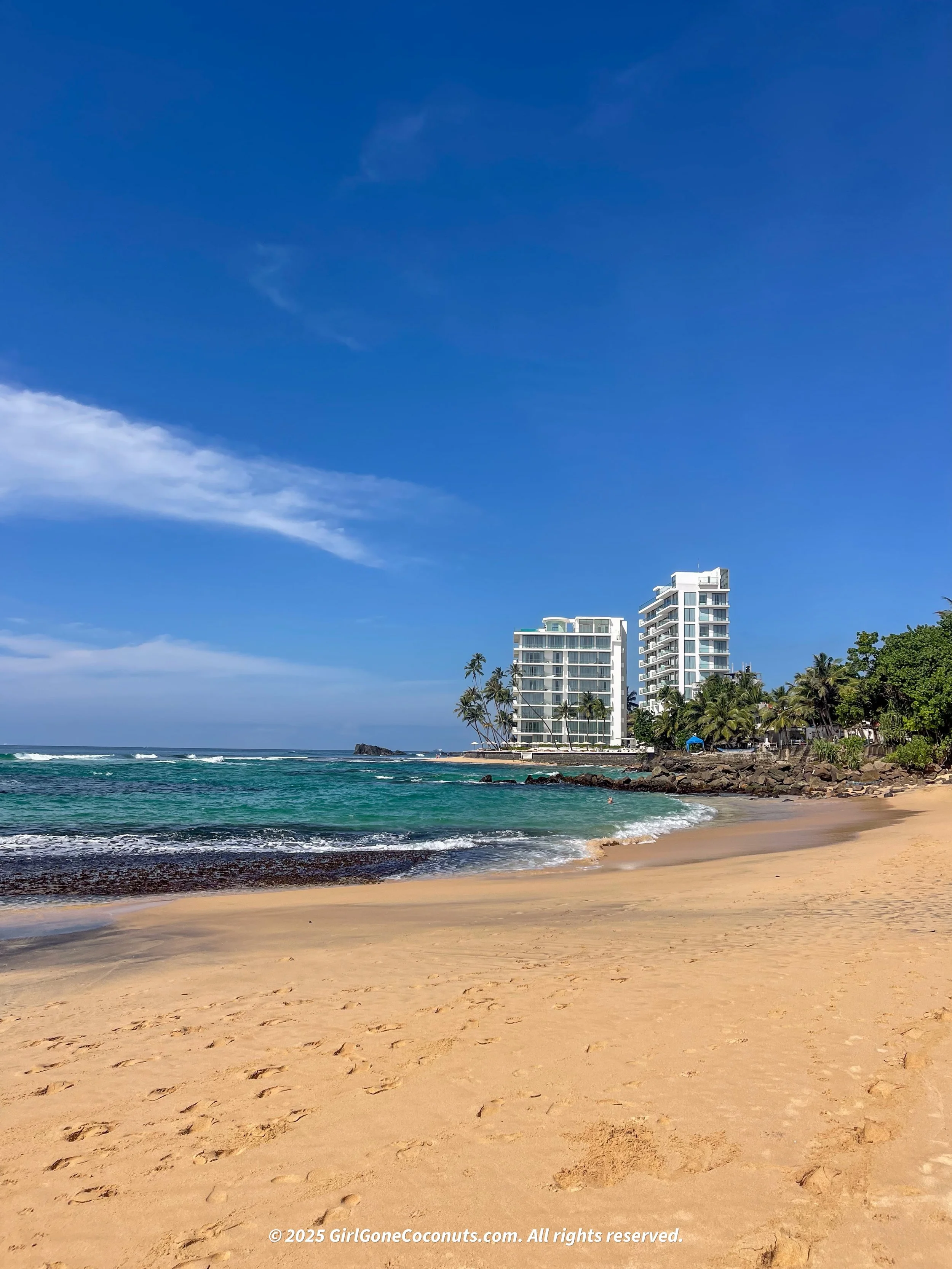
Spend your only full day in Sri Lanka relaxing on Mirissa’s most famous beach, Mirissa Beach. Although more crowded, Mirissa beach is perfect for swimming, sunbathing, exploring, and supposedly even snorkeling. The water is crystal clear, and the sand is a soft yellow, perfect for lying out on. Shops, hotels, and food spots offer lounge chairs along the beach. If you prefer a more peaceful vibe, I recommend heading to the far west end (opposite of Parrot Rock) for a cozy cove, lined with palm trees. The entire beach is lined with tall, flourishing green palms gently blowing in the breeze.
When the tide is at its lowest, head over to Parrot Rock for unobstructed views of Sri Lanka’s coastline, including the iconic Coconut Tree Hill. For a complete guide on exploring Mirissa’s Parrot Rock, head here!
If you have not explored Coconut Tree Hill on your first night here, now is the time! It is an awesome spot to watch a beautiful sunset over the water.
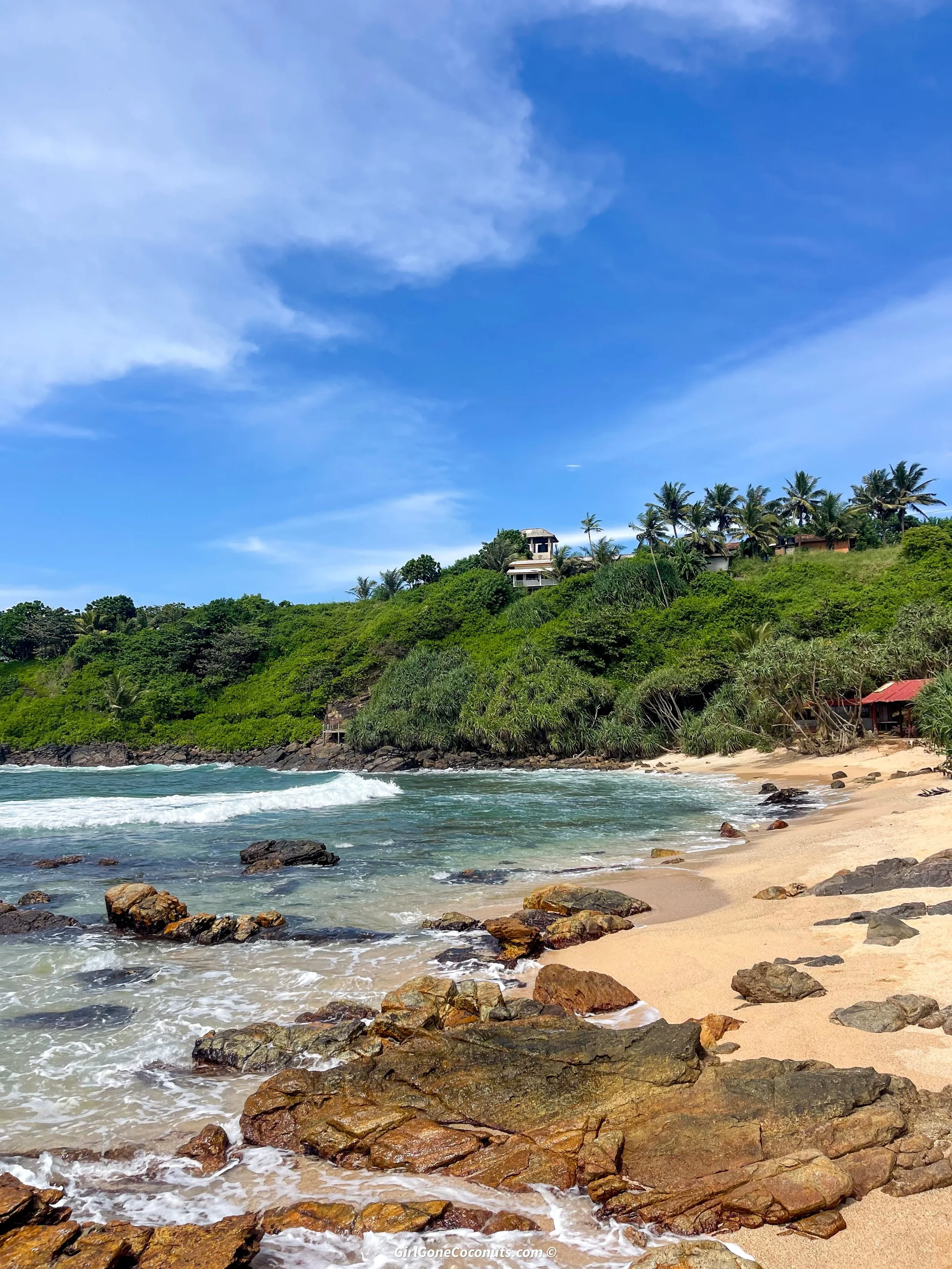
A view over Niyana Wella Beach in Mirissa, Sri Lanka. A perfect secluded tropical paradise for your 10 days itinerary.
Day 3 in Mirissa…
Spend your third and last day in Mirissa exploring another beach. For today, you have a few options:
Mirissa’s Secret Beach (It is really no secret). Secret Beach is a small cove surrounded by rocks, offering a calm, shallow pool of water ideal for swimming and snorkeling. Lounge chairs line the sandy cove, available from a small restaurant tucked back in the jungle. Soft house music plays here (sometimes a bit loud), so this is not your secluded secret beach but more of a place to lounge and vibe.
Niyana Wella, on the other hand, offers that secluded, untouched beach vibe you might be looking for. When I visited, there were only two people on the entire beach. It looks similar to Jungle Beach, but with a much taller cliff covered in palm trees and minimal infrastructure. You do need to walk through the jungle a bit to reach this beach, but nothing too intense— just bring mosquito spray. Aside from yellow sand, a few rocky outcrops loaded with crabs, and some clear water to swim in, you will not find much else here.
If you want to explore some further away beaches, including ones in Weligama (best for surf), Ahangama, or even slightly further west, head to my article on the best beaches near Weligama/Mirissa, here! If you head to Ahangama, you can stop in to volunteer at AnimalSOS, a non-profit organization that rescues, rehabilitates, and rehomes stray animals in need. They currently have over 2000 dogs!! I will release an article soon on my unforgettable experience here.
Keep in mind that you will be traveling to Udawalawa, the town just outside of Udawalawe National Park, later in the day to stay for a night. The form of transport you choose will determine which beach is the most practical to visit. Taking a taxi means more time to explore, while public buses or trains will give you slightly less time.
I chose to travel by private taxi with my boyfriend between the two, which took us just under 2 hours by car. I highly suggest this option if you can budget it in, as it will allow for more time exploring and less confusion with bus hopping. My accommodation in Udawlawa reserved us a 13000 rupee private taxi (around 40 USD).
You can use public buses to reach Mirissa, but I have not done so myself. Your accommodation in Udawalawa or Mirissa can likely help you navigate the best buses to take.
The train is not a great option for traveling to Udawalawe. It is too time-consuming, especially when you factor in the time needed to transfer from the train to a bus. The train will only get you as far as Beliatta, and from there, you will likely need to hire a taxi or take two additional public buses. The total travel time will likely be over 2.5 hours and cost anywhere from 8 to 50 USD, depending on whether you choose the bus or a taxi for the second half. If you do prefer this option, you can check out my post on visiting Udawalawe National Park, which offers a section on how to get there.
If this sounds like too much movement for you and you prefer to stay in Mirissa longer, you can! You can actually book a day tour to Udawalwe National Park from Mirissa like this one! This way, you can skip the train, bus, and taxi, and simply spend another day waking up in Mirissa and visiting from there.
Eating Recommendations in Mirissa…
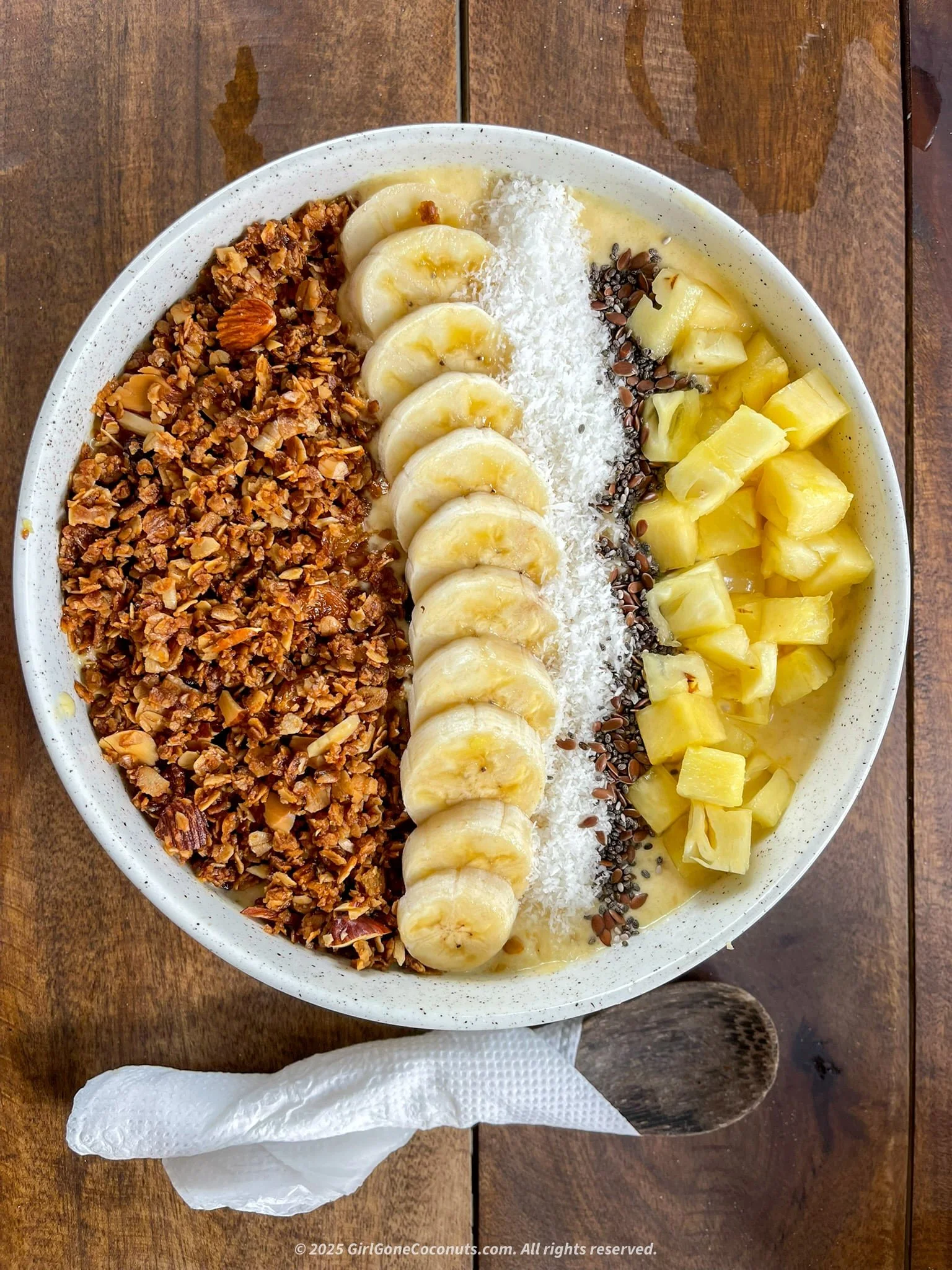
A yummy smoothie bowl from Lost Paradise in Mirrisa, Sri Lanka. Who doesn’t love a smoothie bowl on holiday?
The Best Breakfast or Brunch Spots In Mirissa:
Shady Lane: A cozy, dual-level tropical cafe tucked away on a side street in Mirissa. Vegetarian, Vegan, & Gluten-Free options are available.
Lost Paradise: A small garden oasis vibe with healthy breakfast and lunch options. Vegetarian, Vegan, & Gluten-Free options available.
Barista Mirissa & Nomad Cafe (Weligama): The best coffee spots in Mirissa!
The Best Lunch & Dinner Spots In Mirissa:
Hey Mama: A bohemian-themed, second-floor restaurant offering freshly prepared Sri Lankan dishes that can be modified to be vegan, vegetarian, or gluten-free.
Dhana’s Curry Pot: Offers an authentic Sri Lankan buffet offering both vegan and non-vegan options.
For more of the best restaurants in Mirissa, check out my full blog on where to eat— here!
Day 4: Udawalawe National Park
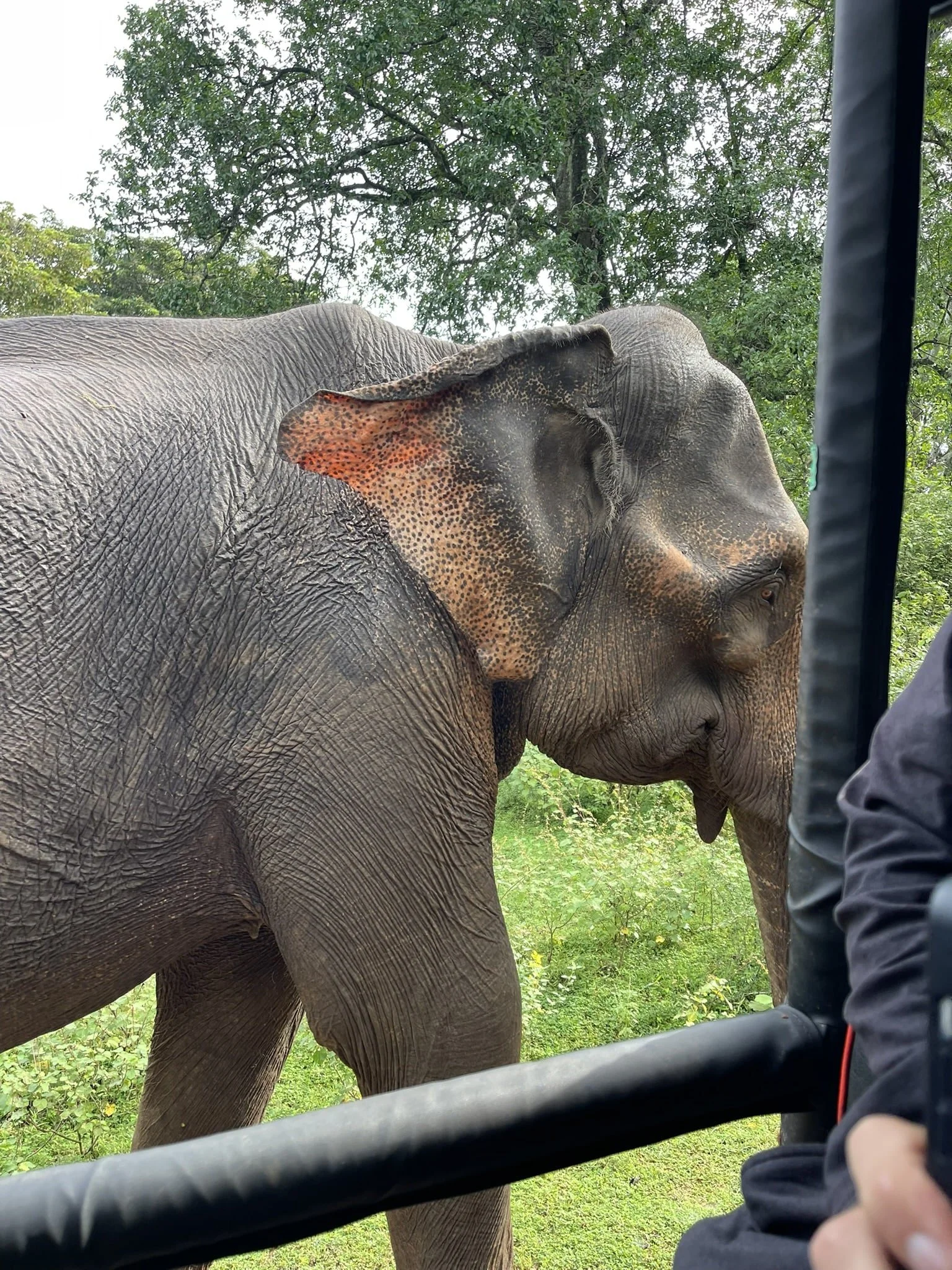
An elephant getting up-close and personal to us on our safari in Udawalawe National Park. This will be a highlight during your 10 days in Sri Lanka itinerary.
Good Morning Day 4…
Ready for an unforgettable day 4 of your 10 days in Sri Lanka? After waking up in Udawalawe, you will spend the day spotting elephants and other wildlife in their natural habitat at Udawalawe National Park.
I loved my experience at Udawalawe National Park and cannot recommend where I stayed enough for the accommodation and the safari. The owner met us early for a quick coffee, tea, and banana before a short ride to the park, where we were among the first jeeps. Driving along dirt roads at sunrise, we watched a elephants (including a baby) enjoy their morning, spotted water buffalo, peacocks, and an incredible variety of birds. Later, we saw crocodiles, deer families, lizards, mongoose, monkeys, and even more elephants walking right past our jeep. The experience was both awe-inspiring and humbling. Returning to our accommodation, we enjoyed a welcoming breakfast that catered to our vegan and gluten-free diet while still spotting wildlife nearby. My best advice for anyone visiting is to go with an open mind, soak in the nature around you, and let the wildlife surprise you.
Udawalawe National Park Entrance Fees, Tour Packages, and Important Information…
The entrance fee is 29 USD per person, plus a 15% VAT and a 14 USD group fee per car, totaling 43 USD. Tickets can be paid in either Sri Lankan rupees or USD. This does not include the mandatory safari guide.
For groups, the total cost of the safari decreases per additional person…
2 people: 72 USD total
3 people: 101 USD total
4 people: 130 USD total
5 people: 159 USD
6 people (jeep capacity):
Special rates apply for children aged 6-12 years (15 USD + VAT) and SAARC citizens (20 USD + VAT). Children under 6 enter for free.
A designated safari car and guide are required to enter the park. Tour prices depend on group size and whether you choose a private or shared tour, with both full-day and half-day options. Prices can vary based on season. Private half-day tours typically cost 40-120 USD, while shared half-day tours range from 25-40 USD per person.
For example, my private four-hour tour for two people cost 40 USD total, excluding the entrance fee. I found four hours to be the perfect amount of time for a safari, seeing plenty of animals without feeling over-saturated. A private tour is not necessary unless you want a more relaxed and personalized experience.
You can choose a morning, afternoon, or evening tour, but for the sake of this itinerary, a morning tour works best. It allows you to finish around 10:00-11:00 AM, grab some lunch, take a quick shower, and then head over to Tissamaharama, the town neighboring Yala National Park.
For a detailed guide on how to get the most out of your Udawalawe National Park Safari, head here.
Post Udawalawe National Park Safari…
If you chose to stay in Udawalawa last night instead of staying in Mirissa, then after your morning safari, you will head over to Tissamaharama, the closest town to Yala National Park.
How to get to Tissamaharama by…
Private Taxi: < 1.5 hours, mine was between 9,000-10,000 LKR (30 USD), booked through my accommodation.
Bus: 3.5 hours+, Bus 98-2 (Ret Junction to Udawalawa Junction), followed by Bus 3 to Tissamaharama
Train: The train is not available here.
If you decide to stay in Mirissa, you can find all of your travel options for reaching Tissamaharama here.
OR you can follow suit and book a day tour from Mirissa to Yala like this one.
Day 5: Yala National Park
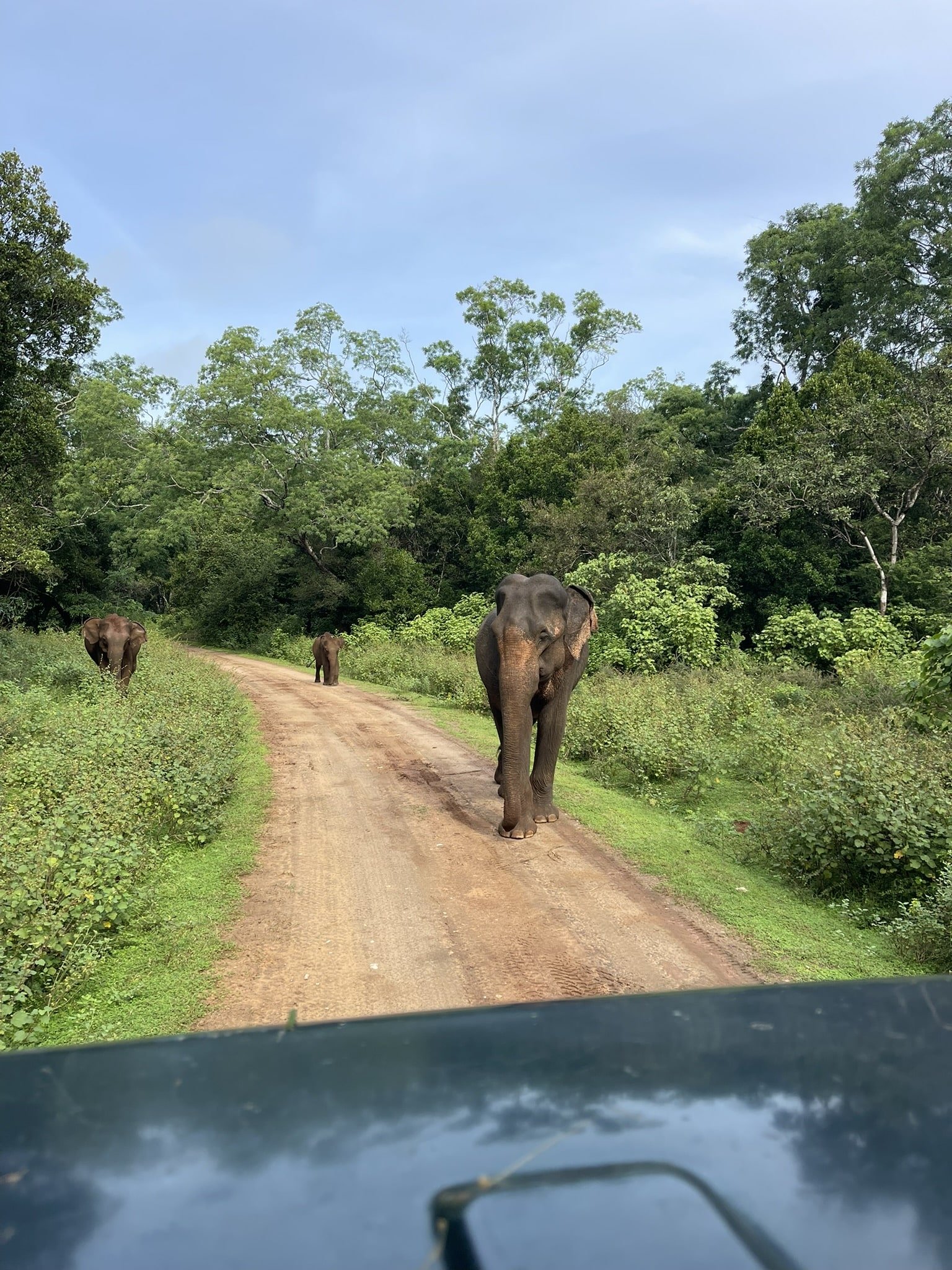
Elehpants walking the safari car pathways.
Welcome to Yala National Park…
Ready to try and spot an elusive leopard in the wild? After waking up in Tissamaharama, you will spend the morning spotting more wildlife in their natural habitat at Yala National Park.
For Yala, I opted for a shared safari that began with a 4:30 AM pickup and a 45-minute ride to the park entrance. At first, the early start and competitive atmosphere of jeeps rushing to be first felt a bit chaotic, but it was quickly outweighed by the wildlife. Not even ten minutes in, we spotted herds of buffalo, grazing deer, wild peacocks, and a massive crocodile, followed shortly by two elephants with one crossing right in front of us. As the sun rose, we saw more elephants, a changeable hawk-eagle, hornbills, a large owl, monkeys, and more crocodiles, many visible with binoculars provided by our guide. Nearly three hours in, we rushed to a leopard sighting, waiting nearly 45 minutes in a line of jeeps for our turn. The leopard was far away and partially obscured, but it was still incredible to witness. Overall, Yala felt huge and wild, like we were deep in the jungle. Seeing such large herds of animals and even a rare leopard made it an incredible safari, even if it was a bit chaotic at times.
Yala National Park Entrance Fees, Tour Packages, and Important Information…
The entrance fee is 43 USD per person (ticket, vehicle fee, VAT, service charge). Tickets must be paid in either Sri Lankan rupees or USD (no cards). Most people pay less by joining a shared tour or splitting costs in a group. There are special rates for children 6–12 and SAARC citizens; under 6 free.
A safari car and guide are required for all tours. There are half-day or full-day tours and private or shared tours. I find a half day to be plenty. Private tours are not necessary unless you want a more relaxed experience. Similar to Udawalawe, morning, afternoon, or evening tours are available. But I suggest the half-day morning tour to leave plenty of time for traveling to your next destination, Hiriketiya.
For a detailed guide on how to get the most out of your Yala National Park Safari, head here.
Post Yala National Park Safari…
If you chose to stay in Tissamharama last night instead of staying in Mirissa, then after your half-day safari, you can grab some food and head over to your next itinerary destination, Hiriketiya! For food, I really enjoyed the buffet at Smoky Kitchen, and they have a really beautiful view over some lush green rice terraces.
How to get to Hiriketiya by…
Private Taxi: 1 hour 40, likely around 10,000-11,000 LKR (35 USD)— this is an estimate based on my previous taxis. You can double-check with your accommodations on the final cost.
Bus: 3 hours, Bus 334-1 or 32 (Seylan Bank Tissamaharama to Hiriketiya Beach). I took this bus route.
Train: The train is not available here.
If you decide to stay in Mirissa, you can take Bus 32 to reach Hiriketiya (<2 hours) or opt for a taxi, which will take you around 1.5 hours.
Only want to do one safari? If you prefer to visit just one national park, you can find an extensive comparison guide of Yala versus Udawalawe here. If choosing just one, I suggest either adding extra time in Mirissa or Hiriketiya, or trying to squeeze in Ella— a place I was so excited to visit but sadly could not because of the constant rain.
Day 6-7: Hiriketiya
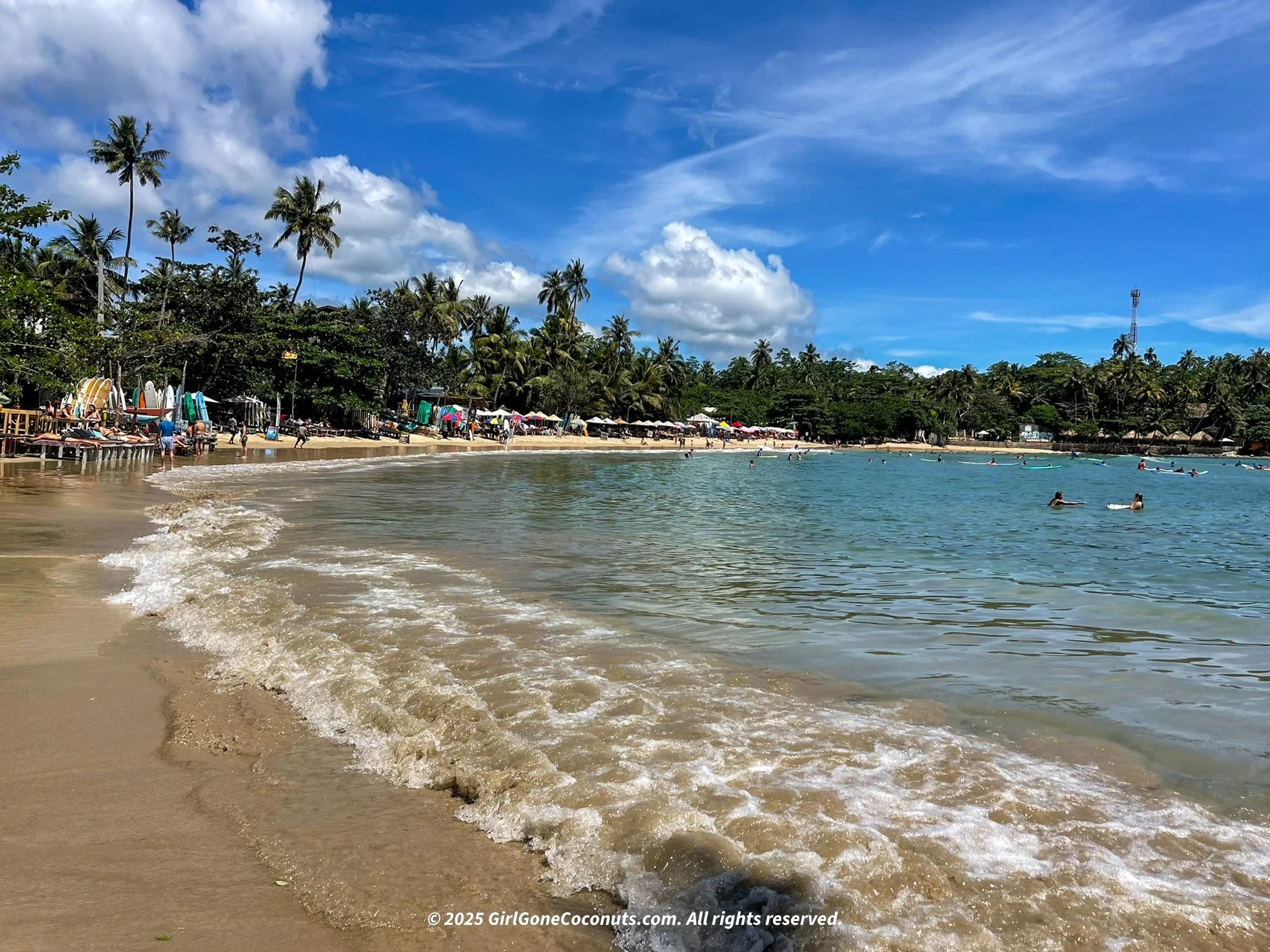
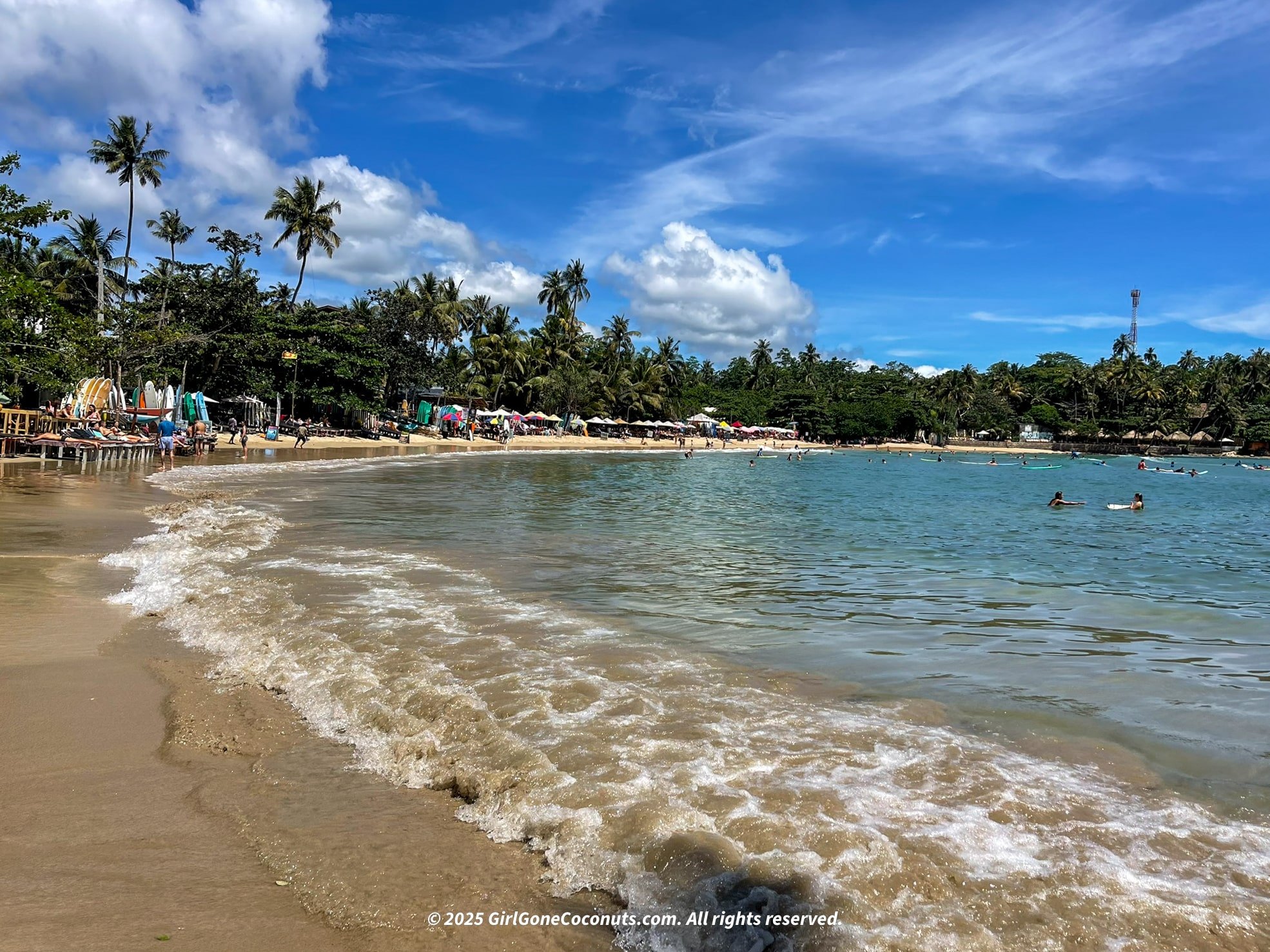
A view over the beautiful Hiriketiya Beach in Sri Lanka. This is where you will spend days 6 through 8 of the 10 days Sri Lanka itinerary.
Welcome to Hiriketiya Beach! This spot perfectly blends chill and lively, appealing to all types of travelers. The palm-tree-lined bay is ideal for surfing, swimming, or sunbathing. The small surf town is easy to explore on foot, with stays, restaurants, and cute cafes spaced out enough to leave pockets of nature. The community of locals, surfers, expats, and backpackers all enjoy life at a slower pace, making it the perfect spot to experience a little bit of everything.
Enjoy the next two days….
Surfing or Sunbathing at Hiriketiya Beach— Hiriketiya Beach, located centrally in town, is a beautiful, small cove-like beach with water rushing right up to the restaurants and lounge chairs during high tide. Lounge chairs are lining the sand, and great surf for every level here. Surfing is a big part of what draws people here— the bay has a mix of small, rolling waves that are great if you are learning, and a few faster breaks for when you are ready to take your skills to the next level. Surf schools and board rentals are spread along the beach.
Pro Tip: The beach gets busy fast, with many popular food spots and accommodations right across from the beach.
Venturing to Nilwella Beach— Not into surf and want a beach that offers a little more adventure? Nilwella Beach is your spot. At low tide, you can walk across the sandbar connecting the two beach coves, then head up a small hill through the jungle to the other side. You will find rocks, tide pools, crabs, fish, and a little palm tree island with amazing ocean views. There is some trash around, so if you have a bag, you can do a quick clean-up along the way. After exploring, lie back on the main cove and let the sun warm your skin.
Relaxing on Dickwella Beach— This is the better beach for relaxing and swimming in peace. It has smaller waves (always check the swell), loads of lounge chairs, restaurants, volleyball nets, etc., along this much longer stretch of sand. Etc.
Decompressing with yoga & sound healing at Jasper House’s rooftop shala— Looking to decompress from life’s troubles or to continue your practice? Jasper House offers daily yoga classes, sound healing, and even wellness retreats on its rooftop yoga shala!
Test your cold exposure strength in an ice bath at Ice Hiriketiya— Did you know short-term cold exposure has been proven to support cognitive, physical, and metabolic functions? Ice Hiriketiya gives you the chance to step up your wellness game or simply have some fun seeing how long you can last in the ice bath.
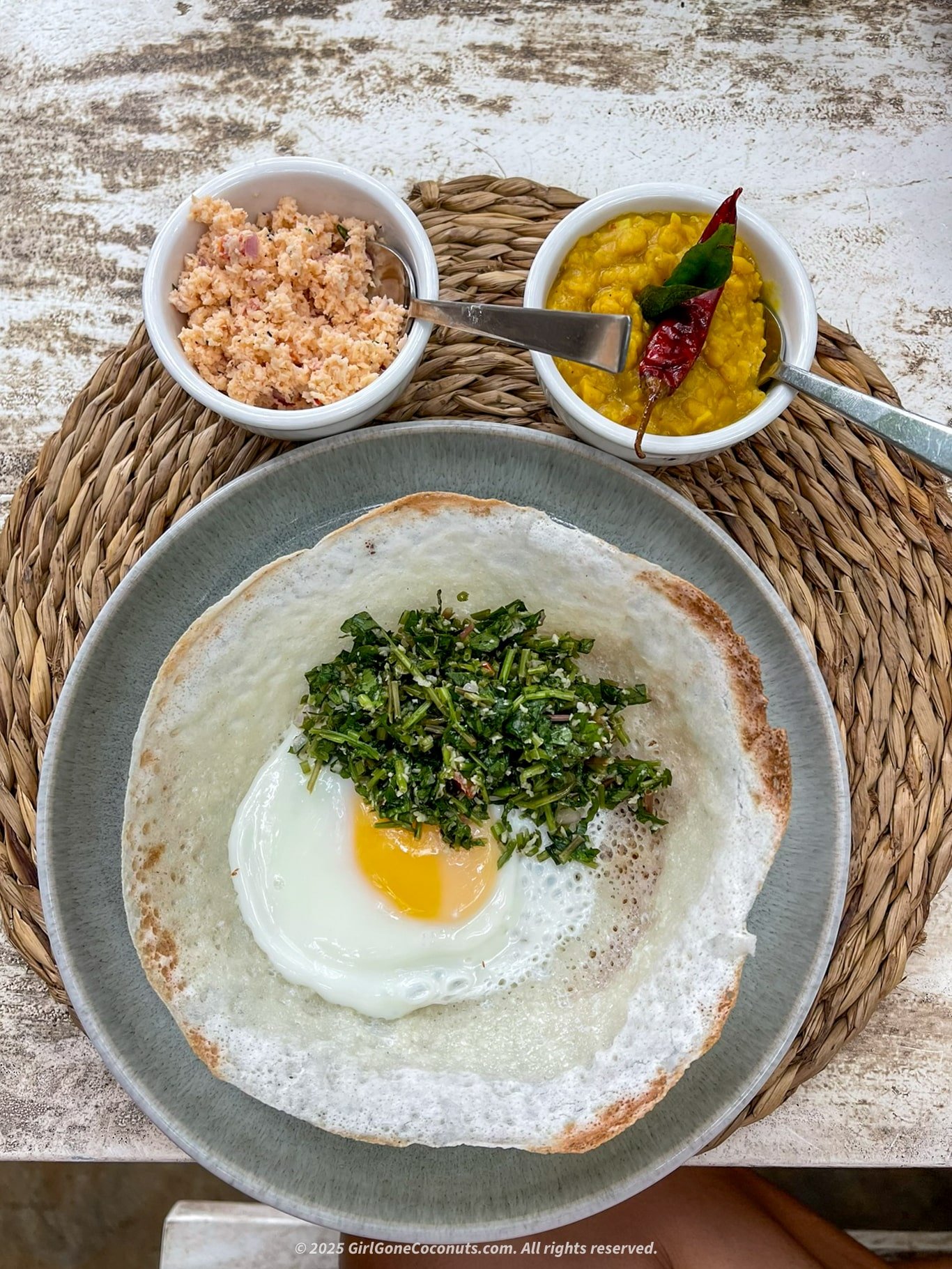
Gluten-free and vegan hoppers from Duni's Hoppers in Hiriketiya.

Malu had some of the most delicious poke bowls in Sri Lanka!
Try some of Hiriketiya’s best cafes and restaurants—
The Jackfruit Vegan Cafe (entirely vegan)
Taboo (more pricey, veggie options)
Malu Poke (a favorite, both gluten-free and vegan options)
Lemon Grass Cafe (delicious Sri Lankan food, veggie options)
Duni’s Hoppers (gluten-free and vegan options, great spot to try hoppers!)
Want even more of the best things to do, cafes, and restaurants in Hiriketiya? Head here!
Day 8: Hiriketiya → Galle
Hiriketiya is about 62 kilometers (roughly 38.5 miles) from Galle, Sri Lanka.
Traveling By Train:
The closest railway station to Hiriketiya is Wewrukannala, a 37-minute walk, 8-minute drive, or 37-minute bus (32 or 334) ride from Hiriketiya Beach.
Departure Station: Wewrukannala, Dickwella
Arrival Station: Galle Railway Station
Travel Time: Around 2 hours
Traveling By Bus:
The best and most direct bus to reach Galle is 32— this is the bus I took. You can always double-check with workers at the bus station on which buses you can take. There are plenty of departures throughout the day. You pay fares in cash onboard to the driver, so bring smaller bills with you.
Departure Station: Dodampahala Junction bus stop, or any of the stops on the map along New Tangalle Road in Hiriketiya
Arrival Station: Galle Central Bus Station
Travel Time: Around 2 hours
Travel By Taxi:
If you prefer traveling in a private car from Hiriketiya to Galle, I recommend sticking with Uber or asking your accommodation to arrange a ride for you ahead of time. Just be sure to agree on the final price before you get in. I did not take this option myself, but the ride will take just over 1-1.5 hours, depending on traffic.
With the average travel time between the two destinations being around 2 hours, you have the option of enjoying another morning in Hiriketiya surfing, sunbathing, or just relaxing before hitting the road. The goal is to arrive in Galle before golden hour, so you have time to check in, shower, and head out for sunset!
Day 8 Itinerary (Post Travel):
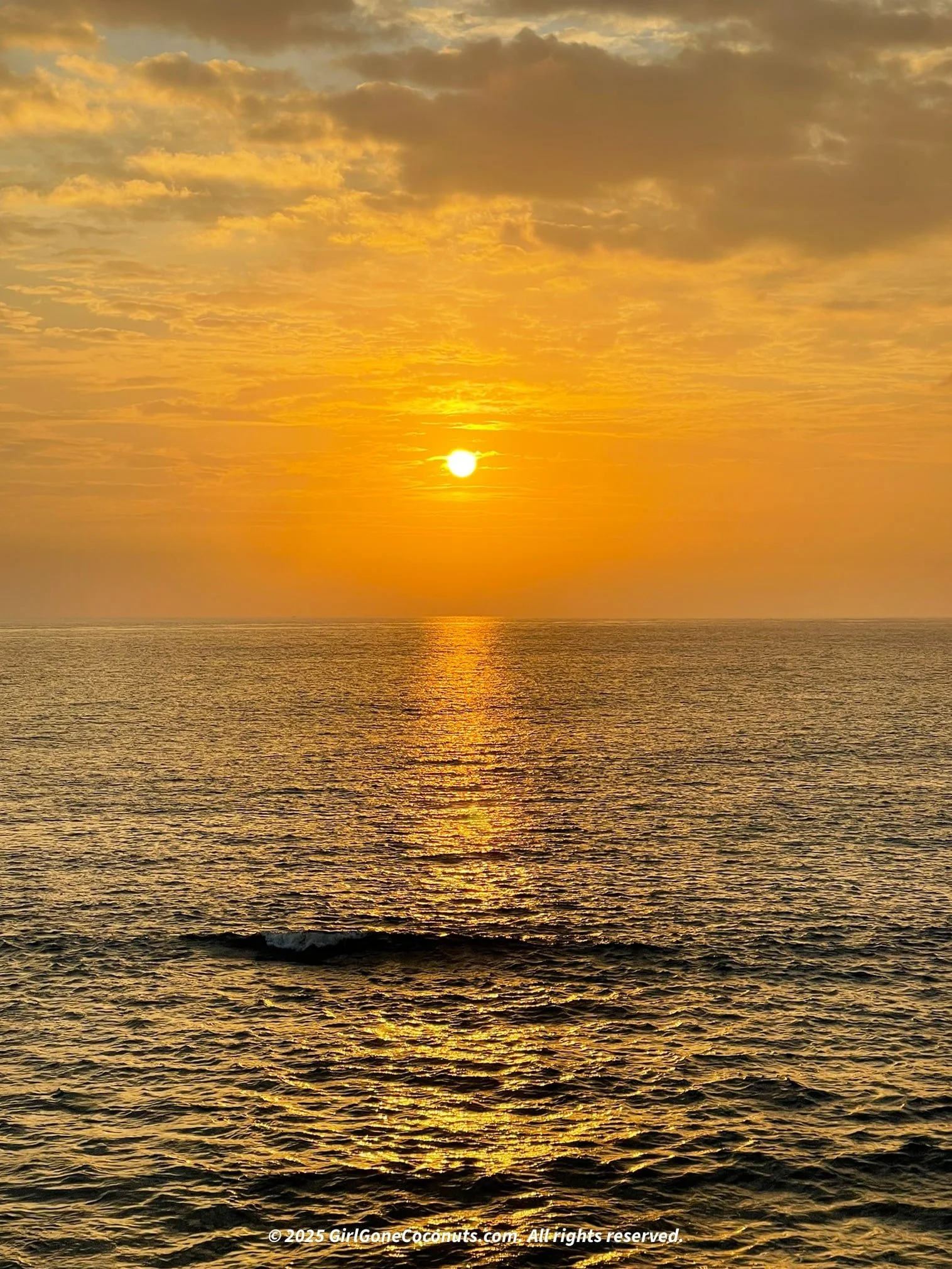
The sunset from Galle Fort in Sri Lanka— one of the best things to do!
After all that hot and sweaty travel, I know I would be ready to eat! Once you have checked into your hotel in Galle, treat yourself to an ice cream or a cold coconut while enjoying golden hour and the sunset along Galle’s incredible fort walls.
For my vegan friends, Cafe 82 has some delicious vegan ice cream you will not want to miss. Spend the next few hours decompressing and soaking in Sri Lanka’s coastline as the sun sets right before you.
To wrap up the day, head over to Puppets Restaurant & Cafe or Coconut Sambol for some dinner and enjoy an early night to catch up on some of the sleep you likely lost waking up early for the safaris!
Day 9: Galle
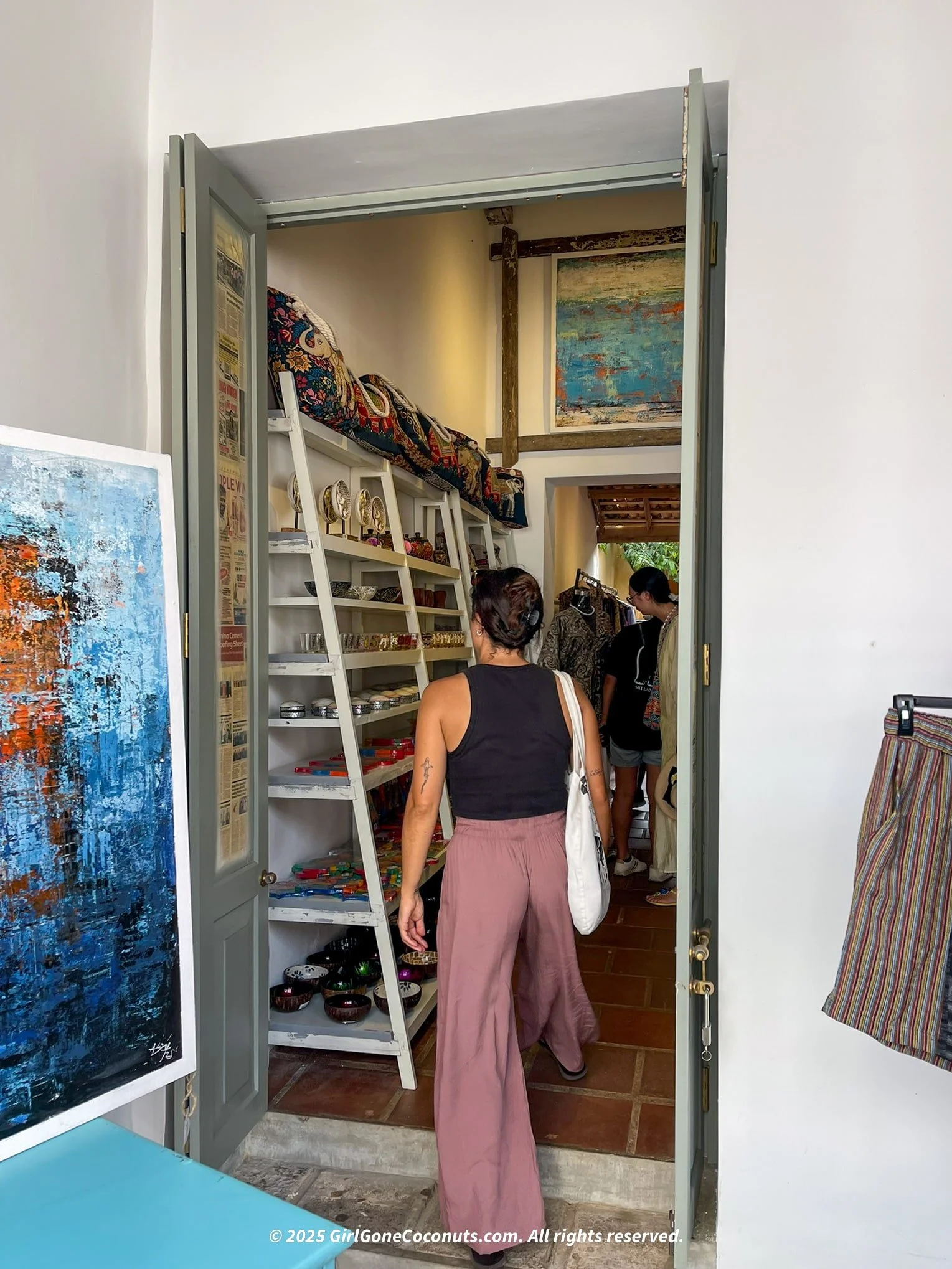
Shopping is one of the best things to do in Galle, Sri Lanka!
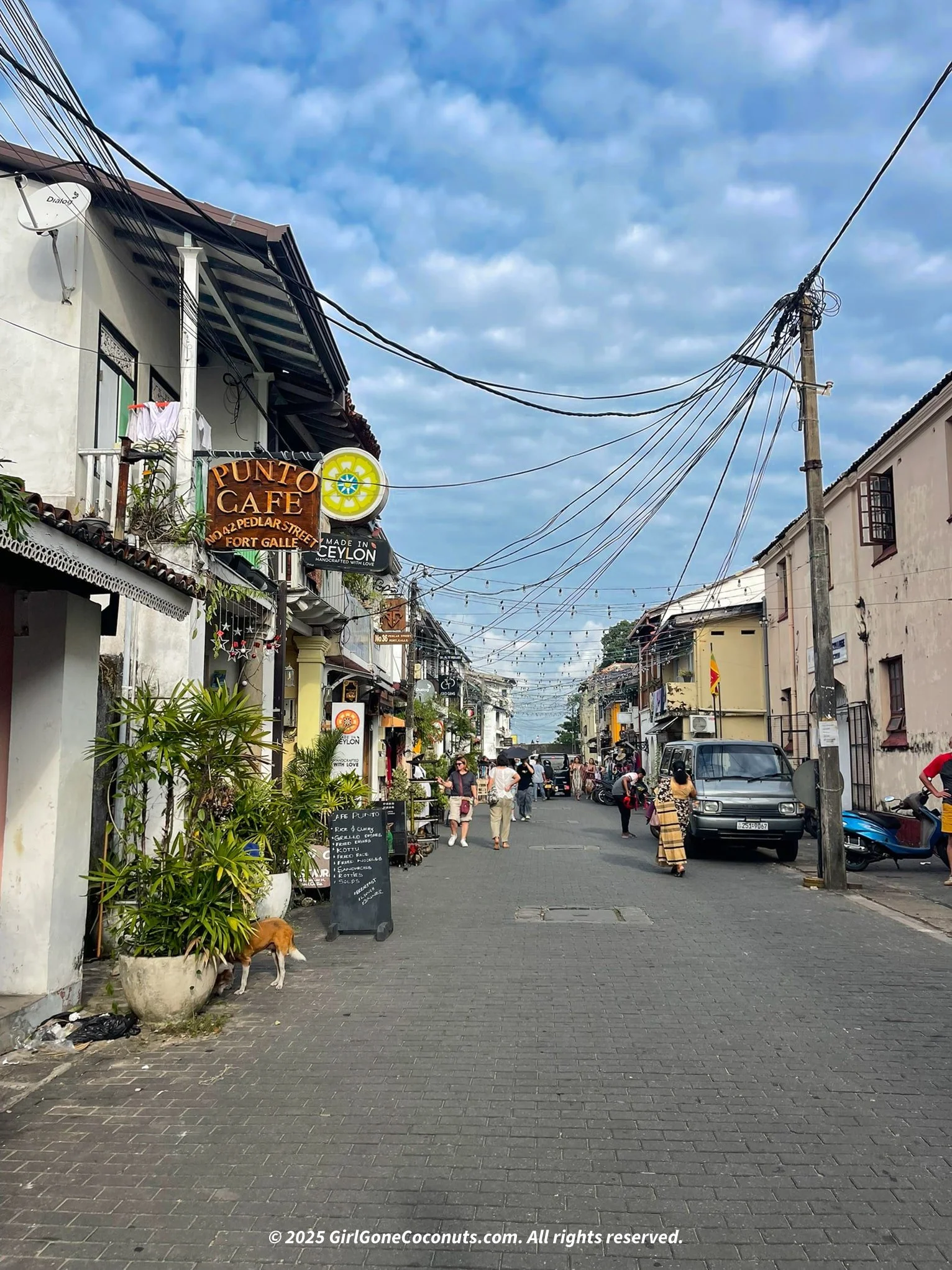
Galle’s charming streets.
In the morning, enjoy a delicious coffee, browse some local shops, and soak up Galle’s street charm…
First things first is coffee… well, and some breakfast probably. I recommend walking over to Kaffi or Coco and Date for something to help you get your day started. I suggest spending the entire day walking so you can fully enjoy Galle’s architectural beauty and charm. After an hour of breakfast, I recommend spending the morning simply wandering Galle’s streets, mixing shopping with some photography. Whether you want to be in the photos or not does not matter— the buildings can easily be the main focus of your shots. When you get a bit too toasty warm, you can hop in a store for a bit longer and enjoy some much-needed air conditioning or fans.
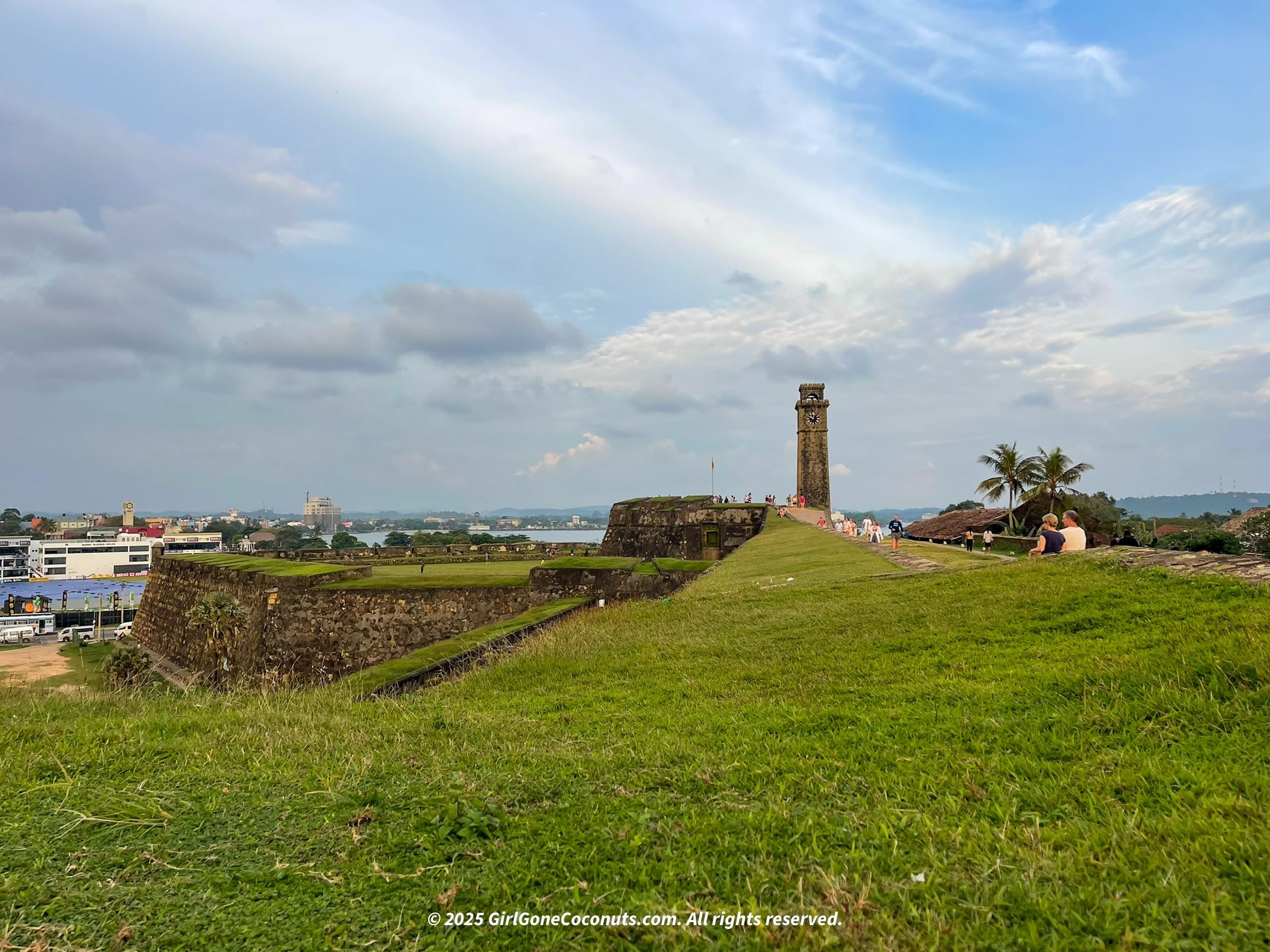
The Galle Fort.
In the afternoon, enjoy some food, visit the Galle Lighthouse, walk along Galle Fort, and, for the history buffs, explore a few of the museums…
After you have finished exploring all of Galle’s streets, it is time for some lunch! All of the options below have vegetarian, vegan, and some form of gluten-free options.
If you want something small, I suggest heading to Dumpling’s Cafe or Maru for a poke bowl.
If you want some delicious Sri Lankan food, try Coconut Sambol.
Craving Indian cuisine? Try Global Kitchen & Cafe.
Spend the rest of the afternoon exploring Galle Lighthouse and walking along the edges of Galle Fort. Galle Fort is a UNESCO World Heritage Site that’s over 400 years old. It was first built by the Portuguese in the late 1500s, but most of what you see today was expanded and strengthened by the Dutch in the 1600s. On one side, you will see some of Galle’s beaches and coastline; meanwhile, on the right, you will see a span of greenery, Galle’s downtown, and perhaps a local cricket game if you are lucky. If last night’s sunset was not enough, you can always pick a spot to enjoy it again for your last night in Sri Lanka.
Into history? Before the sunset, check out one of Galle’s museums— the National Maritime Museum, the National Museum, the Historical Mansion Museum, etc.
Day 10: Galle → Colombo
Galle is about 156 kilometers (roughly 97 miles) from Colombo, Sri Lanka. The journey takes around 2.5 hours by car, 4 to 5 hours by train or bus (depending on the type of service and number of stops), or 4.5 to 6 hours by tuk-tuk.
If you are arriving at Bandaranaike International Airport (CMB) in Negombo and planning to travel to Mirissa or anywhere along the southern coast, you will first need to make your way to Colombo Fort Railway Station for the train, or the Colombo Central Bus Stand in Pettah for the bus. Most long-distance trains and buses depart from one of these. You can either take Bus 187 or a taxi from the airport to the railway station. The bus is around 110 LKR, while a taxi is around 5500+ LKR.
Traveling By Train:
Be sure to check the train schedule. Direct routes from Galle to Colombo only leave 2-3 times per day.
Departure Station: Galle Railway Station
Arrival Station: Fort Railway Station, Colombo
Travel Time: 2 hours
Traveling By Bus:
Some buses you can take to reach Colombo are 2-9, 60, 2-12, and 2. There are also some Expressway-SLTB buses you can take. I recommend double-checking with a worker at the bus station for the next bus you can take to reach Colombo or Negombo (airport), depending on where you are heading next.
Departure Station: Galle Central Bus Station
Arrival Station: Colombo Central Bus Stand, Pettah Station, or Fort Railway Station
Travel Time: 4-6 hours
Travel By Taxi:
If you prefer traveling in a private car from Galle to Colombo or Negombo, I recommend sticking with Uber or asking your accommodation to arrange a ride for you ahead of time. Just be sure to agree on the final price before you get in. I did not take this option myself.
Best Time to Visit the South Coast of Sri Lanka
The best time to visit the places in this South Coast Sri Lanka itinerary is during the “dry season,” from February to March or early April. Keep in mind that it can rain at any time of year. When I visited in January and February, it still rained on some days. December through January are historically a peak season due to holidays.
Udawalawe National Park can be visited year-round, but the dry season from mid-May to the end of September is generally considered the best time for wildlife viewing. During this period, rainfall is relatively low, causing water to become more limited, which attracts animals and makes them easier to spot. If you are interested in birdwatching, specific migratory bird species can only be seen between November and March. Despite these general trends, I visited Udawalawe in mid to late January and had a full day of sunshine during my safari. It had rained the days leading up to my visit, which my accommodation mentioned was unusual for that time of year.
Yala National Park is open year-round, but the best time for spotting wildlife is generally from February to September. The driest months, June to September, make it easier to see animals gathering around the few remaining water sources, and this is also one of the best times to spot leopards.
Mirissa and Hiriketiya have calmer waters and better swimming conditions in the dry season. Hiriketiya surf spots may have better waves outside the dry season.
Galle hosts a Literary Festival in late January, which could affect accommodation availability.
Where to Stay in the South Coast of Sri Lanka
DAY 1-3: MIRISSA
The first two nights will be spent in the coastal town of Mirissa. With fewer than three days here, I recommend booking accommodation closer to the “downtown” area along Mirissa Beach to have easier access to the best restaurants.
Best Accommodation Options in Mirissa For Every Traveler:
Backpacker/Hostel Option: The Hostel (Dorm) or Bird House
Best Low-Budget: Glamour Mirissa or Mirissa Cocoon (I stayed here and it sufficed. Nothing special though, just a budget accommodation).
Best Mid-Budget: Mimoza Mirissa
Best High-End Budget: Peacock Villa or D Canal House
Best Luxury Budget: The Nine Mirissa or Coastline Mirissa Boutique Hotel & Spa
DAY 3-4: UDAWALAWA
For the best safari experience, I highly recommend staying near Udawalawe National Park, in the neighboring town called Udawalawa.
Best Accommodation Options in Udawalawa For Every Traveler:
Backpacker/Hostel Option: Peacock Villa (Non-AC Room)
Best Low-Budget: Walawa Reach Hotel or Ali Weta Safari Resort
Best Mid-Budget: Kottawatta River Bank Resort or Nature House
Best High-End Budget: Mahoora or Jungle Paradise
Where I Stayed (Highly recommend): Peacock Villa (I chose the air-conditioned room)
DAY 4-5: TISSAMAHARAMA (YALA)
For the best safari experience, I highly recommend staying near Yala National Park, in the neighboring town called Tissamaharama. This gives you easier access to the park, making your ride there more enjoyable and less stressful. This also means you can wake up later in the morning to head to your safari!
Best Accommodation Options in Yala For Every Traveler:
Backpacker/Hostel Option: La Safari Inn Tissamaharama
Best Low-Budget: Ariya Tissa
Best Mid-Budget: The Coconut Gardens Hotel & Restaurant or My Village
Best High-End Budget: Yakaduru (Villa) or Wild Lotus Yala, or Cinnamon Wild Yala
Best Luxury All-Inclusive: Wild Coast Tented Lodge
Best High-End Budget (Luxury Glamping): Leopard Nest or Tribe Yala
Best Chain: Hilton Yala Resort
DAY 5-8: HIRIKETIYA
To have walking access to Hiriketiya Beach and the surrounding attractions, I recommend staying anywhere within a 10-minute walk from the beach itself. If you prefer to be slightly further out, you can explore Dickwella or Nilwella as well.
Best Accommodation Options in Hiriketiya For Every Traveler…
Backpacker/Hostel Option: Mount Top or Abinu’s Place (Dorm or Private, I stayed in the private, and I really enjoyed my stay!)
Best Low-Budget: Peak House or House On The Bend
Best Mid-Budget: Wilson's Place or Dots Bay House
Best High-End Budget: Belika Beach
Best Luxury Budget: Kaas Villas
DAY 8-10: GALLE
For the final nights of your 10 days in Sri Lanka, I suggest staying within Galle Fort.
Best Accommodation Options in Galle For Every Traveler…
Backpacker/Hostel Option: Wijenayake's or Sirène
Best Low-Budget: Arches Fort or Ivy Lane
Best Mid-Budget: The Fort House or Prince of Galle
Best High-End Budget: The Merchant or The Bartizan (Sea View Rooms)
Best Luxury Budget: Taru Villas, Rampart Street, or Galle Fort Hotel
You can also find hotel deals at Agoda and Hostel World! You can help support my travel blog by clicking and booking through the links at no additional cost to you!
Travel & Packing Tips for Sri Lanka
What to Pack For Sri Lanka:
An umbrella or rain jacket—Don’t let the weather app fool you, it did rain a lot when I was in Sri Lanka in January/February.
Sunscreen, a hat, and sunglasses for hot days and for the safaris.
Comfortable yet supportive shoes for any hiking, walking, etc.
Mosquito repellent to protect yourself from Dengue. Mosquitos are everywhere in Sri Lanka, and I constantly had so many bites every day.
Loose and comfortable clothing for Sri Lanka’s tropical weather. For females, it is always a good idea to pack some conservative clothing for entering more religious places and areas. This includes clothing that covers your shoulders, knees, and midsection.
General Travel Tips in Sri Lanka
Always carry cash (Sri Lankan Rupee), as some of the shops do not accept cards. The best ATM is the Bank of Ceylon.
Hit the beach early or late to avoid crowds and beat the heat. The earlier you arrive, the more likely you are to rent the perfect lounge chair.
Be cool with the locals and other surfers — give everyone plenty of space in the water.
Swim safely. There are not always lifeguards, so stick close to others and watch for currents. It is best practice to check the swell and weather before heading out.
Do not forget to explore Sri Lanka’s delicious cuisines—papadam, curries, rotti, hoppers, and more!
If you prefer to cook some meals at home, you can shop for groceries at Cargills.
Sri Lanka Safari Tips:
Stay Close to the Park: The closer your accommodation, the more wildlife you might see, and the shorter your ride to the park will be.
Dress in Layers for Early Morning Safaris: Mornings can be chilly, especially on the way to the park. I wore long pants, a T-shirt, and a light coat to stay comfortable.
Camera/Smartphone: For those wildlife shots—duh. A zoom lens is ideal for capturing animals that are farther away.
Choose the Right Tour Length: A half-day tour (around 4 hours) is usually perfect. Longer tours can feel too long, and shorter ones can feel rushed.
Private Tours for More Attention: Group tours can be crowded. If you want a more focused, relaxed experience, a private tour is the way to go. This also allows you to specify what you want to focus on during the safari, i.e., if your goal on the safari is to strictly see as many elephants as possible.
Clarify Pricing & Hire A Knowledgeable Guide: Ask about the total cost of the tour upfront to avoid any surprise fees for park entry or guides. A great guide will point out hard-to-see wildlife and show you a guidebook to help identify the animals.
Respect the Wildlife To Sustain Life: Keep a safe distance from animals. Do not feed or disturb them.
Sri Lanka Safety Tips:
Always follow basic rules of safety while traveling, including not wandering around in dark areas at night, not leaving valuables out or unattended, etc.
Stay hydrated—grab a fresh coconut or carry water with you. DO NOT drink the tap water.
Download an eSIM to help navigate the buses and stay online. I always use Airalo fo,r my eSims.
Watch out for sea urchins at some beaches. I saw some near Parrot Rock in Mirissa.
Be careful with the street dogs. Most are kind and well-fed in touristy areas, but rabies does exist in the country (in more animals than just dogs). I highly recommend getting the rabies vaccination before traveling. The disease is fatal.
Mistakes can happen, especially when traveling to new places, surfing, etc., so I recommend always having some form of travel medical insurance. Safety Wing is by far the best travel medical insurance. It has saved me numerous times by covering hospital visits when I was sick during my travels in Asia.
Emergency Contact Number: Police: 119 | Ambulance: 110
You can find a complete list of Sri Lanka’s Emergency #’s by location here.
Frequently Asked Questions
Do I need a visa to visit Sri Lanka?
Yes. For U.S. citizens (& many others), you must obtain an Electronic Travel Authorization (ETA) before arriving in Sri Lanka. This is a tourist visa with double entry allowed for over 30 days. Please refer to the Sri Lanka Entry Requirements section.
How many days is ideal in Sri Lanka?
As I always say, this depends on the type of traveler you are. To see the entire country? For me, as a traveler who likes a slower pace to really experience a place, I would say you need 2-3 months to discover Sri Lanka (and perhaps that is not even in full). As a backpacker looking for a quick glimpse into Sri Lanka, I think 7-14 days will do. BUT it will be tiresome with all of the moving about since destinations are a bit further away from one another.
How much does it cost to travel Sri Lanka’s south coast for 10 days?
This comes down to how you travel. You could likely get away with 25-40 USD per day for backpackers if you are staying in dorms, eating local food, and taking the public buses or walking. The biggest expenses will be accommodation (if not in a dorm), the safaris, and private taxis.
Is Sri Lanka safe for solo travelers?
I have not traveled solo through Sri Lanka, so I cannot speak on behalf of that experience. But I can say that I never once felt unsafe in the more visited destinations of Sri Lanka, including the ones in this itinerary.
Can you drink tap water in Sri Lanka?
NO— I would not recommend it.
Is it possible to visit Yala and Udawalawe on the same trip?
Yes! I did it, and it is included in this itinerary. The two places are only 1.5 hours or so apart.
Is it better to start in Colombo or end in Colombo?
Essentially, you need to start and end in Colombo to reach the airport. However, if you want to explore Colombo, I recommend doing so at the end of your trip. I would prioritize other places first.
There Are So Many Stray Dogs In Sri Lanka, How Can I Help?
The easiest thing you can do is feed them. You can give them plain white rice and boneless chicken or any other boneless meat, as well as dog food. Many grocery stores sell dog food, but keep in mind that some dogs are picky eaters—do not take it personally if they do not eat what you offer. Of course, a starving dog will eat just about anything. Leaving out some water in a plastic bowl or even an empty coconut can also be helpful. Coconut water is highly hydrating and can benefit dogs as well.
Many dogs, especially those further from tourist areas, are afraid of human interaction. If a dog seems hesitant, simply place the food and water nearby and step away to give them space. I promise they will eat once you leave!
If you come across an injured or sick dog, you can notify Animal SOS, a non-profit organization that rescues, rehabilitates, and rehomes stray animals in need. They currently have over 2000 dogs!! WECare is another incredible group providing veterinary care and sterilization programs to improve the lives of street dogs.
If you notice a dog with fleas or ticks and plan to stay in the area for a while, you can reach out to either organization for help in getting medication to distribute.
If you have more time, consider volunteering with one of these organizations to make an even bigger impact. I volunteered with Animal SOS, and it was a truly amazing day that left my heart even fuller.
Trying to decide between Udawalawe and Yala for your Sri Lanka safari? Here is my honest comparison after visiting both.
Heading to India next? Jaipur needs to be on your itinerary — here is why.