Chiang Rai Itinerary: Perfect 1 to 2 Day Guide to Temples, Cafes, and Local Secrets
Welcome to Thailand!
Welcome to Chiang Rai, a province in Northern Thailand known for its mountainous landscapes and the intricately designed White and Blue Temples. It is one of my favorite day trips from Chiang Mai, not only for its breathtaking temples but also for the peaceful, slower-paced escape from some of Thailand’s busier destinations.
After spending nearly a week exploring this northern gem, I have created the best Chiang Rai itinerary for your 1 or 2 day trip. From wandering through lush tea plantations to getting lost in the details of the White Temple, keep reading to discover the must see experiences and best things to do in Chiang Rai.
Oh & as always practice sustainable tourism while traveling please :)
Disclaimer: This post contains affiliate links. If you click through and make a purchase, my blog may receive a commission at no additional cost to you.
The Best Chiang Rai Itinerary
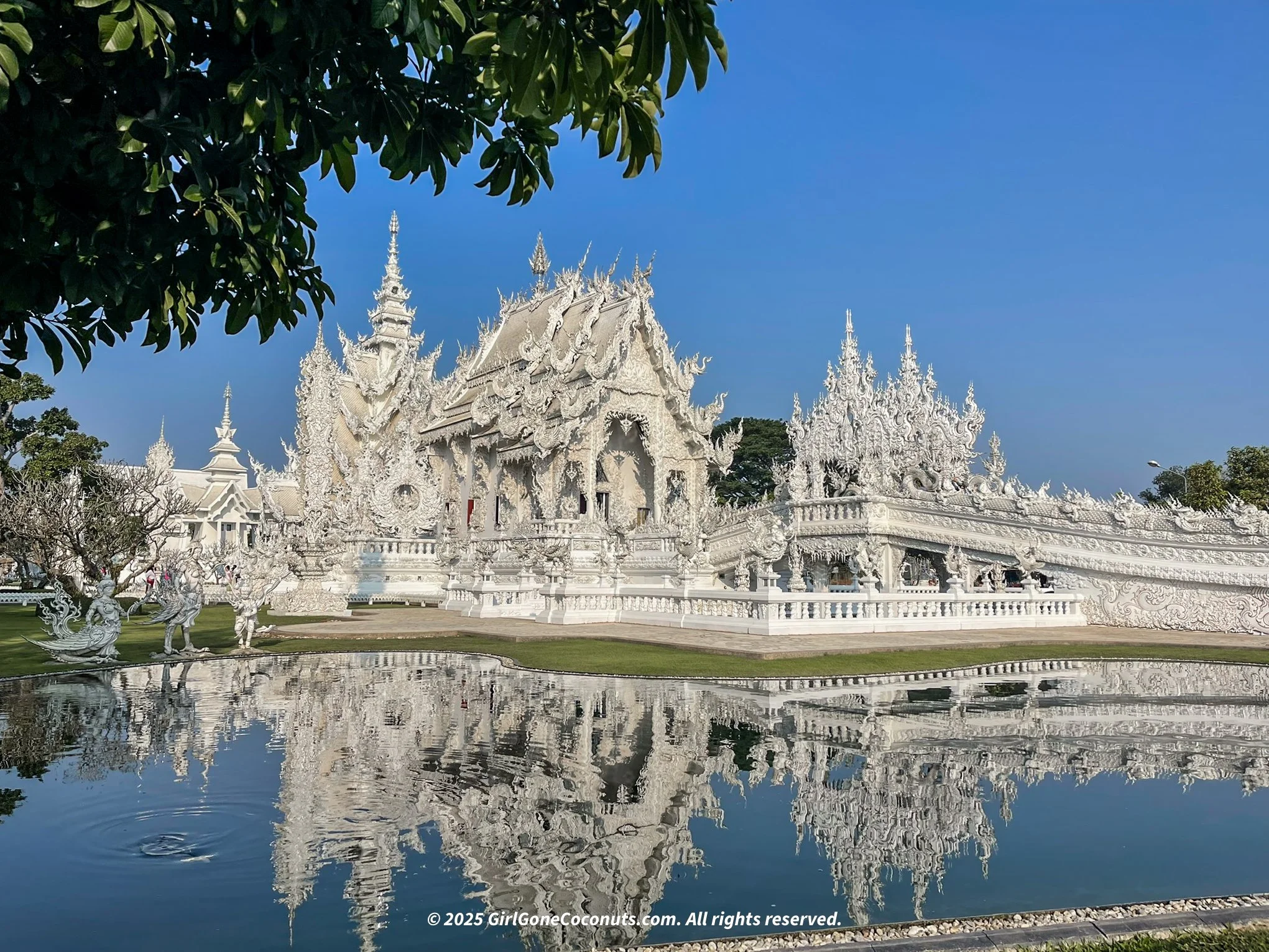
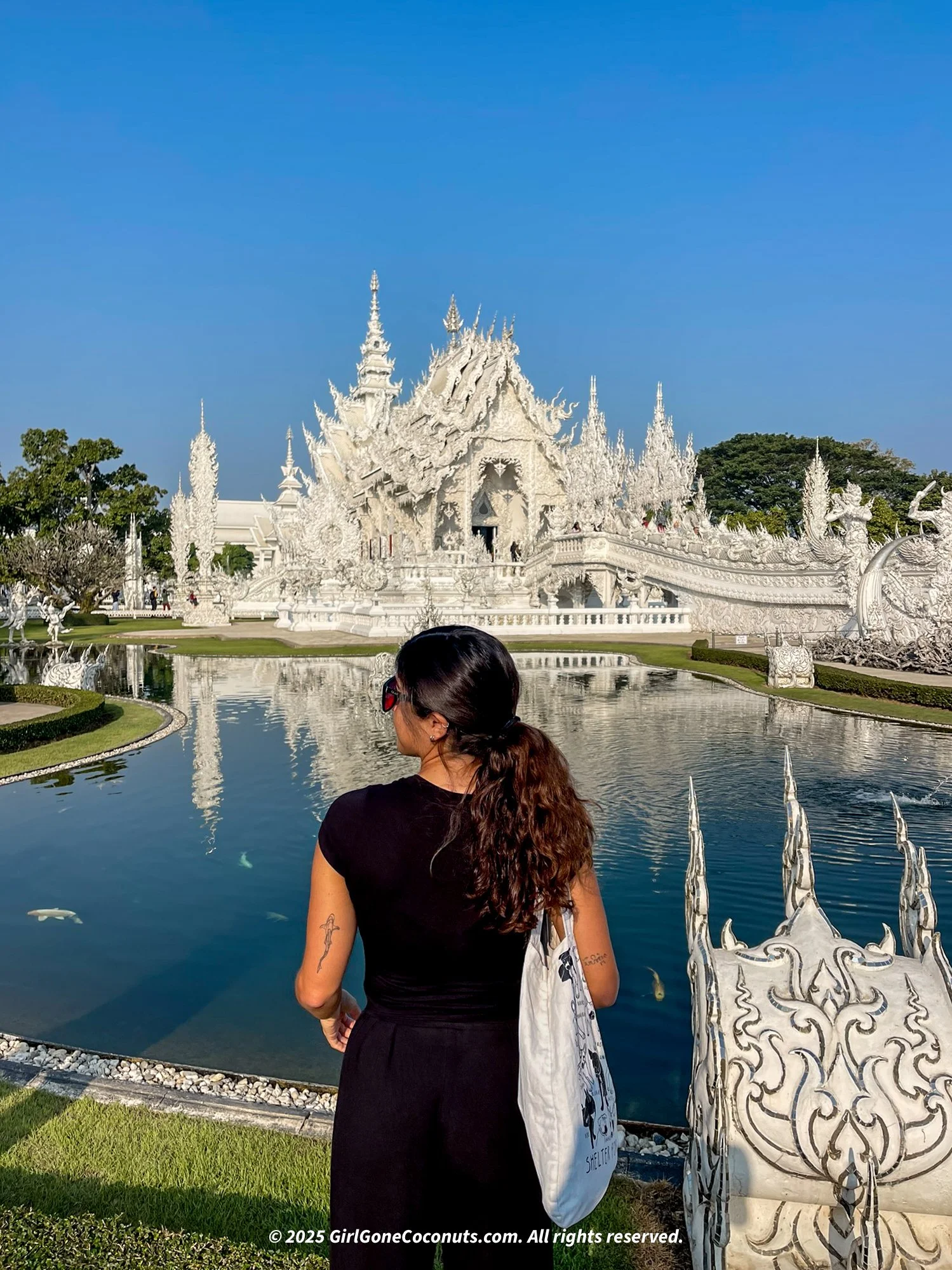
The iconic White Temple (Wat Rong Khun), the number one thing to do on this Chiang Rai itinerary for every traveler.
Chiang Rai Map
Before we jump into the itinerary, you might be wondering if one or two days is enough time in Chiang Rai. My answer is yes. If you enjoy a moderately busy travel itinerary, one to two days is the perfect amount of time to see the highlights of Chiang Rai. However, if you prefer slower travel with more relaxed days, or you want to venture farther out to places like the Golden Triangle, nearby waterfalls, and surrounding viewpoints, adding an extra one to two days would be ideal. No matter how long you stay, this Chiang Rai itinerary is the perfect starting point to help you plan your time in town.
Chiang Rai 1 to 2 Day Itinerary
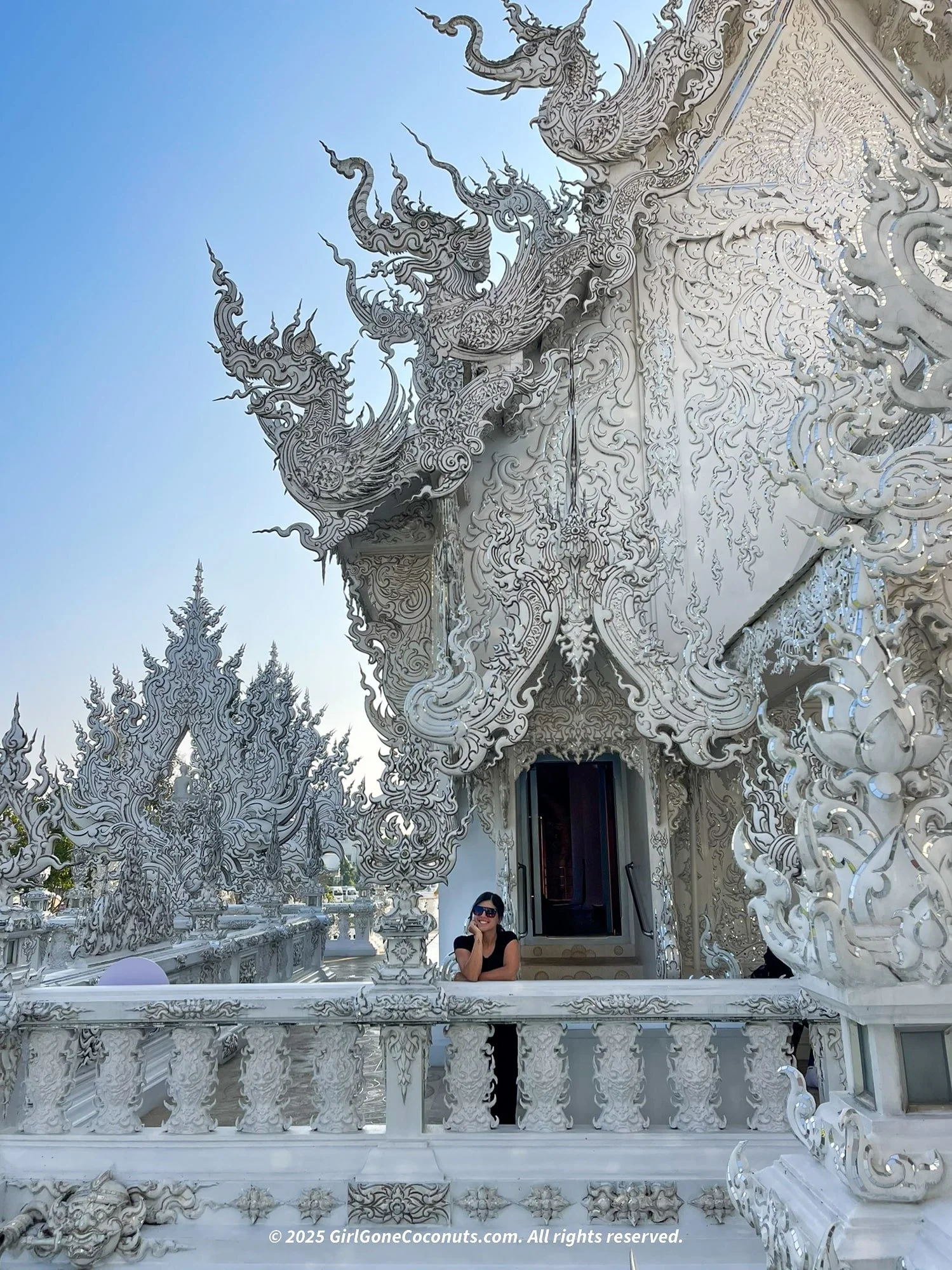
The White Temple of Chiang Rai.
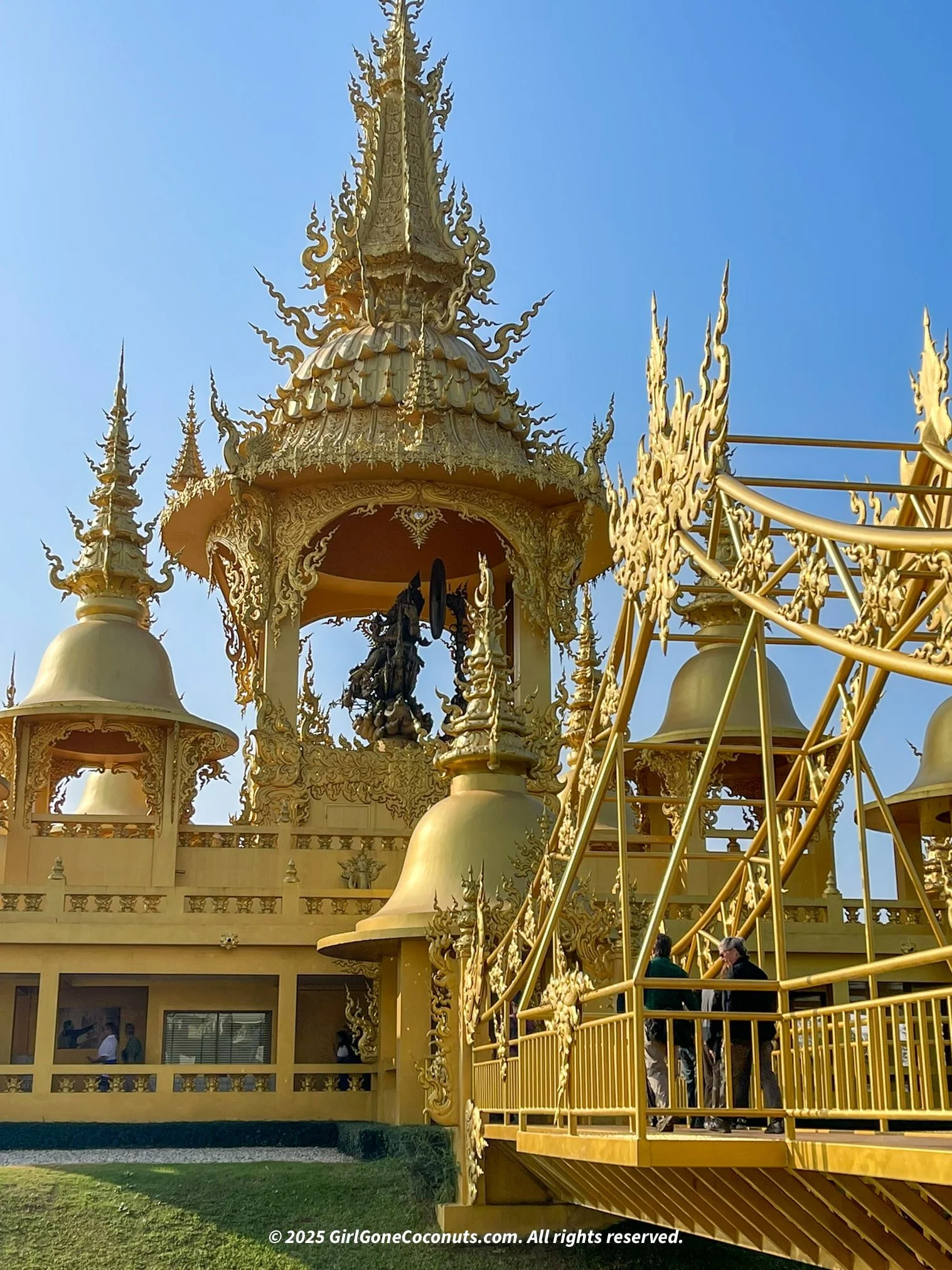
The Ganesha Worship Hall in The White Temple of Chiang Rai
Day 1: Temples, Tea, & Markets
Good Morning, and welcome to Chiang Rai! I suggest grabbing a cup of coffee or tea to go from AGAPE or Alio Slow Bar before heading on over to your first stop!
Chiang Rai Itinerary Stop 1: Wat Rong Khun
Also known as Chiang Rai’s iconic White Temple, Wat Rong Khun is a Buddhist temple designed and built in 1997 by Thai artist Chalermchai Kositpipat. The white color was chosen to symbolize the purity of Buddha. Just before the bridge connecting to the temple, you will notice intricate carved faces and spirits etched into the stone. To the left of the temple, you will find a golden structure that serves as a museum for the temple’s artwork. And yes, behind the temple sits the famously luxurious golden toilets, which definitely live up to their royal reputation!
The temple opens at 8:00 AM, and arriving right at opening is the best way to avoid crowds and the day-trip groups coming from Chiang Mai. The temple is a quick 15-20 minute ride from the main downtown area in Chiang Rai and is fairly priced via Grab. Plan to spend around 1 to 2 hours exploring the area.
Hours: 8:00 AM - 5:00 PM
Entrance Fee: 100 baht (3.50 USD)
This may increase to 200 baht as of 2026.
It is an extra 50 baht to enter the museum in the golden building.
Getting there: About 13 km from downtown Chiang Rai. You can take a Grab, hire a taxi, or arrange a private driver for the day.
Tips for Visiting:
Arrive early: The temple opens at 8:00 AM, and early arrival helps you beat the crowds and day-trip groups from Chiang Mai.
Dress modestly: Shoulders and midsections should be covered, as this is still a sacred site.
Time needed: Plan to spend 1–2 hours exploring the temple, the museum, and snapping photos.
Photography: The bridge and all around the White Temple make for creative, Instagrammable photo-ops.
Chiang Rai Itinerary Stop #2: Garden of Reeds
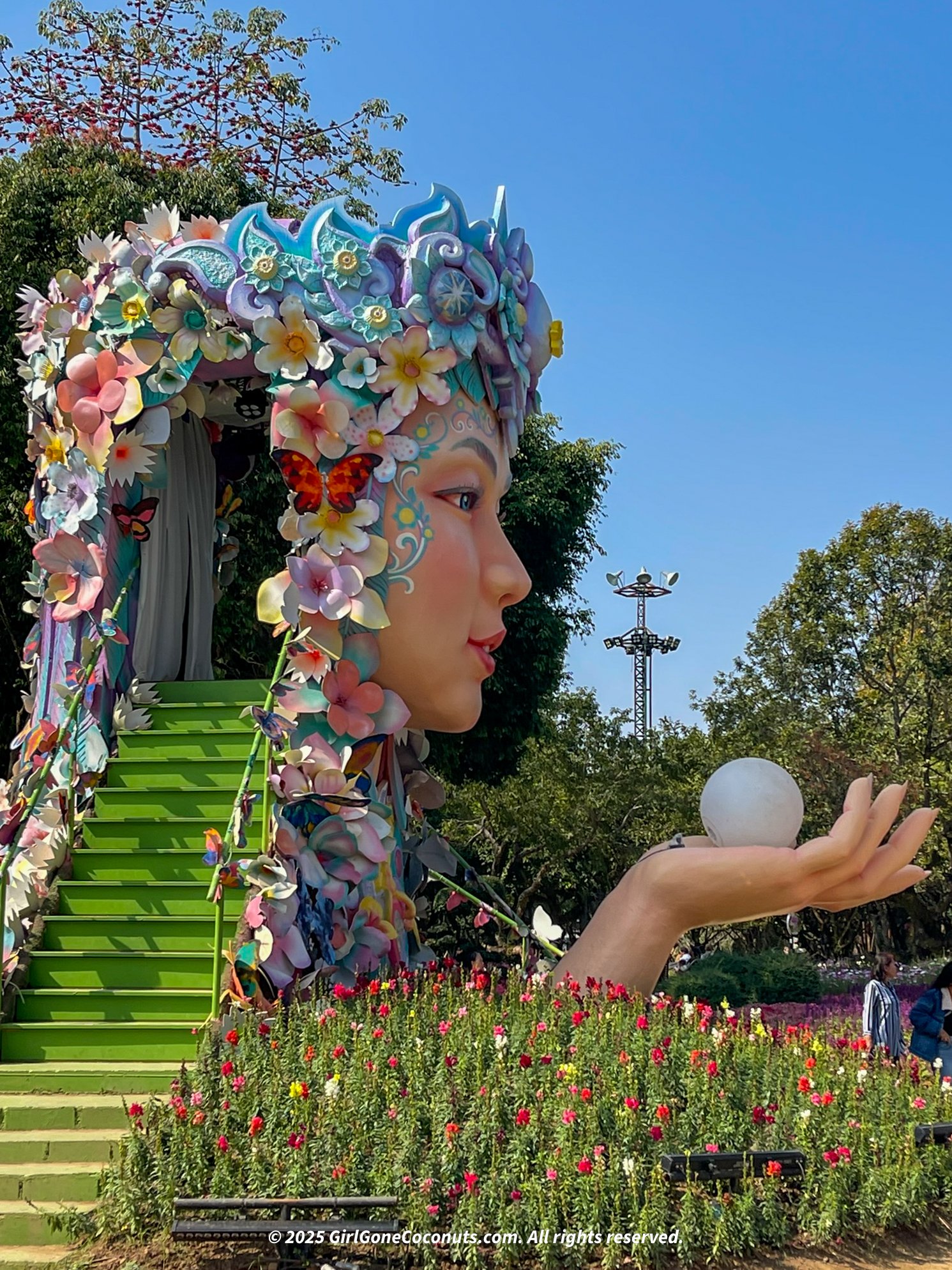
A floral exhibit at the Garden of Reeds in Chiang Rai.
Once you finish exploring the White Temple, hop into another Grab and head about 25 minutes north to the Garden of Reeds, a botanical garden that runs along the Kok River. The area features walking paths and small bridges that guide you through colorful flower beds and over the river, along with unique statues and artistic displays like the one pictured above. While I was there, I spotted a variety of flowers, including chrysanthemums, lilies, and azaleas. This spot becomes even more popular during the Chiang Rai Flower Festival in the winter months, when the gardens are in full bloom.
Hours: 6:00 AM - 8:00 PM
Entrance Fee: Free!
Getting there: About 6 km from downtown Chiang Rai. You can take a Grab, hire a taxi, or arrange a private driver for the day.
Tips for Visiting:
Time needed: Plan to spend 1 hour exploring the grounds. It could also be a lovely spot to enjoy a coffee or tea.
Photography: The dense, colorful flowers and creative displays make this the perfect spot to capture some beautiful photos.
Chiang Rai Itinerary Stop #3: Suea Ten Temple, Wat Huay Pla Kang, & Guan Yin Statue
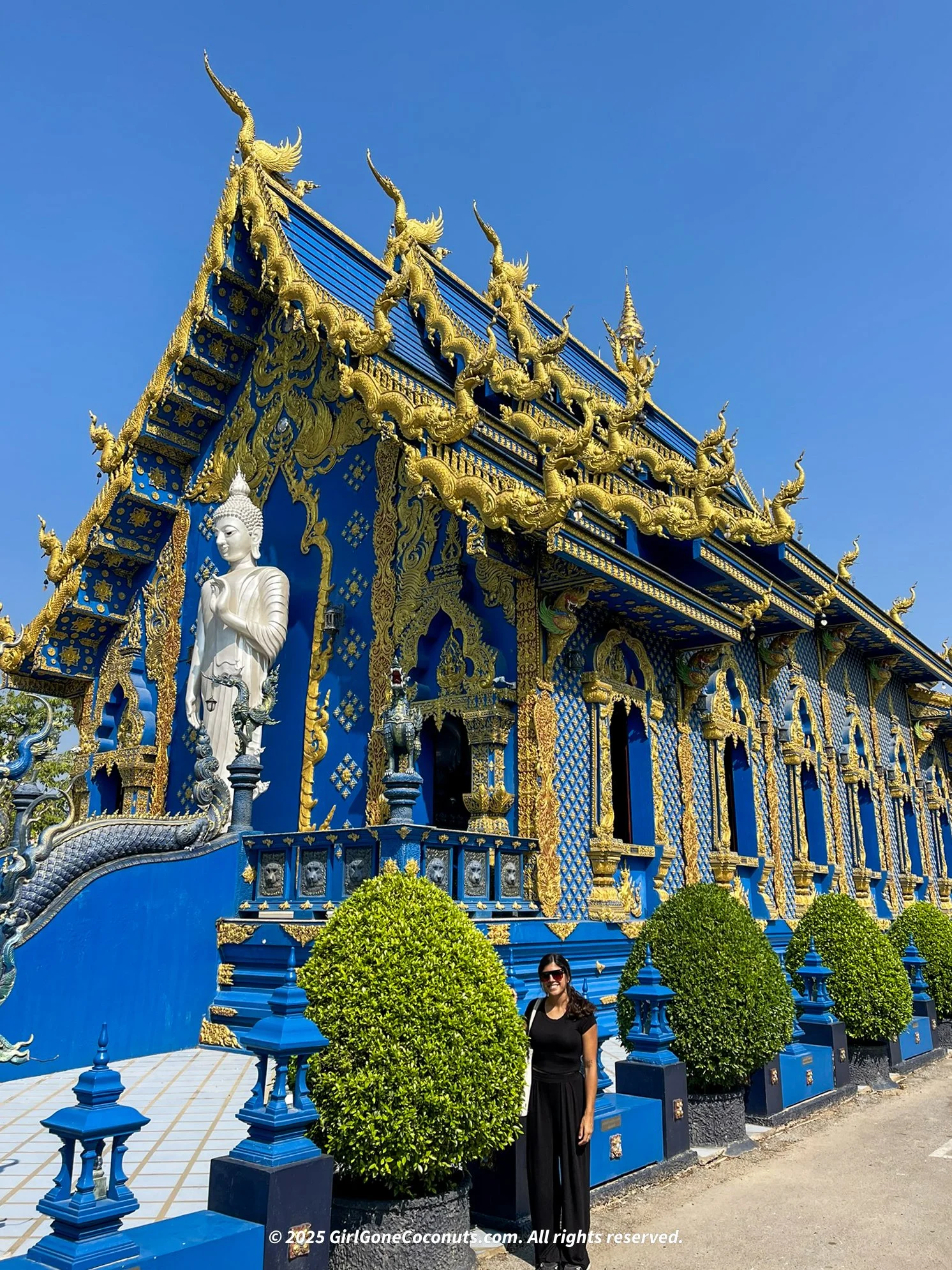
Rong Suea Ten Temple, or the Blue Temple, in Chiang Rai, Thailand. Another priority for your Chiang Rai itinerary.
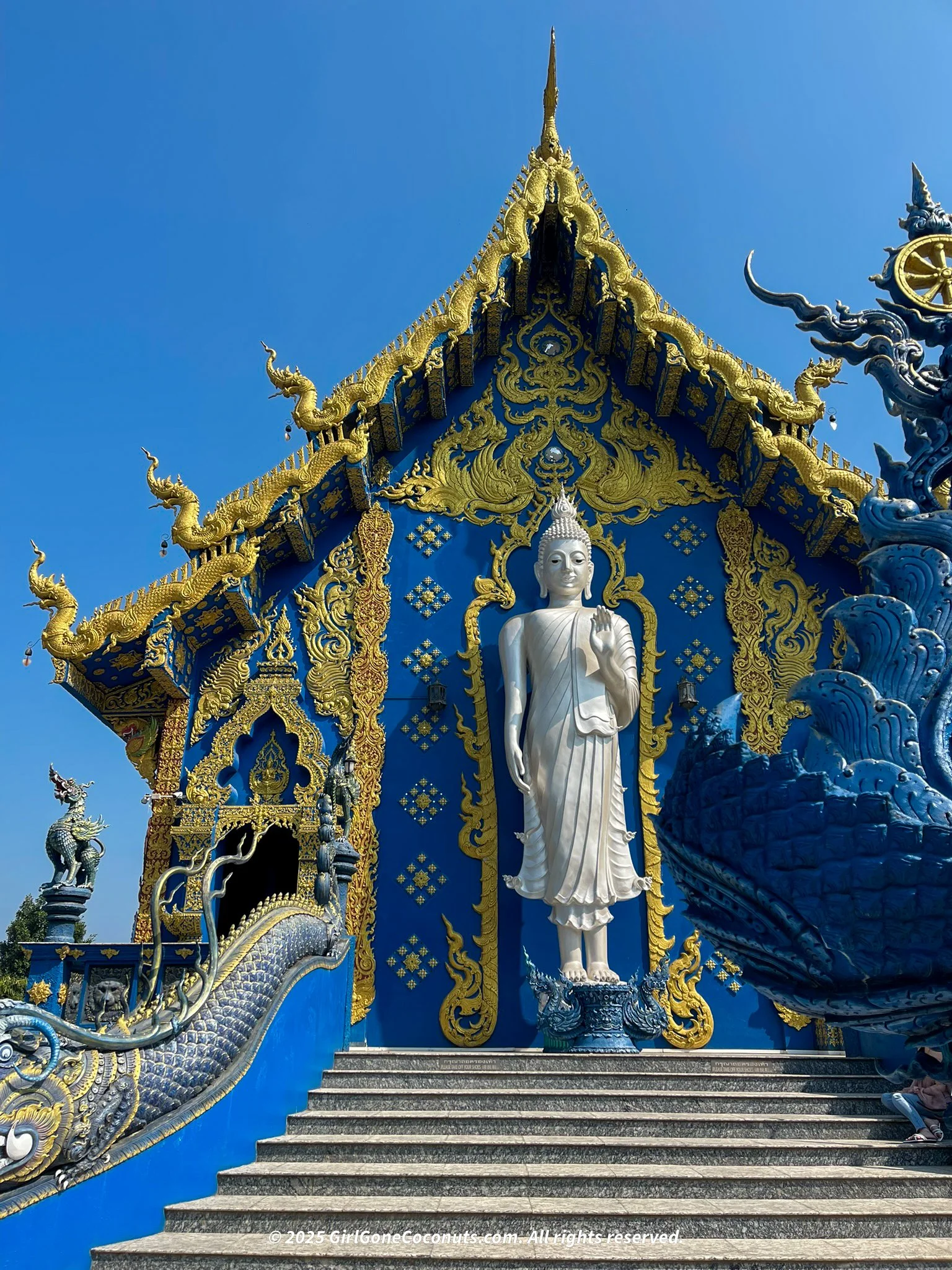
Your next few stops on your Chiang Rai itinerary are the famous Blue Temple (Wat Rong Suea Ten) and another impressive temple complex, Wat Huay Pla Kang. The Blue Temple is a smaller but striking complex painted in bright shades of blue and gold, with two massive sculptures welcoming you inside. It is absolutely worth the stop and feels like a temple unlike any other, offering a really unique contrast to the White Temple.
Wat Huay Pla Kang, on the other hand, sits higher up in the hills and is best known for its giant white Guan Yin Statue. Both the temple complex and the statue offer 360 views over Chiang Rai. With its strong Chinese and Thai influences, this stop once again feels completely different from the other temples you have visited. The Guan Yin Statue represents compassion, mercy, and enlightenment, honoring the Goddess of Mercy who delays Nirvana to help others. Aside from the beauty of the structure itself, the real highlight here is riding the elevator to the top for incredible views over Chiang Rai, especially during sunset.
Blue Temple Hours: 7:00 AM - 8:00 PM
Wat Huay Pla Kang & Guan Yin Statue Hours: 7:00 AM - 9:00 PM
Entrance Fees: Free!
If you plan to ride up the elevator in the Guan Yin Statue, there is a 40 baht fee (1.30 USD).
Getting there: From the Garden of Reeds, the Blue Temple is a 10-minute car ride or 30-minute walk. Wat Huay Pla Kang is another 15 minutes from the Blue Temple.
Tips for Visiting:
Dress modestly: Shoulders and midsections should be covered, as these are still sacred sites.
Time needed: Plan to spend 30 minutes to 1 hour exploring the Blue Temple, as it is much smaller compared to the White Temple. You can plan to spend around 1 hour exploring Wat Huay Pla Kang and riding up to the top of the Guan Yin Statue.
Chiang Rai Itinerary Stop #4: Sawanbondin Tea House
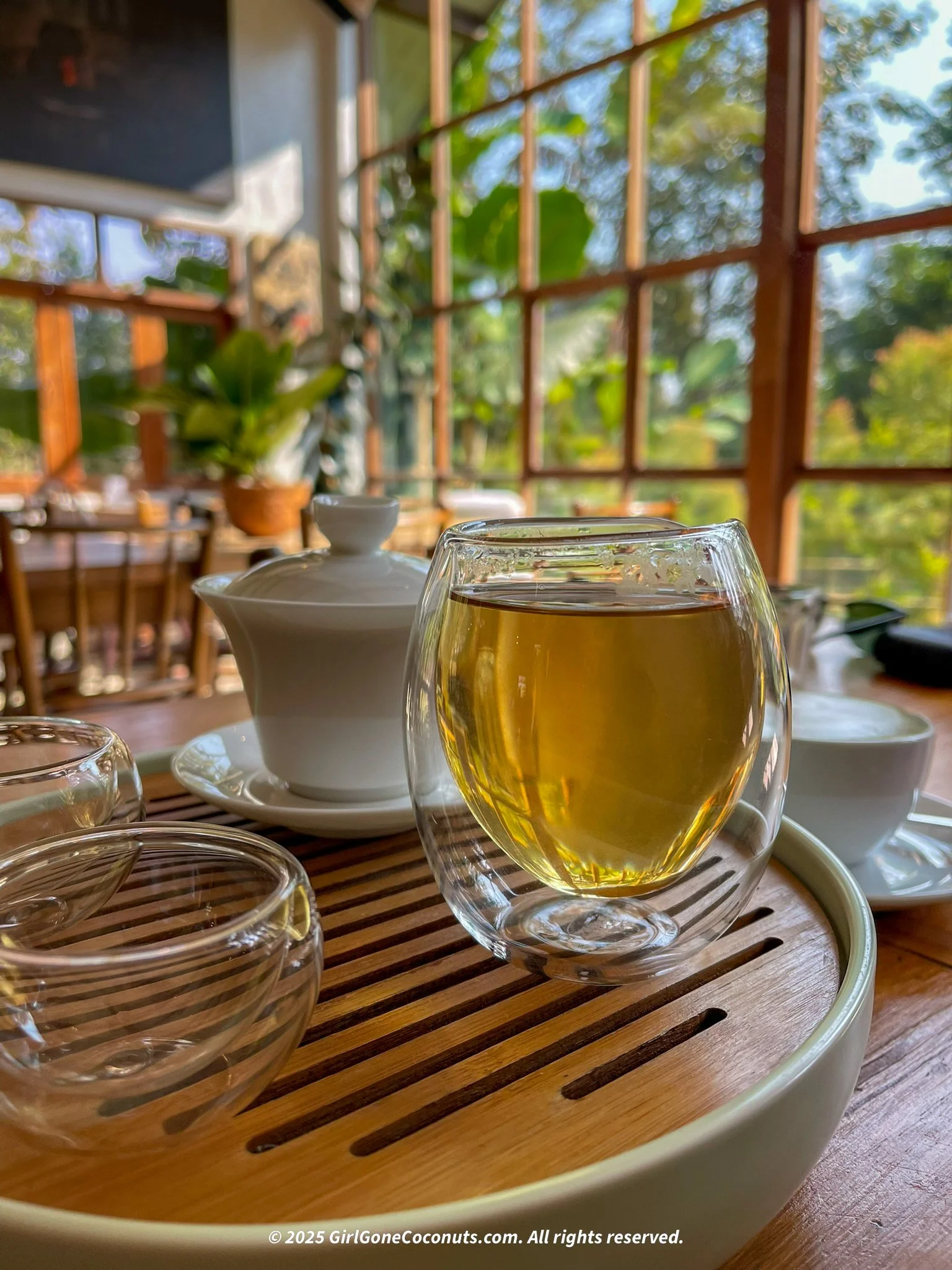
Some refreshing tea tastings at Sawanbondin Tea House in Chiang Rai, perfect for a midday itinerary break.
Ready for a refreshment break? If you love tea and honey, I recommend visiting Sawanbondin Tea House. Sawanbondin Tea House, featured in the New York Times, has a bright, airy atmosphere with floor to ceiling windows that flood the space with natural light. Lush greenery is woven throughout the space, giving it a modern yet earthy feel that is calm, refreshing, and perfectly in tune with Chiang Rai’s natural surroundings. Here, you can enjoy a free honey tasting from their nearby hives, homemade tea tastings, biscuits and cookies, or a few coffee and matcha beverage options. There are plenty of vegan options on the menu as well.
Bonus: They have some pottery lessons!
On the other hand, if you prefer somewhere more popular with a wider range of food options, head to the Instagram hotspot Lalitta Cafe. This is the spot you have likely seen all over social media, with large colorful lily pads leading up to a waterfall. It has a nature fantasy vibe that makes you feel like you are stepping into a fairy garden or Eden-like wonderland. This spot is best for those wanting something more filling to eat, with more of a sit down restaurant feel.
Chiang Rai Itinerary Stop #5: The Clocktower
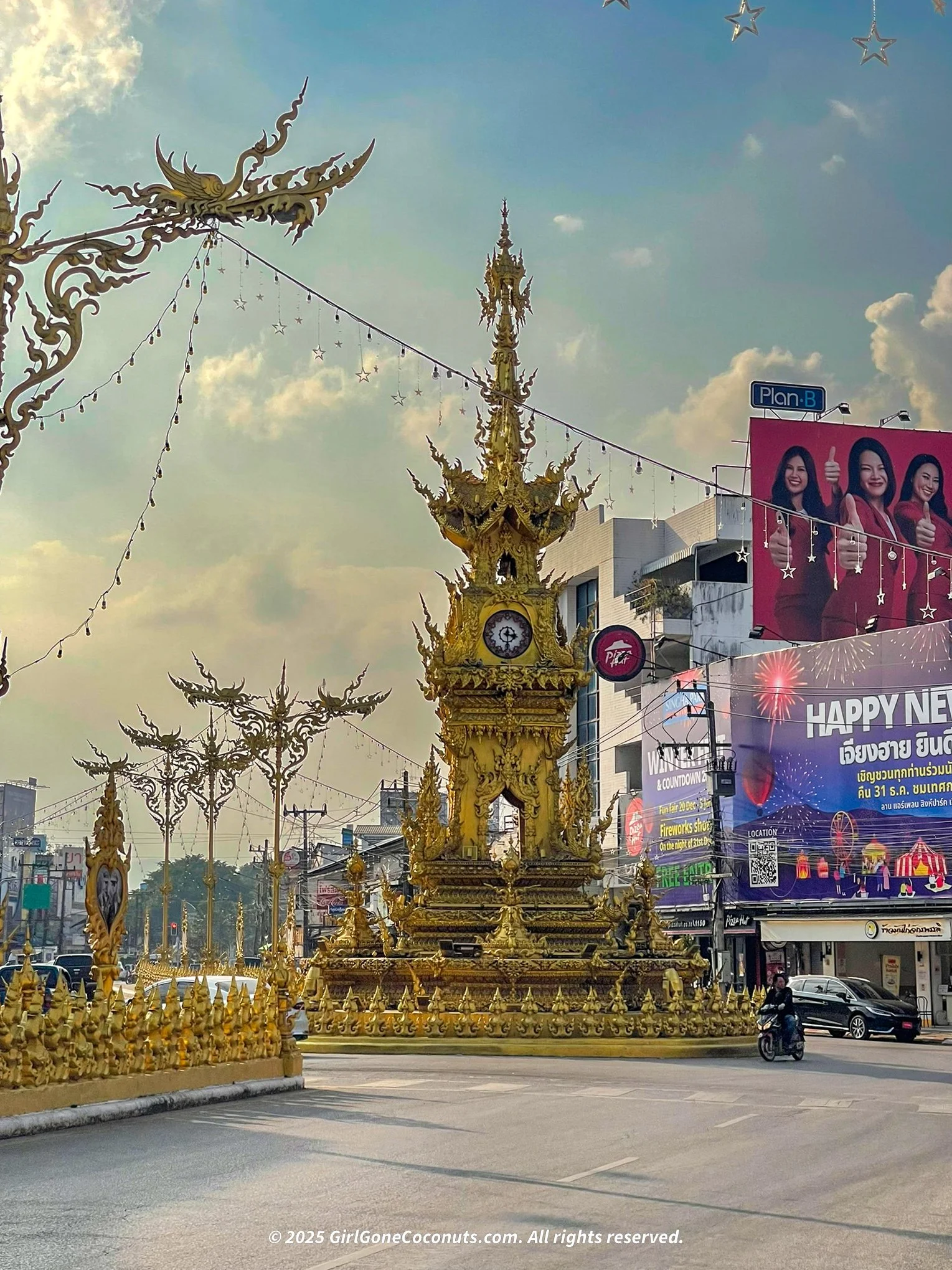
The beautifully crafted Chiang Rai clocktower.
As the night pours in, wander Chiang Rai’s downtown streets over to the Chalermphrakiat Clocktower for a 10-minute colorful light and music show. The light show is a fun little display that takes place every night at 7, 8, and 9 PM. Also nearby is the King Mangrai Monument, a statue for Chiang Rai’s founder.
Chiang Rai Itinerary Stop #6: Night Market
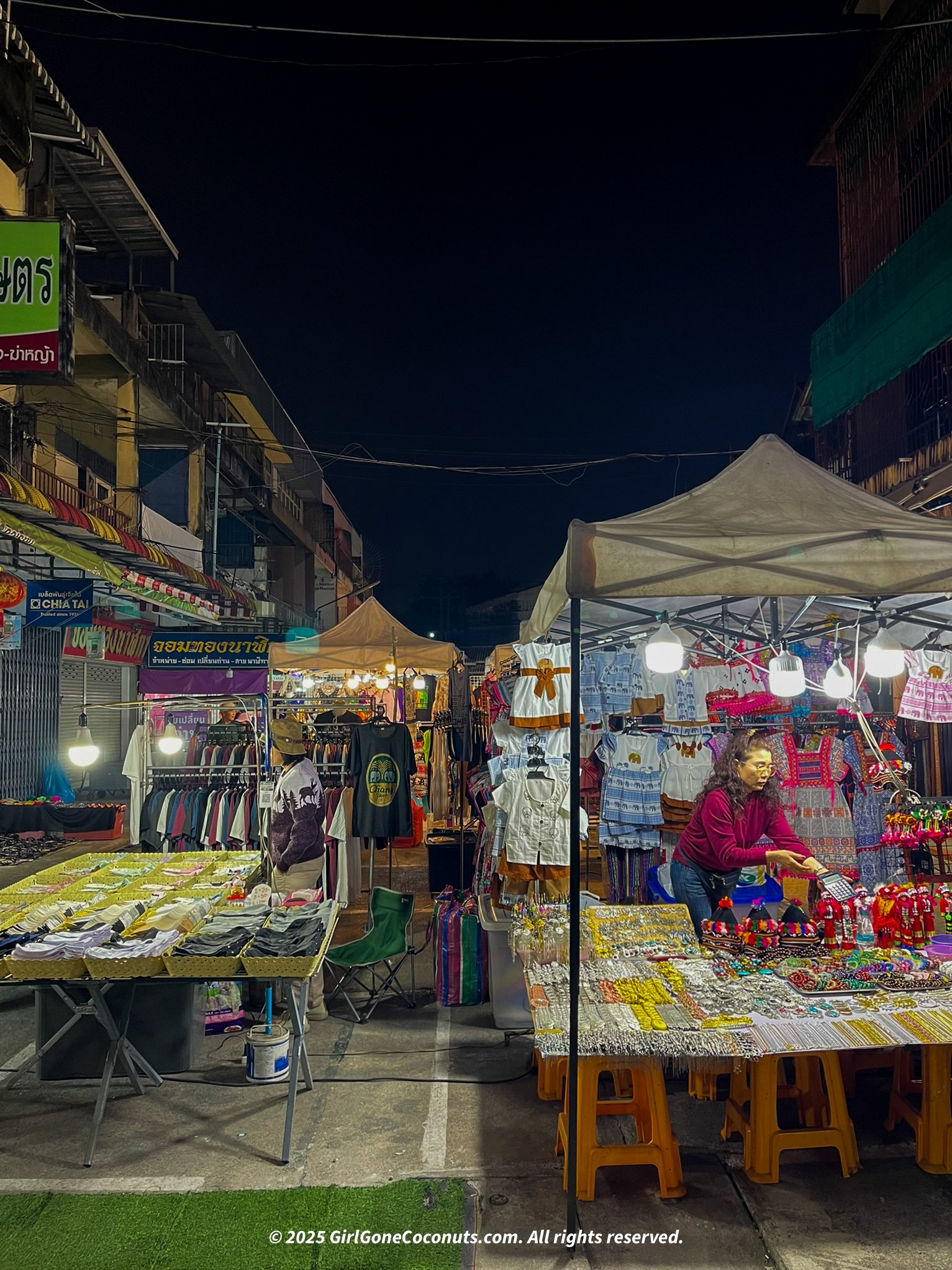
Chiang Rai’s Night Bazaar.
What better way to end your first day in Chiang Rai than exploring the Night Bazaar? Every evening from around 6:00 PM, stalls selling clothing, souvenirs, and food line two small streets in the city. While this market is not the biggest, it still offers a little something for everyone. From bags and pants to pad thai, smoothies, and mango sticky rice, it is definitely worth a wander. I recommend arriving early to avoid the late-night crowds.
If you do not find anything that suits your taste for dinner, some of my favorite nearby restaurants include Accha Authentic Indian, Barrab Restaurant, and the Hungry Wolf, which also offers gluten-free options.
Visiting on a Saturday or Sunday?
Skip the Night Bazaar and head to Chiang Rai Walking Street, one of the largest night markets in town. Running along Thanalai Street from around 3/4 PM to midnight, you will find tons of stalls to explore, local live music, and plenty of food options to taste test all of Thailand’s flavors. Think noodles, fresh rolls, mochi, mini pancakes, and more, all for much less than at the Night Bazaar. This market has everything you would expect from a Thai city night market: artwork, street fashion, trinkets, live music, and more. You definitely will not walk away empty-handed, and it is a fun way to end your Chiang Rai itinerary on a high note.
Day 2: Explore Chiang Rai’s Landscapes
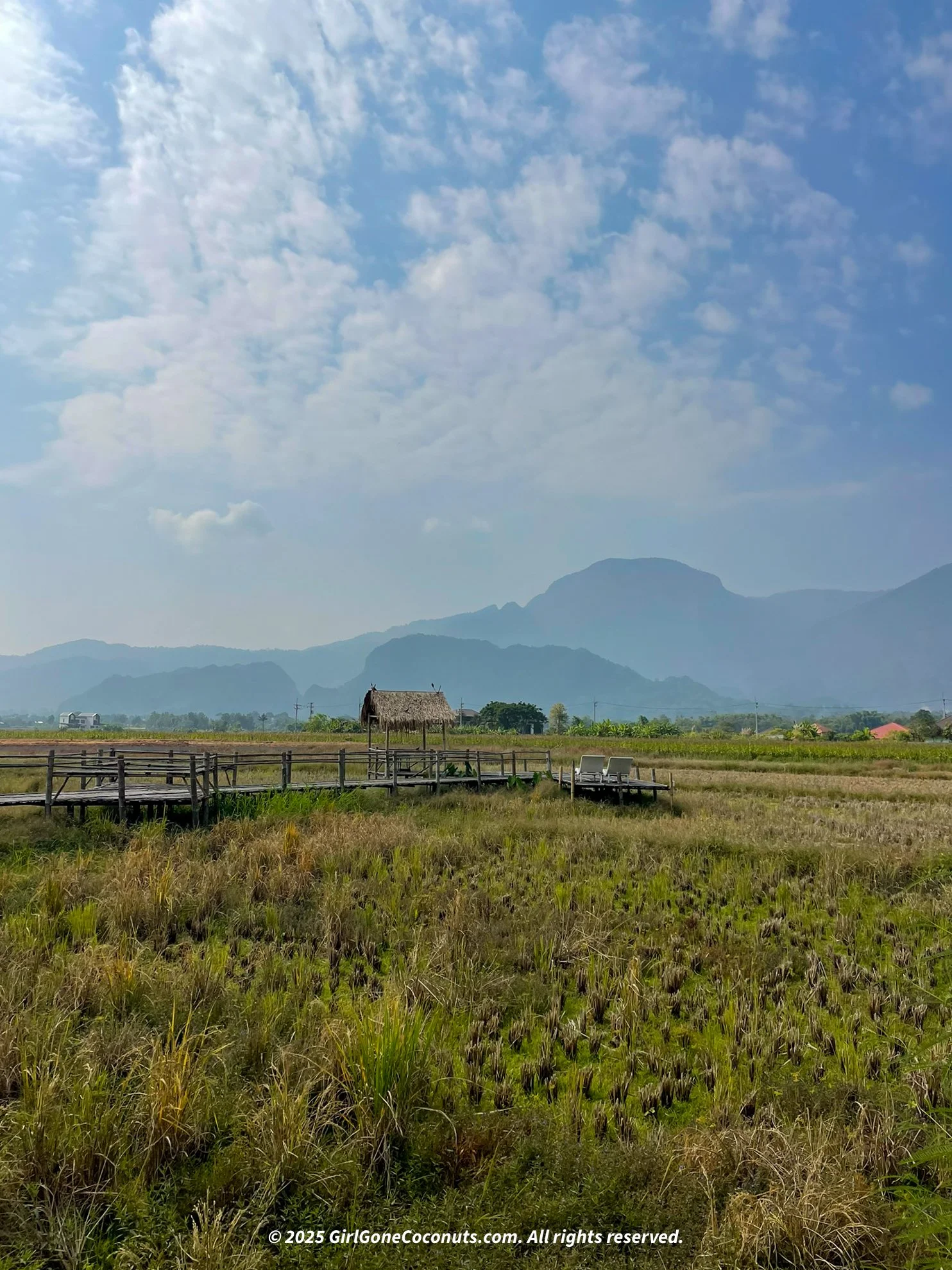
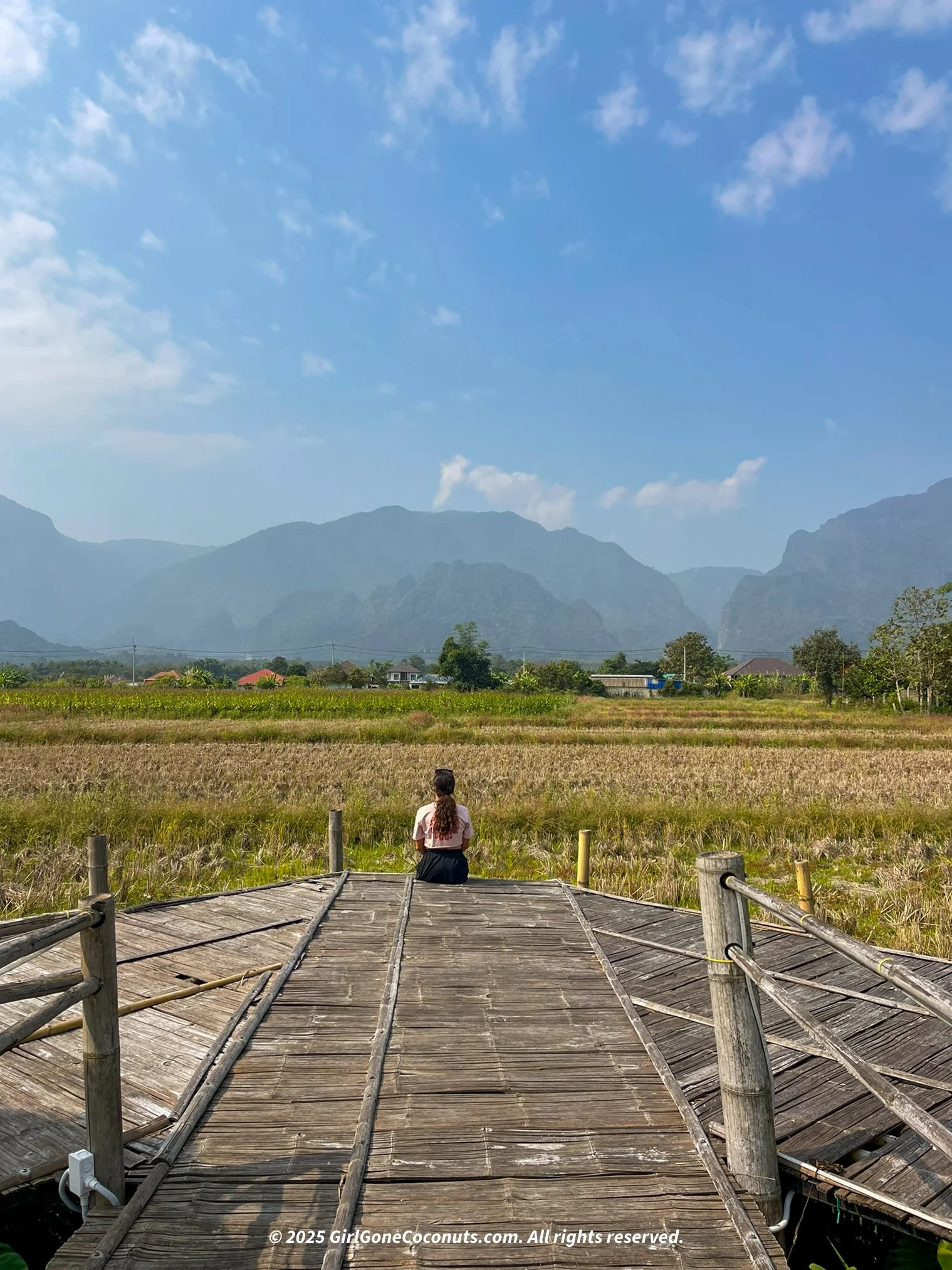
For the second day of your Chiang Rai itinerary, you have quite a few options, from exploring lush green tea plantations and waterfalls to venturing up to the famous Golden Triangle!
The Best Chiang Rai Day Trip Ideas:
Option 1: Visit Choui Fong Tea Plantation
Choui Fong Tea Plantation Hours: Daily 8:00 to 5:30 PM.
If you are looking to slow things down on your second day in Chiang Rai, a visit to Choui Fong Tea Plantation is a beautiful and relaxing option. Located around one hour from downtown, this serene hillside plantation feels worlds away from the city and offers some incredible scenic views.
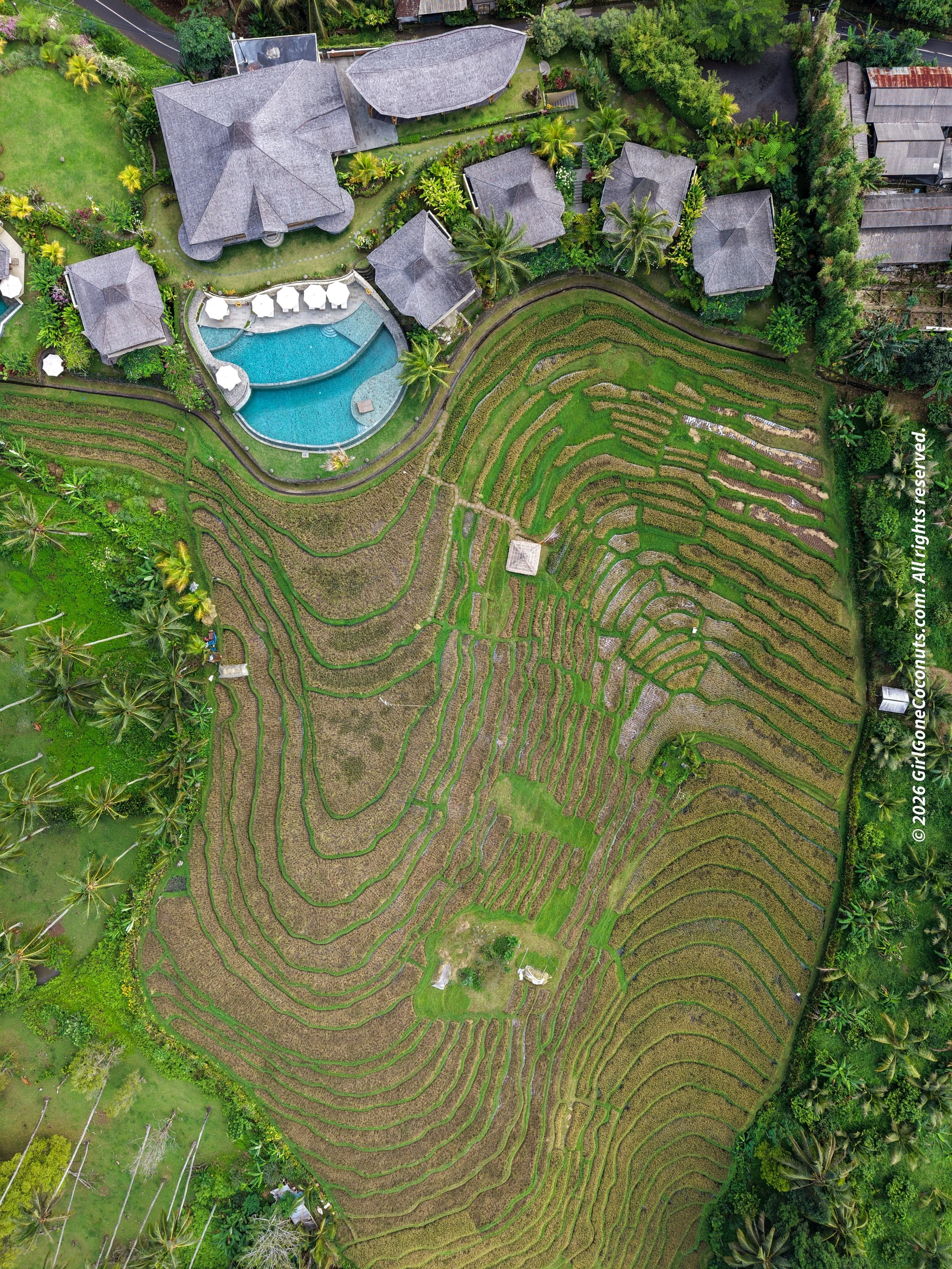
Choui Fong has two separate plantations. The section visitors can explore is located in the Mae Chan district, covering over 1.6 square kilometres, filled with rows of lush green tea bushes trailing down the hillsides. The views are just as dreamy as the iconic rice terraces of Bali.
The easiest way to visit is by ordering a Grab car or joining a tour, which often combines the tea plantation with nearby attractions, like this one! A tour can be a great option if you prefer not to drive yourself or want a more relaxed experience, with some information about the destinations.
I recommend visiting in the early morning or late afternoon to enjoy exploring the landscapes during cooler temperatures and better lighting for photography. There is a cafe at the plantation, where you can try local dishes and tea-based treats, including green tea, iced tea, green tea cake, soft tea leaf steamed buns, and so much more. I found it to be the perfect place to sit, take in the view, and enjoy a slower pace for a couple of hours to decompress.
Option 2: Venture to the Golden Triangle
A visit to the Golden Triangle is a popular option for a second or third day in a Chiang Rai itinerary, especially if you are curious about the region’s history and geography. Located around 1.5 hours north of Chiang Rai, this famous viewpoint marks the meeting point of Thailand, Laos, and Myanmar, where the Mekong and Ruak rivers converge.
The Golden Triangle was once known for its role in the opium trade, and today it offers a mix of viewpoints, museums, riverside walks, and cafes. The main viewpoint provides clear views across the river into neighboring countries, and it is a unique feeling to stand in one place and see three nations at once.
The easiest way to visit is by joining a day tour, which often includes stops at nearby attractions such as the Opium Museum, local villages, or temples along the way. I recommend visiting mid-morning or later in the afternoon, when the heat is more manageable and the visibility is hopefully clearer.
Personally, I did skip the Golden Triangle, as my partner had been there before and we wanted to prioritize other points of interest. It is not a place you need hours to explore, but it works well when paired with other northern attractions or as part of a guided tour, like this one.
Option 3: Explore Waterfalls & Soak in Hot Springs
Another great day trip option for your itinerary is to escape into nature and explore Chiang Mai’s waterfalls and hot springs.
Khun Korn Waterfall: Khun Korn, the tallest waterfall in the province, is located just under 30 kilometers from Chiang Rai inside Khun Korn Forest Park. This relatively easy 1.9-mile out-and-back trail takes you through bamboo groves and rainforest and across streams, before reaching the waterfall. The hike takes around 1 hour in total, and I recommend visiting earlier in the day to avoid the crowds. Though I did not choose to enjoy a refreshing swim in the waterfall, quite a few people were swimming in it.
Pro Tip: Pack some mosquito spray and sturdy shoes!
Huay Mae Sai Waterfall: Located just 19 kilometres from town, this waterfall is a smaller, yet lovely spot to relax in nature with fewer crowds. This 1.2-mile out-and-back trail is relatively easy and takes around 30 minutes to complete. You can swim in this waterfall as well.
Huay Kaew Waterfall: Located roughly 25 kilometres from Chiang Rai, this cascading waterfall is reachable via a short 0.4-mile forest walk through shaded terrain. It has shallow pools where you can cool off, too!
Dip in a Hot Spring: There are a couple of options for natural hot springs in the region. Huay Mak Liam Hot Spring is located 25 KM from Chiang Rai along the Kok River, with naturally heated pools. Phra Soet Hot Springs, on the other hand, offers mineral pools where you can soak.
Pro Tip: Waterfalls are usually at their best after the rainy season (May to October), but all of these remain scenic year-round. Early morning or late afternoon are the best times to avoid heat and crowds. Hiring a driver or Grab is the best option for reaching these spots.
→ If you are continuing north after Chiang Rai, Laos is an easy next stop, with Luang Prabang offering a slower pace, beautiful temples, and plenty to explore over a few days. Find the best 5-day Laos itinerary here!
Best Time to Visit Chiang Rai
Monsoon: Late May until October | High Season: November to February
The best time to visit Chiang Rai is during the cooler, drier season from November to February. During these months, temperatures are more comfortable, typically ranging from around 54 to 84 degrees Fahrenheit, making it ideal for temple hopping, cafe hopping, and exploring the surrounding countryside. This period is also the most popular time to visit, so if you want fewer crowds, early November or the quieter weeks after the holiday season (Jan-Feb) are great options.
If you are visiting Chiang Rai during this time, I highly recommend packing a light jacket and longer trousers. Mornings and evenings can feel surprisingly chilly, especially compared to other parts of Thailand. I visited in January and found that while daytime temperatures were perfect for a tank top and light pants, I definitely needed extra layers once the sun went down.
Songkran, Thailand’s New Year celebration, typically takes place in mid-April and is known for its city-wide water fights, music, and celebrations. While it can be a fun cultural experience, it also brings larger crowds and higher accommodation prices. If you are not specifically traveling for Songkran, you may want to avoid these dates.
Another popular time to visit Chiang Rai is in February, when the Chiang Rai Flower Festival takes place. This event features colorful flower parades, large floral displays, and local cultural activities. February is also when the Chiang Rai International Hot Air Balloon Festival is typically held, drawing both locals and travelers to the area. While these festivals are beautiful to experience, they do attract more visitors, so booking accommodation in advance is a good idea.
Overall, November through February offers the best balance of pleasant weather, scenery, and ease of travel, making it the ideal time to include Chiang Rai in your Thailand itinerary.
How to Get to Chiang Rai
Getting to Chiang Rai can be quick or a bit time-consuming, depending on how you choose to travel. Here are the best ways to get there.
Flying into Chiang Rai International Airport (CEI)…
Chiang Rai International Airport is the easiest way to reach the city. You can fly domestically to Chiang Rai from destinations such as Bangkok, Phuket, and Chiang Mai, with Bangkok being the most common and affordable route. There are multiple daily flights from both Suvarnabhumi and Don Mueang airports.
Chiang Rai also has a limited number of international flights, with direct service currently operating from Singapore. For most international travelers, you will likely connect through Bangkok before flying onward to Chiang Rai.
Flying into Chiang Mai & continuing by road…
Another popular option is flying into Chiang Mai International Airport, which is the closest major airport to Chiang Rai. From Chiang Mai, you can book a bus, shared van, or private transfer to Chiang Rai. The drive takes around three hours and can be helpful if flights to Chiang Rai are expensive or sold out, or if you are already planning to explore Chiang Mai. I found Grab to be the most affordable way to book a private taxi from Chiang Mai to Chiang Rai.
Both options are simple and traveled often, so it really comes down to what fits best with your overall Thailand itinerary.
Visiting Chiang Rai on a Day Trip…
If you only have time for a quick day trip, many options run daily from Chiang Mai that include return trips and entrance to the temples! Some of the best options are:
Chiang Rai Full Day Tour: White & Blue Temples + Golden Triangle
Chiang Rai Full Day Tour: White & Blue Temples + Hot Springs
Thailand Tourist Visa: US citizens are typically allowed to enter Thailand visa-free for up to 60 days for tourism purposes. This is granted on arrival and does not require any advance application. Your passport must be valid for at least six months, and you may be asked to show proof of onward travel and accommodation. Find more information here!
How To Get Around Chiang Rai
Chiang Rai’s downtown area is compact and walkable, but popular sights such as the White Temple and Blue Temple sit farther out and require transportation. The best way to get around is a mix of walking and ordering from the ridesharing app, Grab. While local songthaews and scooter rentals are available, they are not always the most convenient for shorter visits.
If you prefer to have one driver for the entire day or want to see all of Chiang Rai’s attractions in one day, I recommend hiring a private driver, like this one.
Pro Tip: Always be sure your phone is connected to the internet. I recommend getting an eSIM, like Airalo, to stay connected.
Where To Stay In Chiang Rai:
The best area to stay in Chiang Rai is around the Clock Tower and Night Bazaar, where you can easily walk to restaurants, shops, and everything you need during your stay.
You can help support my blog by booking directly through the links below at no additional cost to you!
Best Accommodations In Chiang Rai For Every Traveler:
Backpacker/Hostel Option: Baan Mai Kradan Hostel Chiang Rai (Dorm) or Baan Baramee House (Private)
Best Low-Budget: Baan Jaru
Best Mid-Budget: Sleepy House Chiang Rai or Hotel Selene Chiang Rai
Best High-End Budget: MORA Boutique Hotel or Le Patta Resort
You can also find hotel deals at Agoda and Hostel World!
Chiang Rai Travel Tips
Bring cash (Thai Baht). Many temples, local markets, and small vendors in Chiang Rai do not accept cards, especially outside the main town area.
Do not forget your camera or phone. The temples in Chiang Rai and the surrounding landscapes are incredibly photogenic!
Start early. Popular sights like the White Temple are much quieter in the morning and far more enjoyable before tour buses arrive.
Purchase travel medical insurance. I always recommend having travel medical insurance when visiting Thailand. SafetyWing is the provider I personally use and trust.
Download an eSIM to your phone—so you have data for maps and ride-hailing apps like Grab. I always use Airalo.
Pack layers. Temperatures can vary throughout the day, especially in the cooler months. A light jacket or shawl is helpful for early mornings and evenings.
Dress modestly for temples. While there is no strict dress code, it is respectful to wear loose-fitting clothing that covers your shoulders and knees when visiting temples.
Check vaccination recommendations before traveling. It is always a good idea to review current travel health advice for Thailand. Common recommendations include Typhoid and Hepatitis A.
Bring mosquito repellent. Mosquitoes are common in Northern Thailand, and Dengue cases do occur. Protecting yourself is important, especially during warmer months.
Always wear a helmet if riding a motorbike. Many travelers skip this, but wearing a helmet can truly save your life.
Watch for street dogs while driving. Dogs often wander onto roads, particularly in quieter areas.
Do not drink the tap water. Avoid swallowing water while showering, and consider using bottled water to brush your teeth if you have a sensitive stomach like I do.
Know the emergency numbers in Thailand.: Police: 191 | Fire: 199 | Ambulance: 1669
Frequently Asked Questions
Is Chiang Rai Worth Visiting?
Absolutely. Chiang Rai is well worth a visit, whether you are coming just for the day from Chiang Mai or spending a couple of nights as a slower escape from the city. The White Temple (Wat Rong Khun) and the Blue Temple (Wat Rong Suea Ten) are truly breathtaking and unlike anything I had seen elsewhere in Thailand. While temples are all over the country, these two feel completely different, with incredibly intricate designs and details that really stand out.
Beyond the temples, Chiang Rai’s mountainous scenery and lush tea plantations add another layer to the experience. It is a small destination that feels unique and refreshing.
What are some free things to do in Chiang Rai?
Wander the Night Bazaar and Walking Street Markets.
Explore the Blue Temple (Wat Rong Suea Ten)
Clocktower Sunset Show
Garden of Reeds
What should I not miss in Chiang Rai?
I recommend visiting everything on my list above (especially on day 1), as it is quite easy to do even with just one day. The White Temple, Blue Temple, and Night Bazaar are a must-do!
Did you feel safe in Chiang Rai?
I have always felt safe everywhere I have traveled in Thailand, including Chiang Rai. But I recommend staying up to date with your country’s travel advisories and following basic safety rules while traveling anywhere.
I have always felt safe everywhere I have traveled in Thailand, including Chiang Rai. That said, I always recommend staying up to date with your country’s travel advisories and following basic safety precautions, just as you would when traveling anywhere in the world.