How to Get from Colombo to Weligama (And Weligama to Colombo)
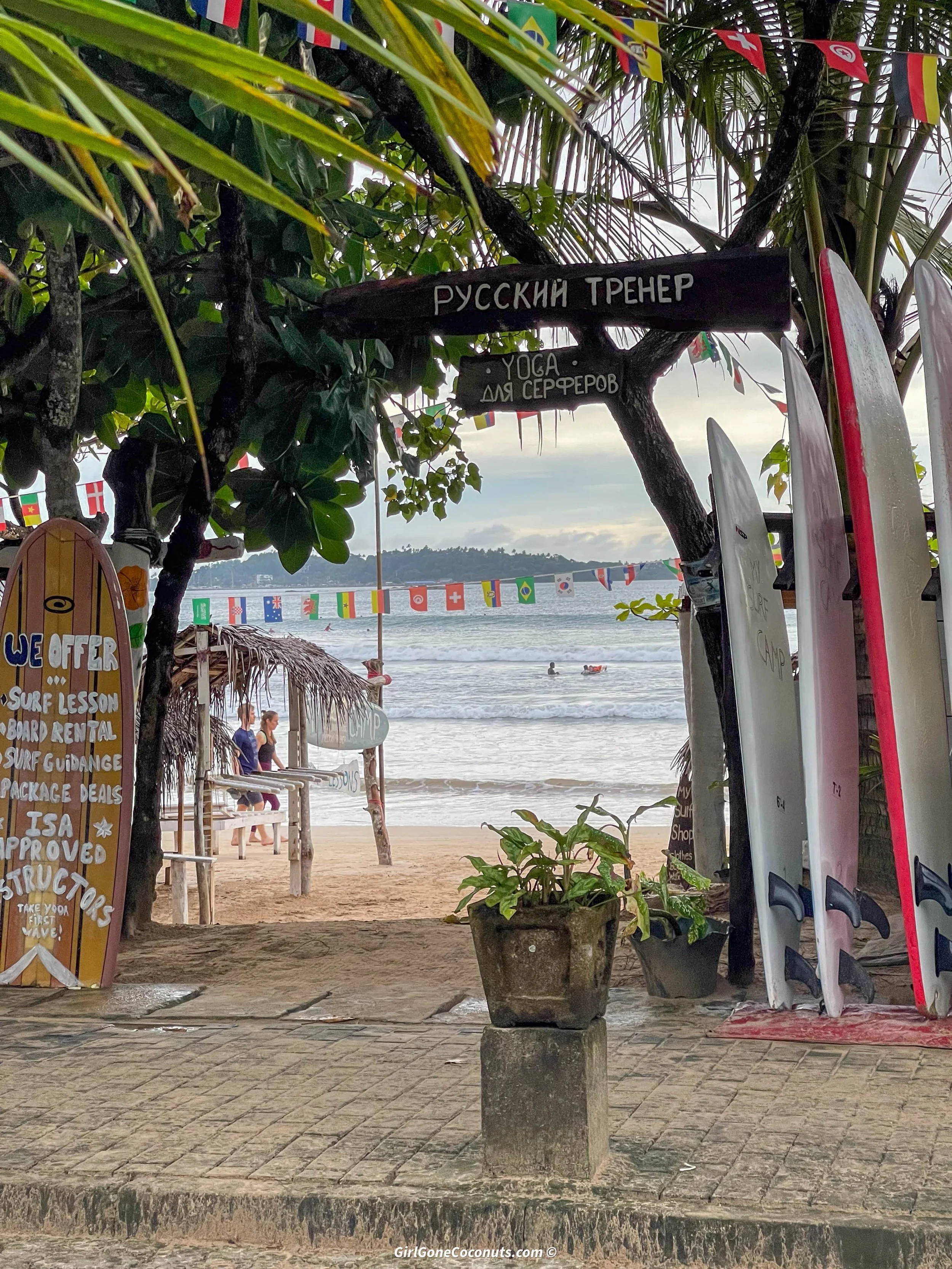
Getting from Colombo to Weligama seemed simple enough when I first looked it up; jump on a train, ride the rails down the Sri Lankan coast, and arrive a few hours later by the beach. Easy, right? Well… not exactly.
In reality, my train was delayed by three hours, there were no first-class seats, no air-conditioning, and I spent most of the unexpectedly long five-plus-hour ride sitting on my bag on the floor.
If you are trying to figure out the best way to travel between Colombo and Weligama, or in the opposite direction, this guide breaks down all your options, from trains and buses to taxis, Ubers, and tuk-tuks. I am sharing everything I learned the hard way so you can choose the option that best suits your travel style and hopefully avoid a sweaty floor nap on your backpack.
Oh & as always practice sustainable tourism while traveling, please :)
Disclaimer: This post contains affiliate links. If you click through and make a purchase, my blog may receive a commission at no additional cost to you.
Step-by-Step Travel Guide: Colombo to Weligama
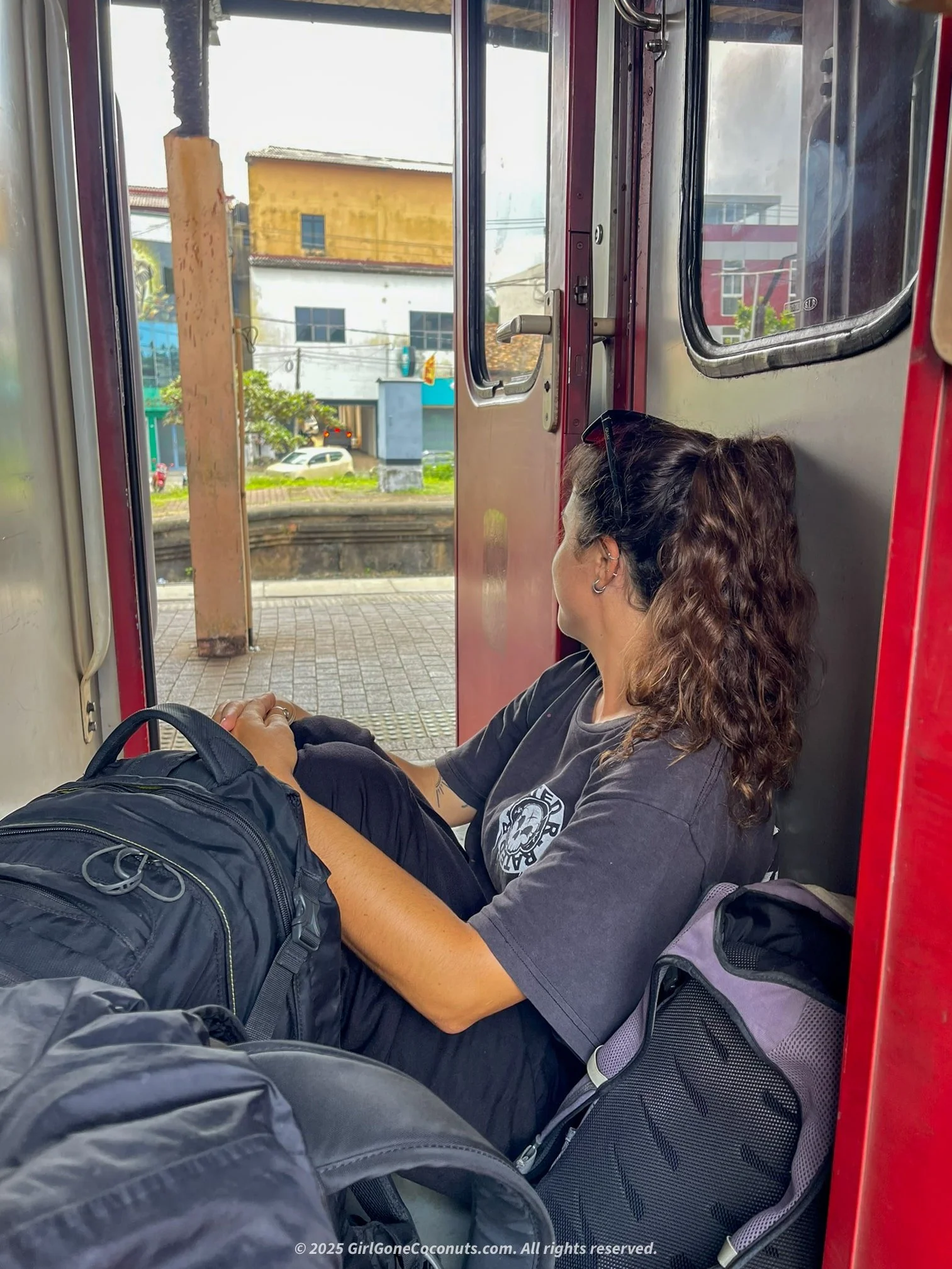
My train from Weligama to Colombo—this time I have claimed a seat on the floor near the door (thankfully).
Pin it & save it for later!
Table of Contents
Overview of Transport Options Between Colombo and Weligama
Taking the Train Between Colombo and Weligama
Taxi, Uber, and Ride-Sharing Services Between Colombo and Weligama
Bus Services from Colombo to Weligama (& Vice Versa)
Independent Travel: Tuk Tuk, Car, and Scooter Rentals Between Colombo and Weligama
Overview of Transport Options Between Colombo and Weligama
Weligama is about 149 kilometers (roughly 93 miles) from Colombo, Sri Lanka. The journey takes around 2 to 2.5 hours by car, 3.5 to 5 hours by train or bus (depending on the type of service and number of stops), or 4.5 to 5+ hours by tuk-tuk.
If you are arriving at Bandaranaike International Airport (CMB) in Negombo and planning to travel to Weligama or anywhere along the southern coast, you will first need to make your way to Colombo Fort Railway Station. Most long-distance trains and buses depart from here.
Pro Tip: There are not many food options around Colombo Fort Railway Station aside from a few small carts selling nuts, fruit, and local snacks. I recommend grabbing your food and drinks before the long journey ahead.
Negombo (Airport) - Colombo (Fort Railway Station):
Bus 187:
Departure Point: Katunayake Airport Bus Station (just outside the airport terminal)
Destination: Colombo Central Bus Stand (Pettah), a 500-meter walk to Fort Railway Station
Schedule: Every 30 minutes from 5:30 AM to 6:30 PM
Fare: Approximately 110 (LKR)
Travel Time: Around 45 minutes, though it depends on traffic conditions
Taxi:
Travel Time: Around 1 hour, depending on traffic
Cost: 5500+ LKR or around 18+ USD.
How to Book? I booked mine through my accommodation, but you can also use Uber.
Pro Tip: I do not recommend using PickMe for getting around. Drivers often ask for extra money once they arrive at your pick-up spot, and you need a local phone number to sign up.
Tuk-tuk: I have not taken a tuk-tuk between these two spots myself, and honestly, I do not recommend it. While it will probably cost about half as much as a car or bus, the travel time will easily double. The ride can be uncomfortable because of the heat, and it is nearly impossible if you have large bags or suitcases.
You can rent a tuk-tuk to use during your time in Sri Lanka, but keep in mind that you will need a valid local driver’s license and some basic training before you can drive one safely. Unless you have plenty of extra time, I suggest saving tuk-tuk rentals for shorter trips or when you are further down the coast and traveling between nearby towns.
Taking the Train Between Colombo and Weligama
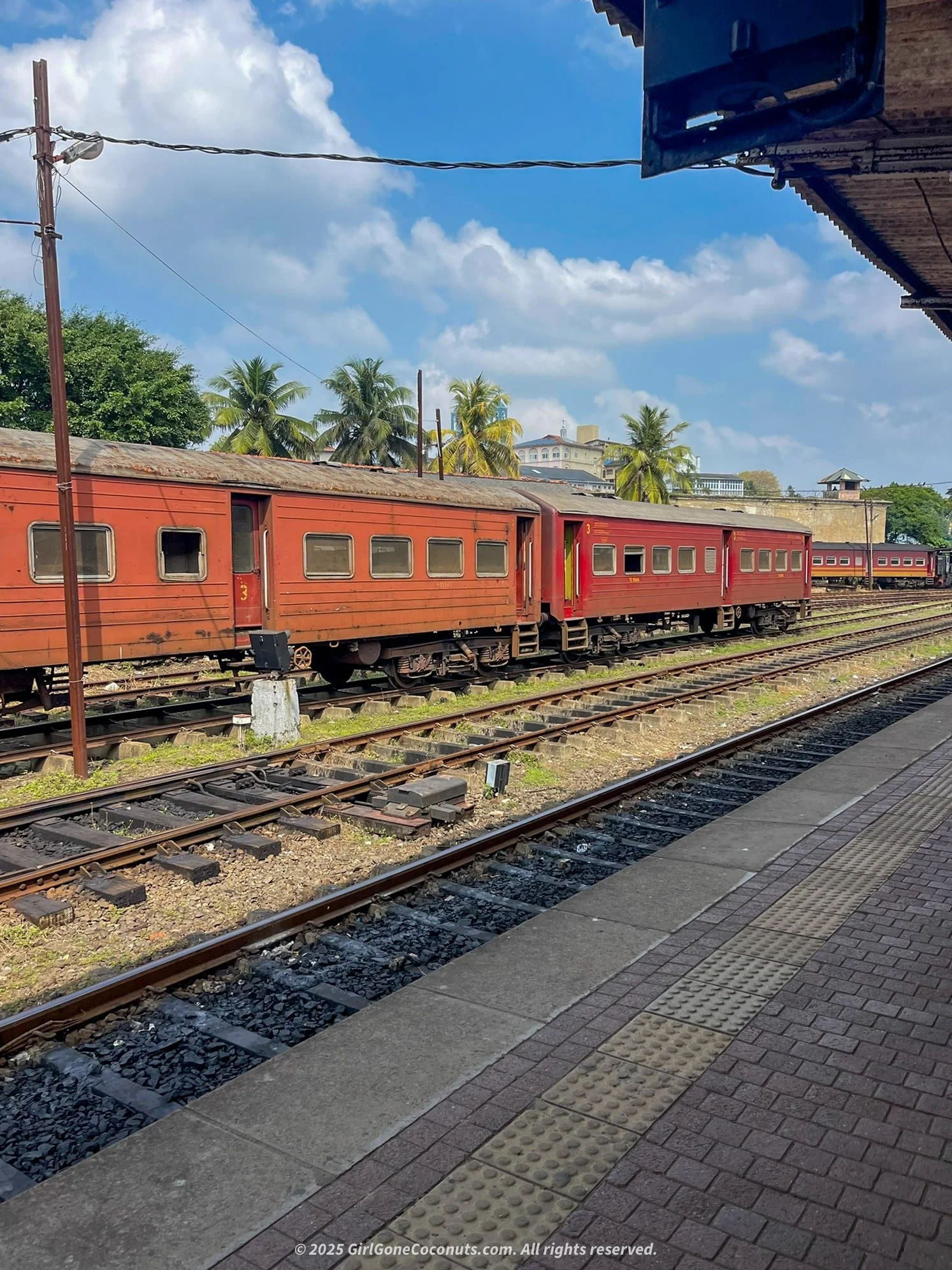
Sri Lanka Railways used for travel from Colombo to Weligama by train.
Taking the train between Colombo and Weligama is actually quite simple. The part that can get tricky is the ride itself, and whether or not your train leaves on time.
Buying Tickets
You can purchase train tickets directly at the station, either at Colombo Fort Railway Station or Weligama Station. Just walk up to the ticketing window and let them know where you are heading. When you buy your ticket, the officer will also tell you which platform to wait on.
There are usually multiple trains per day, but keep in mind that some make more stops than others. I recommend asking the ticketing officer which train is the most direct and what time it departs. If tickets are sold out, do not panic. There are often one or two more trains later in the day.
If you want to book ahead, 12GoAsia is an option, although it may not always show every train. Ticket prices are anywhere from 1 to 6 USD, depending on class, time of day, etc. Keep in mind that just because you have booked a first-class ticket, you might not be in first class. Sometimes the trains will change last minute to one without a first class attached.
Pro Tip: Some trains will have Matara as their destination, but they usually stop in Weligama and sometimes Mirissa along the way. You can find Sri Lanka train timetables and schedules here.
Train Classes
First-class tickets (with A/C and assigned seats) are not always available on this route. Most travelers end up in second or third class.
The second class has fans and padded seats.
The third class is more basic, usually bench seating, and no fans.
Neither the second nor the third class has assigned seating, so if it is busy, you might end up sitting on the floor (as I did). The train cars do get oversold, and it can feel pretty packed, especially during peak hours.
Comfort + Conditions
There was no restroom on the train I took, or if there was, I did not find it.
The only baggage storage is on the floor or on small overhead racks, which are not super secure if you have loose or heavy items.
Windows open in both second and third class, which helps with airflow, but it still gets SWEATY.
I suggest packing your own food and water. There are a few carts at the station selling snacks, nuts, and drinks, but not much else.
At Fort Railway Station, there is a special restroom for foreigners (weird, I know), but you will need to ask a staff member for the key.
When to Travel
Peak times are mornings (commuters heading to work), evenings (people heading home), and weekends or holidays. If you want to avoid the crowds, I recommend traveling between 10:00 AM and 2:00 PM, although this can vary during holidays or random delays.
Also, anticipate your train to be late or slow. Mine was delayed by three hours, and the ride took over five hours in total.
Safety & Final Thoughts
I do not recommend hanging out of the train doors, even if it looks fun on social media. It is genuinely dangerous, especially with trees and bridges so close to the tracks.
Do not hold your phone or camera outside the window in tourist-heavy areas (like Ella). Phone snatching is a real thing, and some people wait in the bushes just for that.
I do not know how often the trains are cleaned, so bring hand sanitizer and wipes if that is something you care about.
A hand fan is also handy, especially if it is raining and you cannot open the windows.
If you are squeamish about sitting on the floor, a light blanket or mat is useful.
And if all else fails, just plan for a long, sweaty journey followed by a well-earned hot shower.
My Train Experience:
I originally planned to take the 8:00/9:00 AM train from Colombo to Weligama, but it ended up being delayed until almost 1:00 PM. To make things worse, they combined both the delayed morning trains into one, and there was no first-class carriage available that day. We had no seats for more than two-thirds of the ride, and I ended up sitting on the floor, half-asleep with my head in my hands, absolutely drenched in sweat.
We finally pulled into Weligama at 4:30 PM, nearly five hours after departure, completely exhausted. From the station, we could have grabbed a tuk-tuk, but we were so over riding anything that we just walked the 15 minutes to our accommodation with our backpacks.
That train ride was honestly draining, and after that experience, we mostly chose to travel by bus or private taxi for the rest of our trip.
On the plus side, people were hopping on and off at stops, selling drinks and local snacks. Most stops lasted anywhere from two to ten minutes, and lots of locals would step off the train just to get a bit of fresh air.
Taxi, Uber, and Ride-Sharing Services Between Colombo and Weligama
As mentioned earlier, the two main ride-sharing apps in Sri Lanka are Uber and PickMe. I personally did not have much luck with PickMe. Drivers would show up at the pickup point and then ask for more money than the app had quoted. It wasted time, waiting around, saying no, and eventually calling an Uber anyway.
Because of that, I recommend sticking with Uber or asking your accommodation to arrange a ride for you in advance. Just make sure to agree on a final price beforehand. I did not end up taking this option myself, but I was quoted 12,000 LKR (around 40 USD) for a mini car, which would only fit two people plus backpacks or small luggage. This is likely the lower end of the price range for a taxi or Uber between Colombo and Weligama.
The ride takes about 2 hours and 15 minutes with no stops. If you are looking for a direct, fast, and hassle-free way to get from Colombo to Weligama, this is your best bet, especially if you book in advance. Just note that if you are starting from Bandaranaike International Airport (Negombo), the price will be a bit higher since the airport is slightly farther north.
Taxi & Uber Scams in Sri Lanka: What to Watch For
Unfortunately, scams do happen, especially with ride-sharing and taxis. Here are a few common ones to be aware of…
Drivers asking for more money upon arrival, even though the fare is already set in the app.
Taking longer routes on purpose to increase the price.
Requesting toll fees separately, even though tolls are already included (especially with Uber).
Not ending the trip after drop-off, causing the fare to keep rising in the app.
If you are arriving at the airport, I strongly recommend booking your ride in advance. There have been reports of scammers near the terminal pretending to be Uber or PickMe drivers and trying to lure travelers into overpriced or unlicensed rides.
Bus Services from Colombo to Weligama (& Vice Versa)
The best bus to reach Weligama is typically the Colombo–Matara route, which departs from the Colombo Central Bus Stand in Pettah. There are many departures throughout the day, and the travel time is between 3 and 4 hours, depending on stops and traffic. Fares are paid in cash onboard to the conductor, so make sure to carry smaller bills. The one-way ticket costs range from 410 to 750 LKR (approximately 1.36 to 2.50 USD).
Keep in mind, drivers can be a little wild with frequent stops and sudden speeding, so it might not be ideal if you get car sick easily.
If you are traveling on a budget, the bus might be a better option, at least it was for me. After a hot, crowded, seatless train ride, I found myself choosing the bus more often and genuinely preferred it. I found it more comfortable overall, and the experience felt a bit less chaotic (even though the drivers can be a bit insane). I would actually recommend the bus over the train.
There are plenty of buses running throughout the day, so even if you miss one, chances are another will show up within 10–15 minutes.
Bus Tips:
You do not need to book ahead; buses leave frequently.
There are no seat reservations, just take the first available.
Luggage space is minimal, so expect to keep bags at your feet or squeeze them behind the last row.
Be sure to press the stop buttons on the bus when you reach the spot where you want to hop off.
Independent Travel: Tuk Tuk Rentals Between Colombo and Weligama
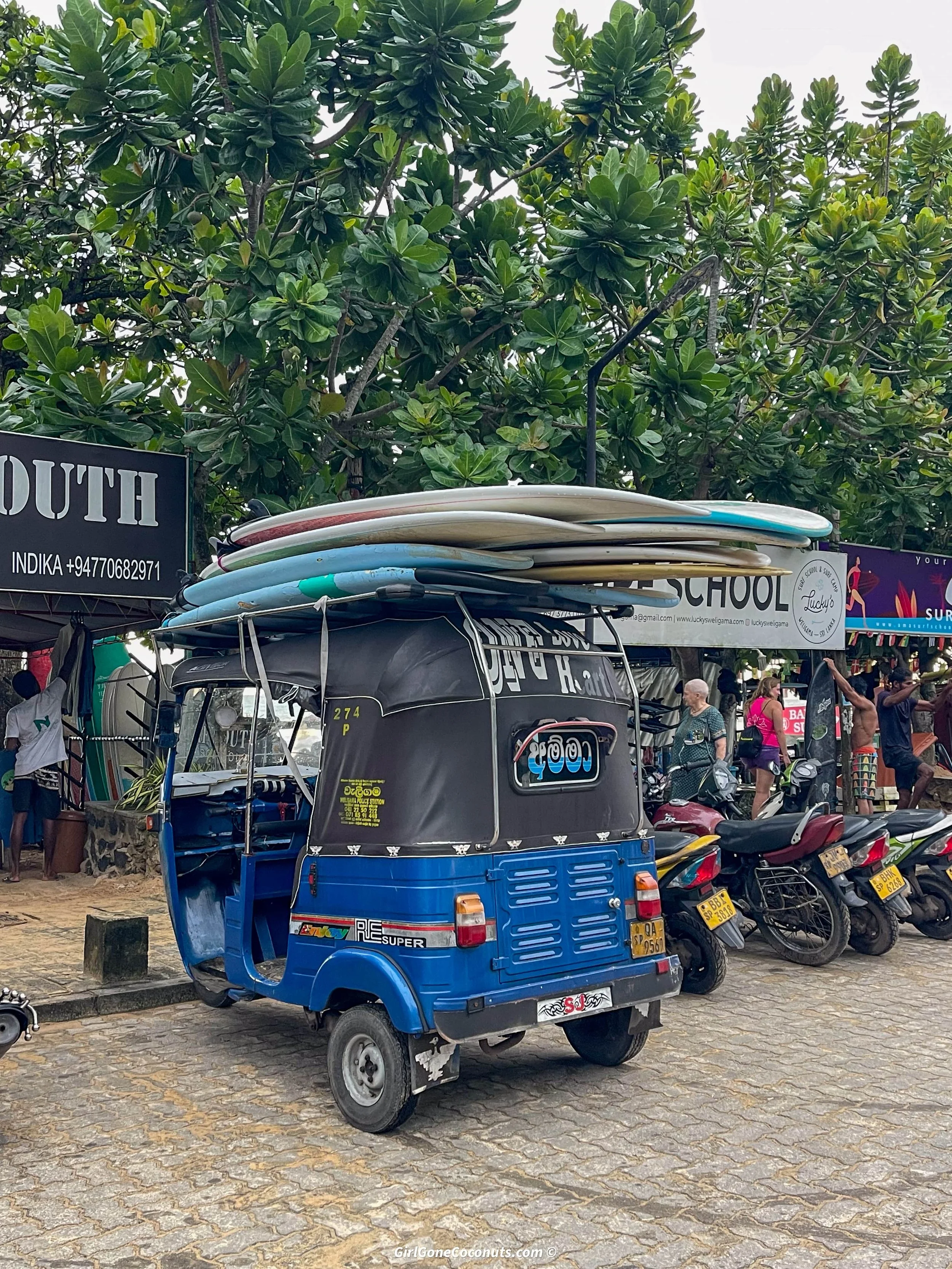
A local tuk-tuk riding around with surfboards on its roof.
Since I have not driven a tuk-tuk between these two spots myself, I do not have too much information to offer about it, except that when I did research to potentially rent one in Weligama, I saw a variety of prices from 16 USD per day to 25 USD per day. The longer you rent the tuk-tuk for, the cheaper the daily price will be.
Keep in mind that you will need an international driver’s license, a valid driver’s permit, and some basic training before you can drive one legally in Sri Lanka. Unless you have plenty of extra time to spare traveling around in Sri Lanka, I suggest saving tuk-tuk rentals for shorter trips or when you are further down the coast and traveling between nearby towns.
If you want some more information on renting a tuk-tuk and how to obtain a permit, head here!
Travel & Safety Tips for the Colombo to Weligama Journey
Colombo to Weligama Travel Tips
Bring cash (Sri Lankan Rupees) for snacks, coconuts, or small vendors at and around stations/buses; cards are rarely accepted.
Expect delays and bring plenty of water or grab a coconut before boarding. Trains and buses can be hot, especially in second and third class.
Watch your belongings, especially if you are seated near open doors or windows.
Trains and buses get crowded, especially during peak hours. Be respectful and give locals space if you have a large bag.
Remember, if you are renting your own tuk-tuk, you will need a local driver’s license and a short training session. Driving is on the left side of the road in Sri Lanka, and the traffic can be chaotic.
Pack mosquito repellent, especially for longer, more rural routes where the train might stop for longer periods.
Download an eSIM to help navigate the buses. I always use Airalo for my eSims.
Be careful with the street dogs. Most are kind and well-fed in touristy areas, but rabies does exist in the country (in more animals than just dogs). I highly recommend getting the rabies vaccination before traveling. The disease is fatal.
Mistakes can happen, especially when surfing, so I recommend always having some form of travel medical insurance. Safety Wing is by far the best travel medical insurance. It has saved me numerous times by covering hospital visits when I was sick during my travels in Asia.
Emergency Contact Number: Police: 119 | Ambulance: 110
You can find a complete list of Sri Lanka’s Emergency #’s by location here.
For Taxis, Ubers, and PickMe:
Agree on the price before the ride if not using the app, and do not be afraid to walk away if it feels off.
Uber > PickMe. In my experience, PickMe drivers often ask for more money once they arrive.
Expect to pay more if traveling from the airport.
Watch for scams, like toll fees being added or trips not being ended in the app.
Book in advance from the airport to avoid scammers pretending to be your driver.
→ Made it to Weligama? Here’s where to find the best beaches.
Frequently Asked Questions
Where should I stay in Weligama?
If you want to stay close to the downtown area and have easy access to a variety of restaurants, I recommend booking accommodation along the coast near Weligama Beach. If you do not mind a short walk, you can stay along the river like I did, or head toward Jungle Beach for a more peaceful and secluded experience.
Best Accommodation Options in Weligama For Every Traveler…
Backpacker/Hostel Option: Happy Hammocks (dorm) or Wake Up Weligama (private room)
Best Low-Budget: Villa Don Williams Weligama (I stayed here— keep in mind it is slightly further from the coast, but it is walkable)
Best Mid-Budget: Weligama Watergate
Best High-End Budget: Boutique Villa Bougainvillea
Best Luxury Budget: Weligama Bay Marriott Resort & Spa
You can also find hotel deals at Agoda and Hostel World! You can help support my travel blog by clicking and booking through the links at no additional cost to you!
How do I get to Weligama from the airport?
Traveling from the airport to Weligama is outlined for you above. The first step is navigating your way from the airport to either Fort Railway Station (the train) or to Pettah Bus Station (bus). If you prefer to take a taxi or Uber, you can book one right from the airport!
Is the train between Colombo and Weligama reliable and safe?
It is reliable, just sometimes delayed. As for safety, I never felt unsafe at all on this route. I would just maintain your regular safety measures that you should always have in place while traveling. I was with my boyfriend, so I was not solo traveling on this trip.
Can I bring luggage and food on the train from Colombo to Weligama?
Yes! However, suitcases will need to either sit in the aisle next to you or be placed at the back of the train. Keep in mind that the doors stay open, so if you leave your suitcase at the back, you will need to stay with it to make sure it does not slide out. There are overhead racks for backpacks and smaller items, but they are not very secure, and things can fall off.
As for food, I definitely recommend bringing some, especially on this longer route. Nobody likes to travel hangry.
There Are So Many Stray Dogs In Sri Lanka, How Can I Help?
The easiest thing you can do is feed them. You can give them plain white rice and boneless chicken or any other boneless meat, as well as dog food. Many grocery stores sell dog food, but keep in mind that some dogs are picky eaters—do not take it personally if they do not eat what you offer. Of course, a starving dog will eat just about anything. Leaving out some water in a plastic bowl or even an empty coconut can also be helpful. Coconut water is highly hydrating and can benefit dogs as well.
Many dogs, especially those further from tourist areas, are afraid of human interaction. If a dog seems hesitant, simply place the food and water nearby and step away to give them space. I promise they will eat once you leave!
If you come across an injured or sick dog, you can notify Animal SOS, a non-profit organization that rescues, rehabilitates, and rehomes stray animals in need. They currently have over 2000 dogs!! WECare is another incredible group providing veterinary care and sterilization programs to improve the lives of street dogs.
If you notice a dog with fleas or ticks and plan to stay in the area for a while, you can reach out to either organization for help in getting medication to distribute.
If you have more time, consider volunteering with one of these organizations to make an even bigger impact. I volunteered with Animal SOS, and it was a truly amazing day that left my heart even fuller.
Trying to decide between Udawalawe and Yala for your Sri Lanka safari? Here is my honest comparison after visiting both.
Heading to India next? Jaipur needs to be on your itinerary — here is why.