Thresher Shark Dive Malapascua: The Complete Guide (2026)
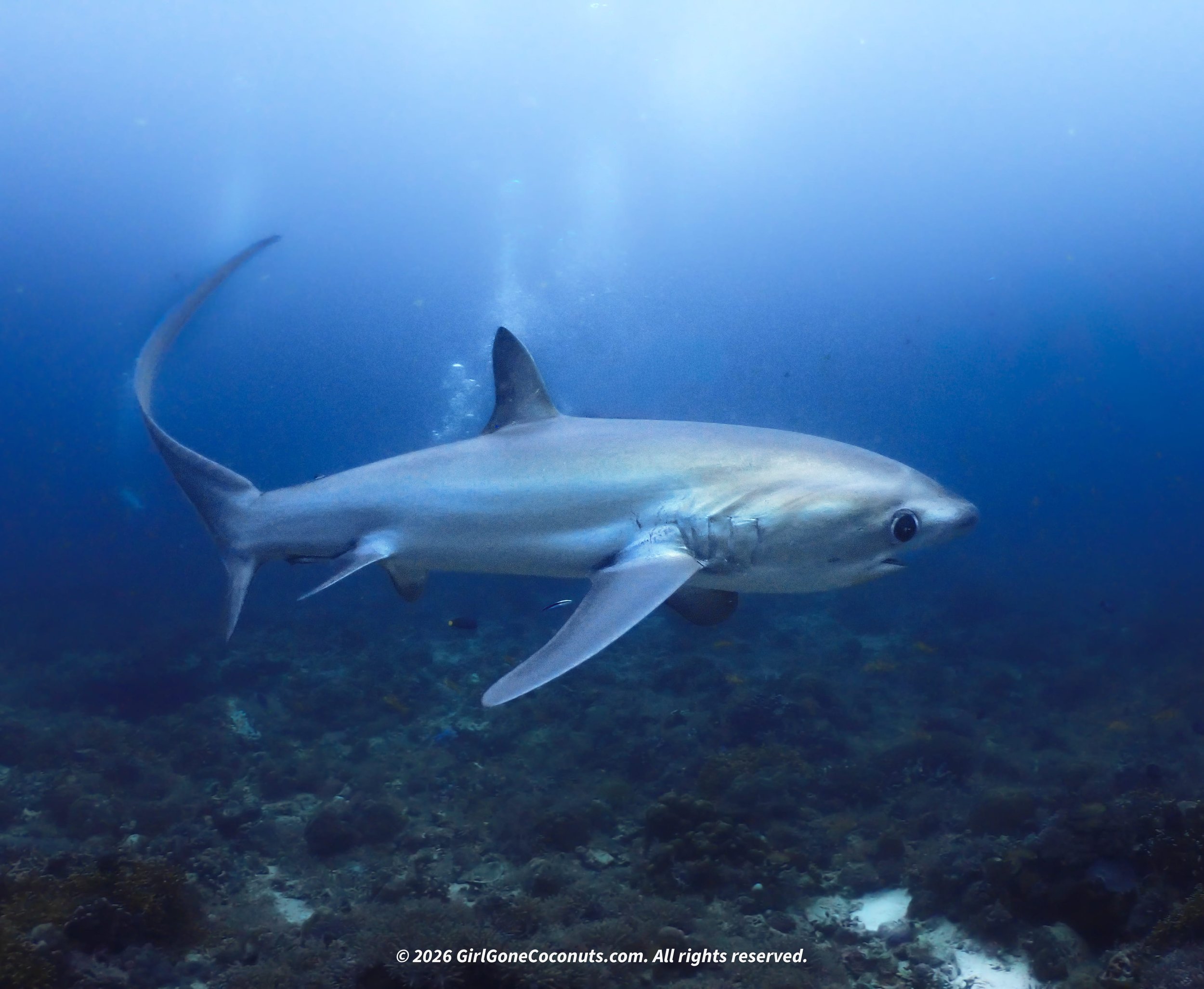
Imagine descending into the ocean at dawn, the water still dark and quiet, and coming face to face with a thresher shark. This is Kimud Shoal in Malapascua; the only place in the world where you are almost always guaranteed to see these incredible creatures.
Diving with thresher sharks in Malapascua has been on my bucket list for years, and it should be on yours, too. Descending down to a 12-14 meter cleaning station in the middle of the ocean, you will find thresher sharks coming up close to inspect you. The experience is truly like no other, so you want to make sure you plan this trip perfectly.
This guide includes everything you need to know for the thresher shark dive in Malapascua, including what I wish I had known before visiting.
Please travel sustainably. Bring a reusable water bottle, minimize trash, and do not touch or chase any marine life, including the sharks and the topography (corals).
Disclaimer: This post contains affiliate links. If you click through and make a purchase, my blog may receive a commission at no additional cost to you.
Thresher Shark Diving in Malapascua
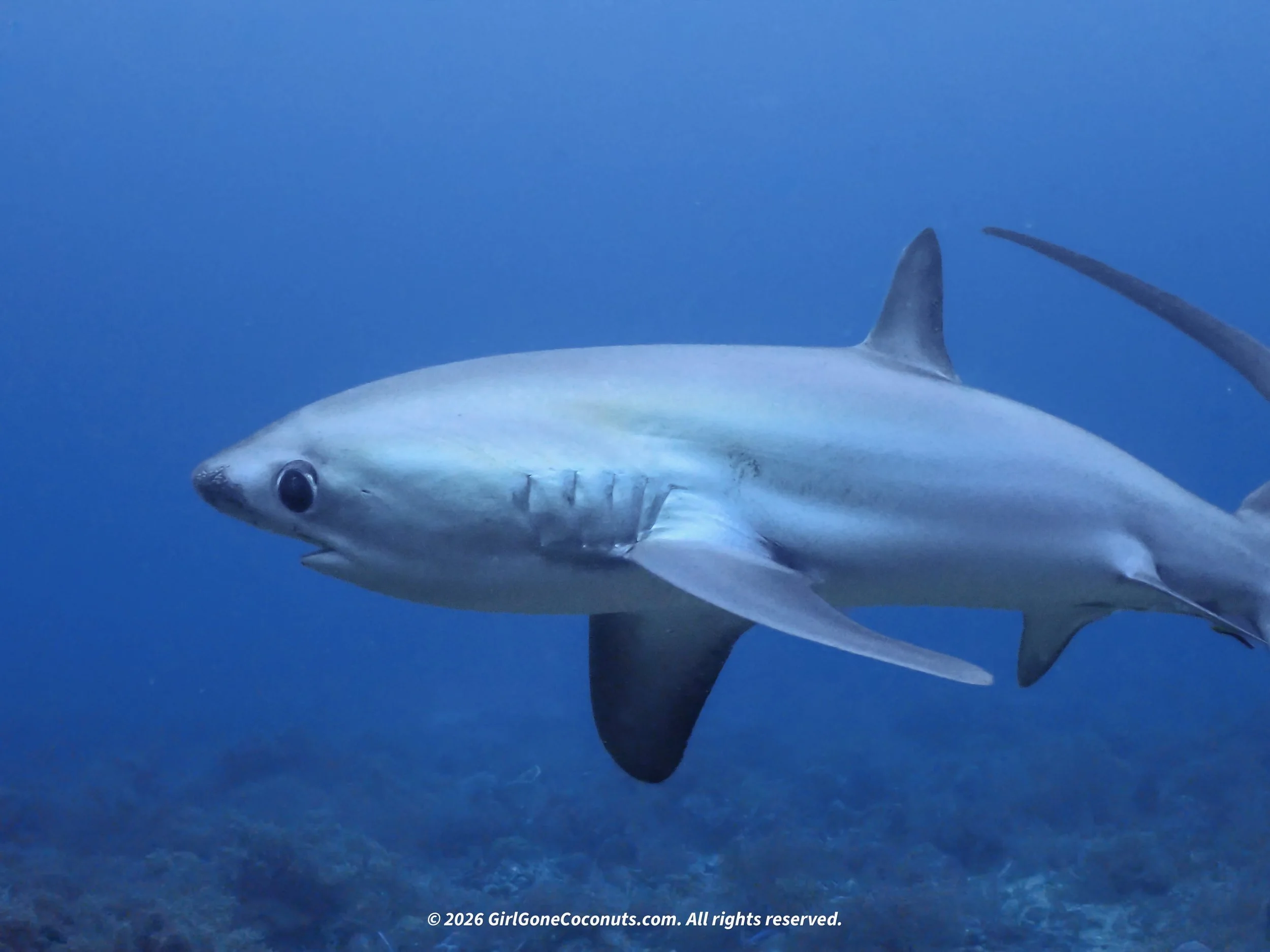
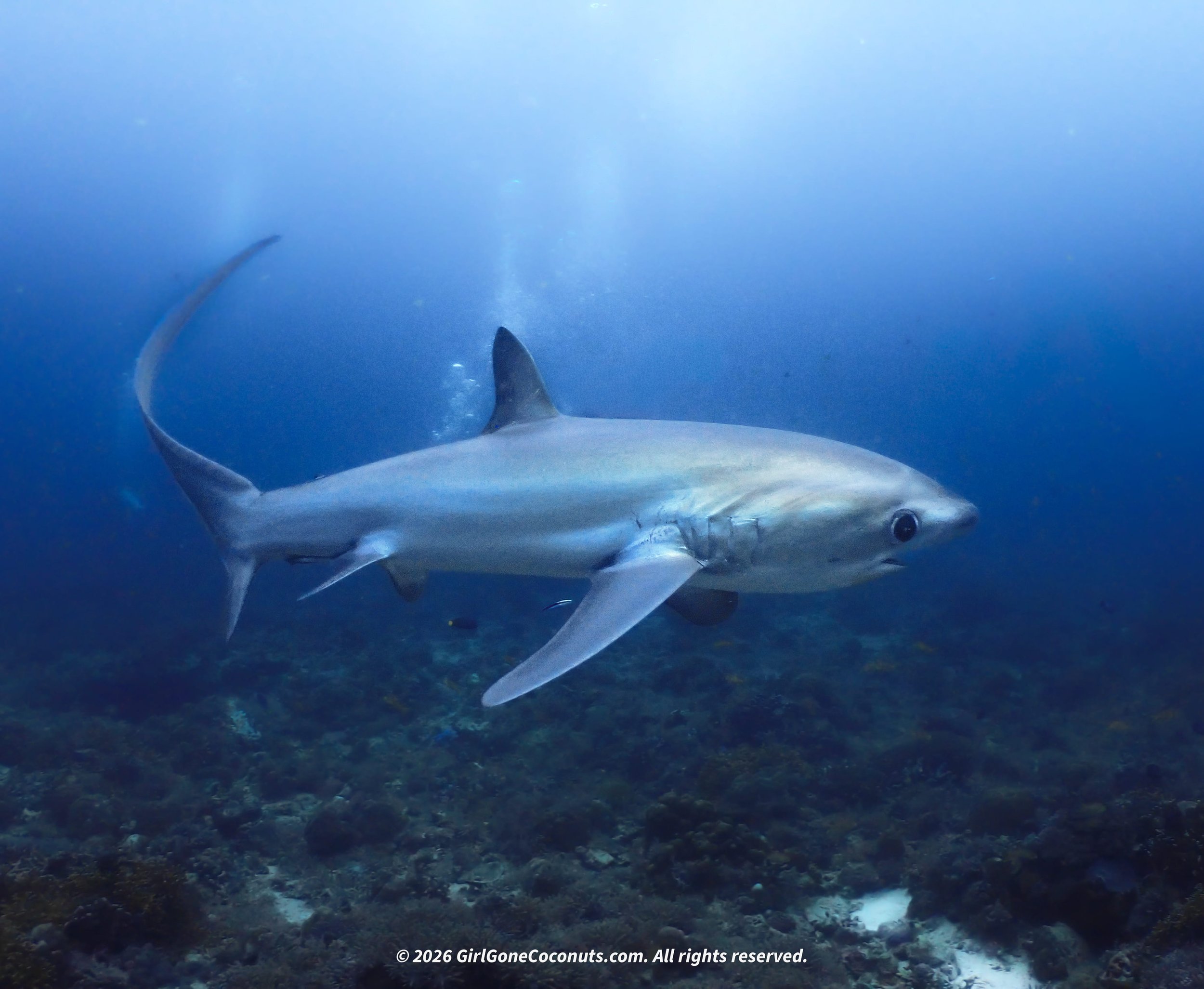
A curious thresher shark at my dive in Malapascua, Philippines
What to Expect on a Thresher Shark Dive at Kimud Shoal
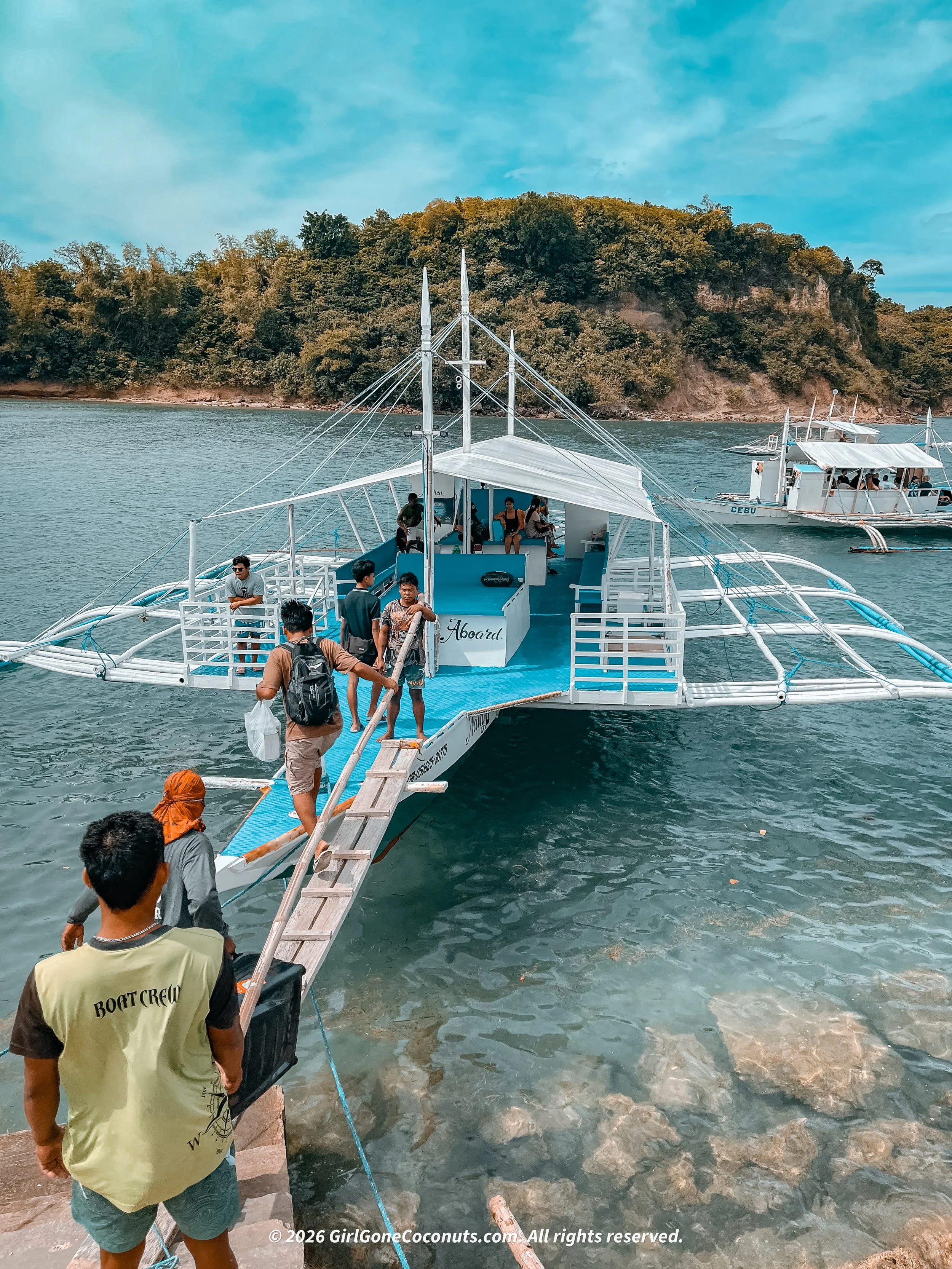
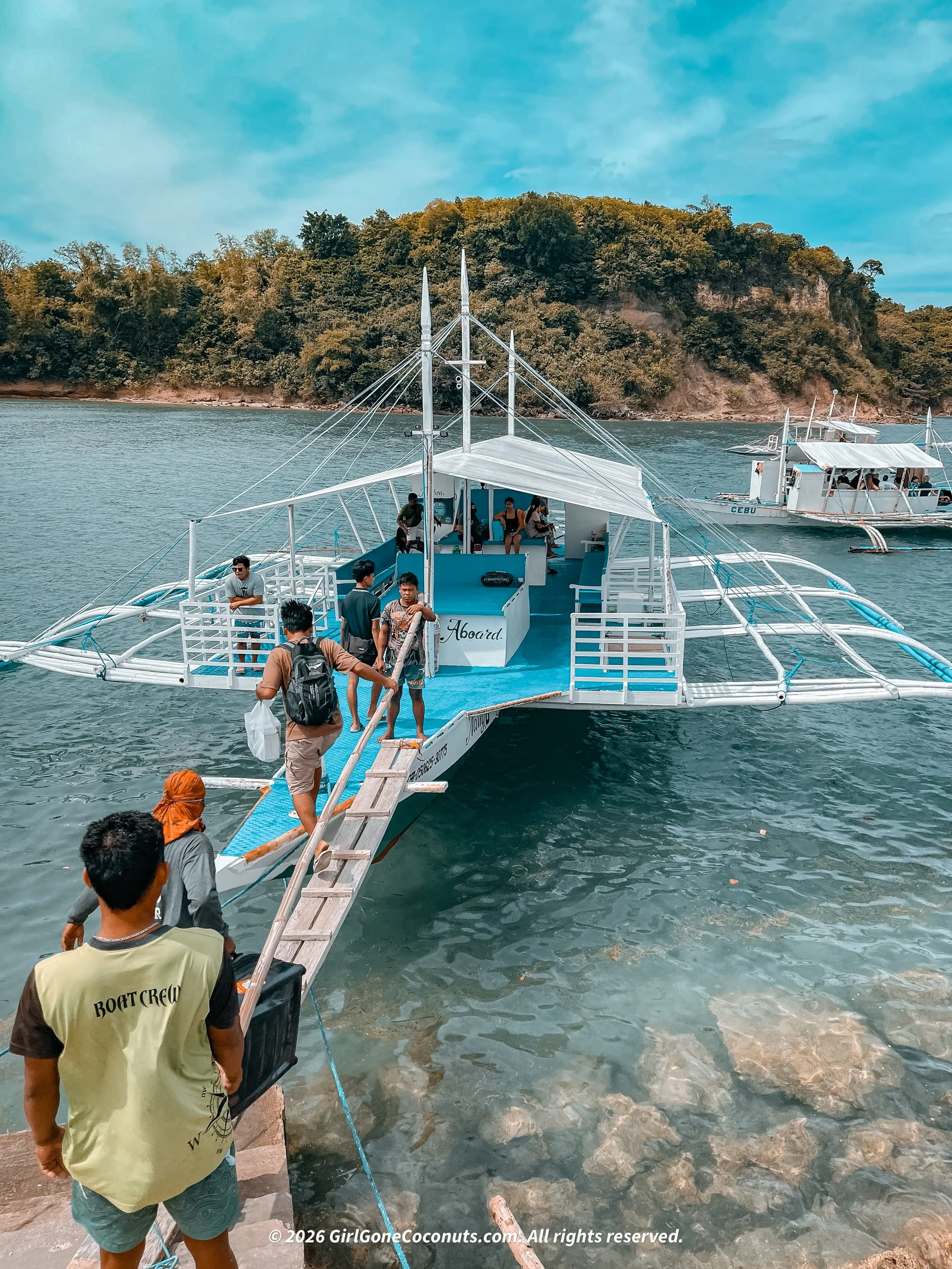
The ferry boat and the dive boats are all the same boat.
Getting to Kimud & Monad Shoal
The day starts early. Very early. My alarm went off at 5:30 AM, and from what I learned, the earlier you go, the better your chances. Every dive boat on Malapascua is heading to the same place, so getting there first really matters.
That said, the 1.5-hour boat ride gives you a bit of time to ease into the morning. Some people try to nap (including myself), although the traditional Filipino boats are not exactly built for comfort. They are slow, a little rocky, and you definitely feel it more as you get closer to the open water.
Dive 1 & 2: Kimud Shoal
The first two dives take place at Kimud Shoal, which has now become the main cleaning station for thresher sharks. After gearing up, you enter the water with a giant stride off the boat. I will admit, this one felt higher than usual and definitely gave me that brief stomach drop feeling on the way down.
Once in, you gather at the mooring line with your guide and begin your descent. At around 14 meters, the seafloor comes into view, and you reach the cleaning station.
It is a relatively flat, open area surrounded by a dramatic drop-off into the deep blue. Standing at the edge feels like looking into a black hole, with over 200 meters of depth below. Some divers venture down into the blue, but we stayed on the plateau, which I was more than happy with.
One thing that stood out, unfortunately, was the mooring setup. A large cement block wrapped in rope sat on the seafloor, visibly crushing the marine life beneath it.
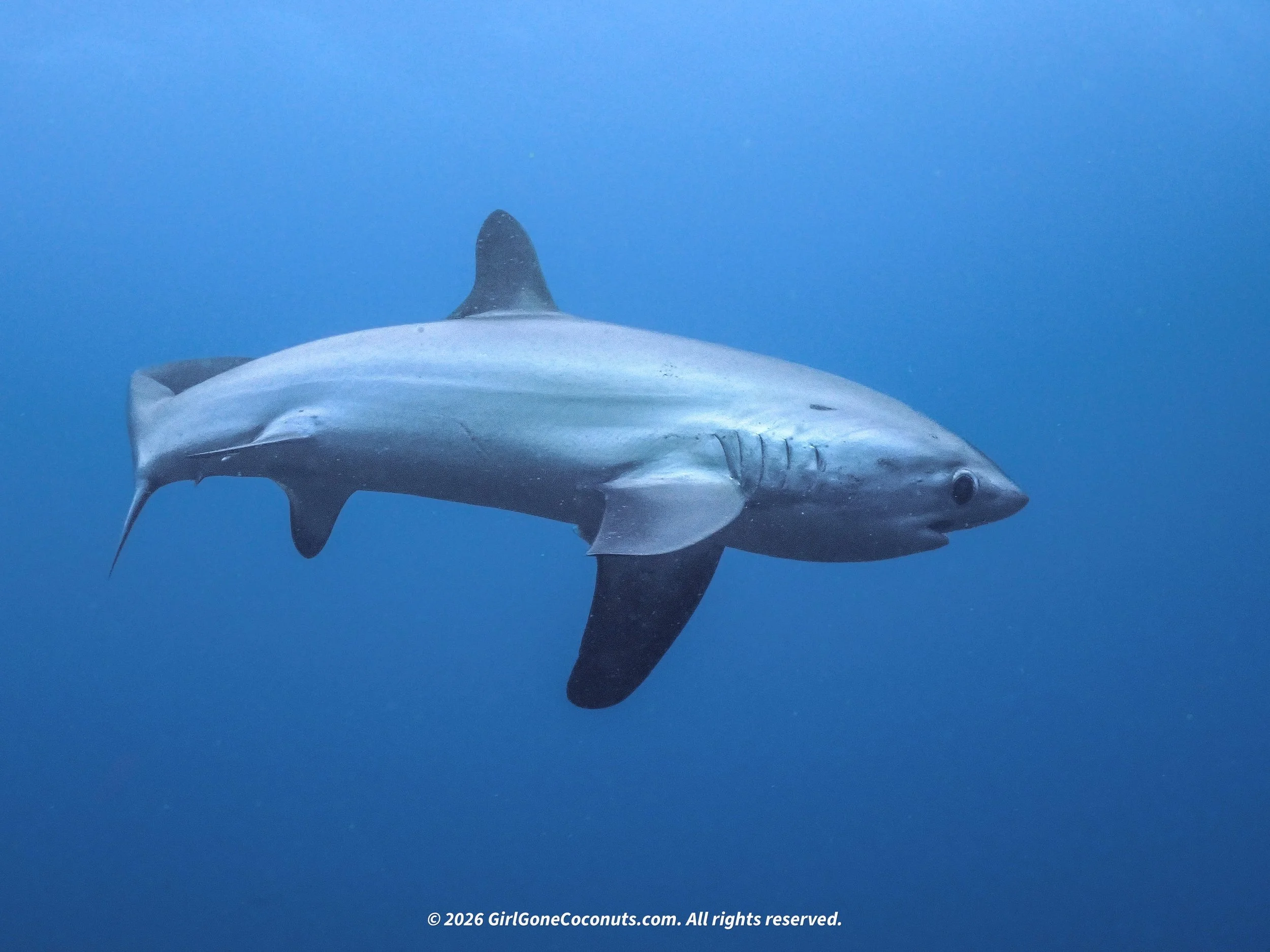
But within minutes, everything else faded into the background. About two minutes into the dive, our first thresher shark appeared. It moved slowly and gracefully toward us, its long tail trailing behind like a ribbon. As it got closer, we noticed fishing line wrapped around its dorsal fin. It was heartbreaking to see, especially in one of the only places in the world where sightings like this are almost guaranteed. The moment felt bittersweet. Incredible, but also a sad reminder.
From there, the encounters just kept coming. Over the course of the dive, we saw around seven thresher sharks, although some may have been the same ones circling back. What surprised me most was how close they came. A few passed so close to my camera that I thought I might accidentally bump into them. They were calm, curious, and completely unbothered by our presence. At times, it honestly felt like they were the ones observing us. They would swim past, then slowly turn and come back for another look, as if just as intrigued.
There are a few rules to follow while diving here. You must always stay below the sharks and remain neutrally buoyant, making sure not to touch the bottom or interfere with the cleaning station. An important practice for the sustainability of the dive site, which sadly not everyone follows.
Between shark sightings, there is still plenty of other marine life to see. We spotted colorful scorpionfish, an eel, an octopus, and plenty of reef fish scattered across the plateau. By the end of the first dive, I was already blown away. It exceeded every expectation, both in the number of sharks and how close the encounters were.
The second dive, however, felt noticeably busier. By then, more boats had arrived, and the site became more crowded. When we first got there, there were around ten boats. By the time we left, there were even more. Underwater, you could almost always spot another dive group in the distance. I also felt a bit of a side current, pulling me off the side of the plateau. Nothing too crazy, but it made me wonder if down currents are present here. Even so, nothing really takes away from the moment when a thresher shark swims straight toward you out of the blue, before disappearing into the deep again.
Before arriving, we were told hammerheads are spotted here, but after speaking to many people on the island, it appears this may be false.
→ If you are still planning your trip, be sure to check out my Cebu to Malapascua Island Travel Guide, where I break down exactly how to get to Malapascua from Cebu, including the bus, ferry, costs, and a few tips that made the journey much easier.
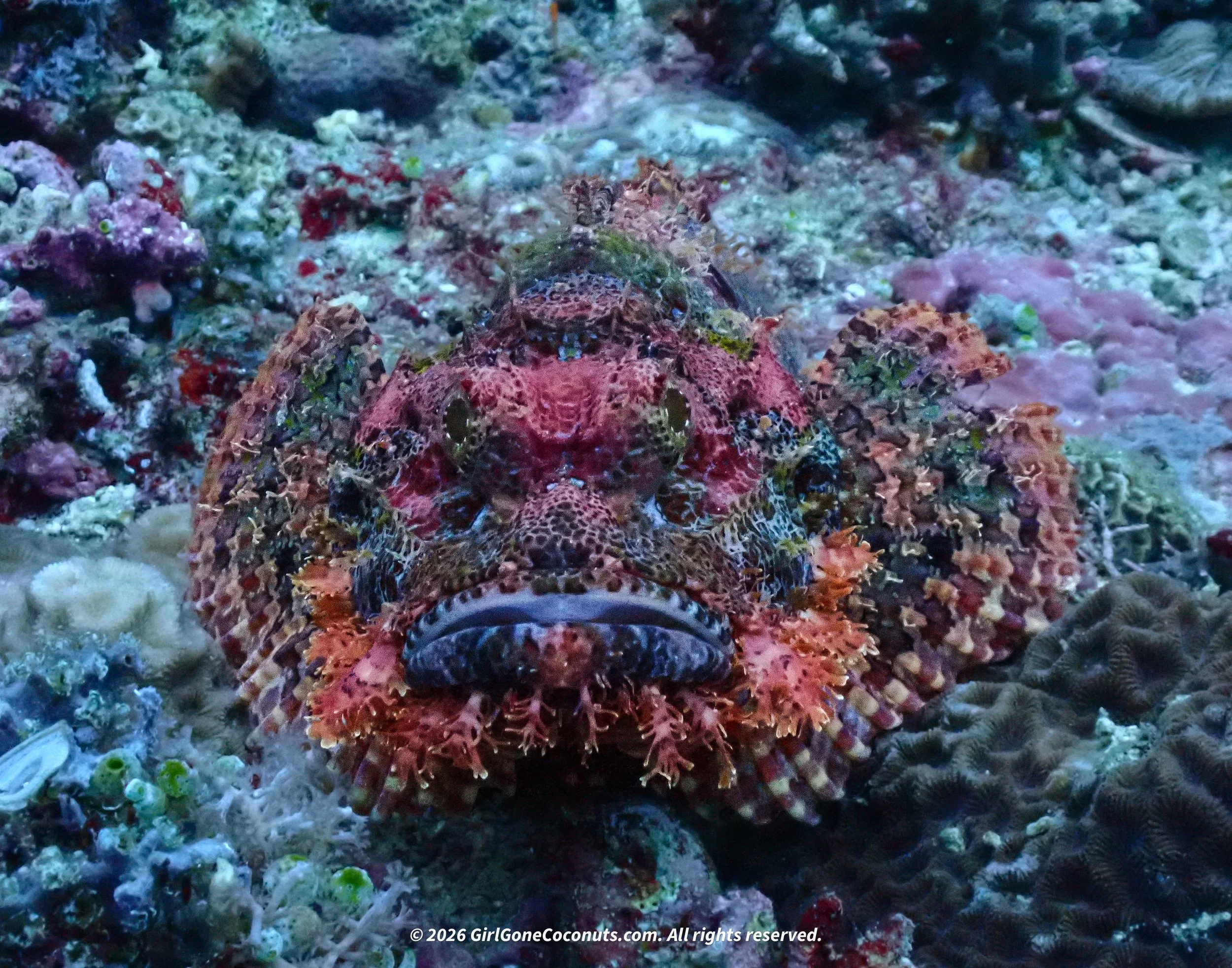
A scorpion fish.
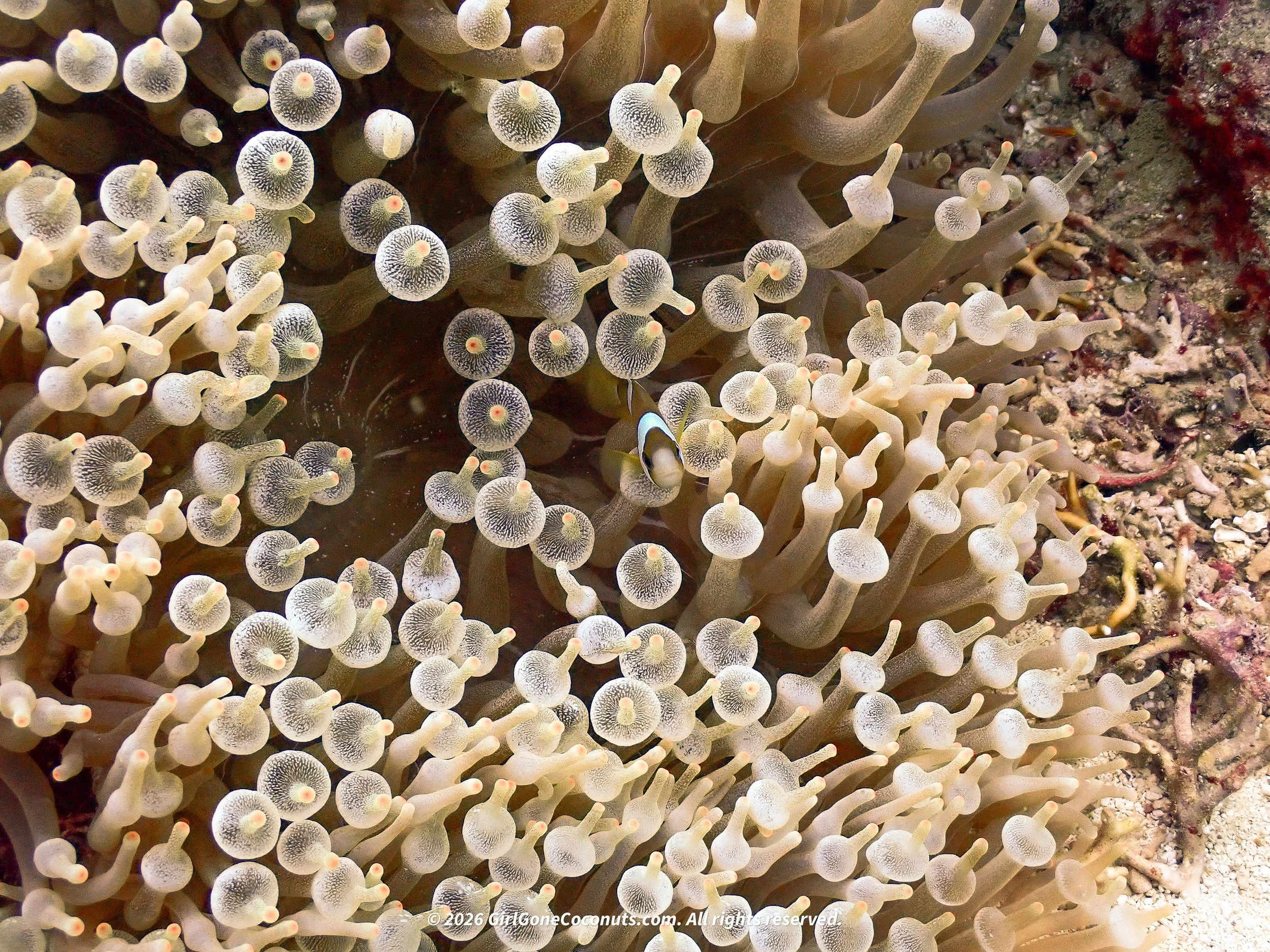
A clownfish.
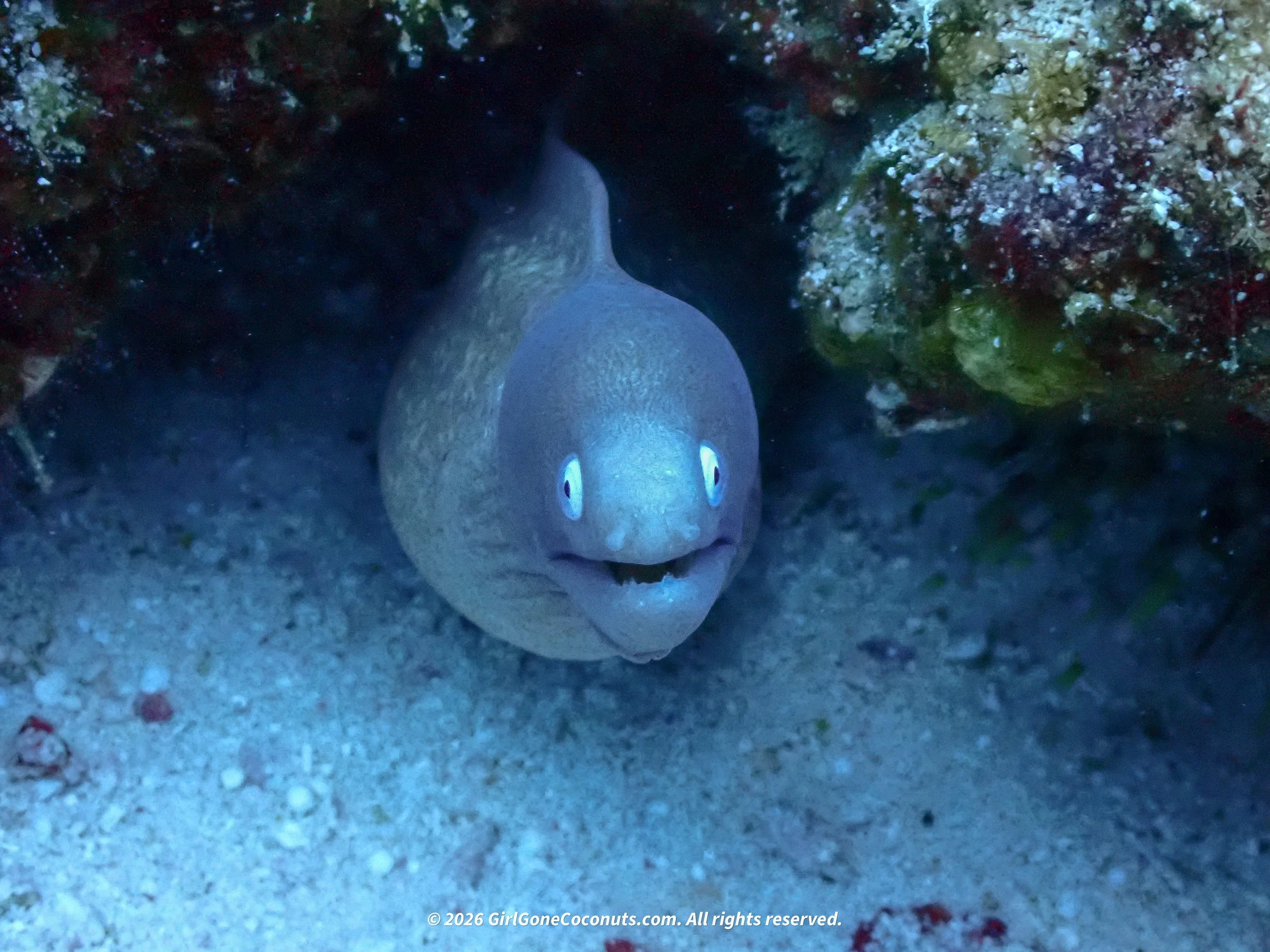
An eel.
Dive 3: Monad Shoal
For the third dive of the day, we headed to Monad Shoal, the original cleaning station for the thresher sharks. From what we were told, the sharks gradually shifted over to Kimud Shoal, supposedly due to an increase in tiger and bull sharks in the area. Interestingly, though, a few of the dive operators mentioned that sightings of those larger sharks here are actually quite rare.
The difference between the two sites was immediately noticeable. Monad Shoal has a sandy, almost barren feel compared to Kimud, with just a few scattered coral clusters breaking up the seafloor. It is much more of a macro-focused dive.
Along the deeper section, I could see a patch of garden eels off to the left. In the distance, there was also a quick glimpse of a whitetip shark passing by, but it did not stick around long enough for a proper look.
We spent most of the dive searching for the smaller marine life hidden along the bottom. We came across an eel, a flatworm, a mantis shrimp, a lionfish, and a handful of other small creatures tucked into the sand and coral.
It was a nice, easy dive to finish the day, but if I am being completely honest, it did not quite compare to the energy of Kimud Shoal. After the adrenaline of being surrounded by thresher sharks, this one felt a bit underwhelming. If I had the choice, I would probably skip Monad and opt for a third dive at the thresher site instead.
Once finished the third dive, it took us around hour or so to return to Malapascua, making for a long but exciting day. One day was enough for me, so we did not opt for a second day at the sites.
Kimud Shoal Dive Requirements, Costs & What to Bring
Kimud Shoal does have a few dive requirements:
Advanced Open Water Certified or equivalent
I have read there is a mandatory buoyancy course for some certification levels, but I have not confirmed this.
You need to have good buoyancy while diving, so you do not crush the corals and seamount surface under you.
You must go with a dive guide from one of the local shops
Some shops suggest Nitrox; however, I do not find this necessary. My max depth at this dive site was 15 meters.
Costs:
Prices for the dive vary depending on the dive shop, but average around 5,000-6,000 PHP (83-100 USD) for the 3-dive package, including all marine fees. The package includes two dives at Kimud Shoal and one dive at the old thresher shark spot, Monad Shoal. While researching, I could not find a single dive shop that offered a discount for doing just two dives. If you choose to skip a dive, you still pay.
The fee above usually includes some form of breakfast, a snack, coffee, tea, and water.
Most dive shops include dive gear in the package. However, based on my experience, the gear can be old and overworn. I highly recommend bringing your own mask, fins, dive socks, and gloves at a minimum. You can always ask the shop what they have ahead of time.
There is an additional fee at some shops for a dive computer, which I highly recommend everyone have.
I also suggest getting written confirmation of your booking ahead of time. Based on my experience, some dive shops can be disorganized, so having everything confirmed in writing gives you peace of mind.
Most dive shops on the island operate on cash, Wise, or bank transfer, so be sure to have enough on hand before you arrive.
What to bring with you:
I highly recommend bringing your own mask, fins, dive socks, and gloves at a minimum.
A wetsuit or rashguard if you get cold easily. The water at Monad Shoal can be colder than expected, especially on cloudy and windy days. The wetsuit I rented did not keep me warm. But there could be better gear at other dive shops on the island.
An underwater camera and housing. Some shops do offer GoPro rentals, but it is best to have your own.
A warm towel, sweatshirt, and clothes to change into between dives, especially if it is a cold windy day like mine was.
Seasickness prevention if you are prone. The boat ride to Monad Shoal is long, and the water can be choppy.
A dive computer. Some shops charge extra to rent one, so it is worth having your own.
Reef safe sunscreen for surface intervals.
A dry bag or waterproof pouch to protect your valuables on the boat.
A reusable water bottle.
Cash to pay for the dive, unless you have Wise or can do a bank transfer.
I recommend bringing your own snacks, as there are not too many options on the island. This especially goes for my gluten-free and vegan friends. I do not know about you, but I eat a lot between dives.
Best Time of Year to See Thresher Sharks
The good news is that because Kimud Shoal is a regular cleaning station for the threshers, you can see thresher sharks in Malapascua year-round. However, for the best visibility, weather, and overall conditions, I suggest visiting within the dry season between December and May. I visited in mid February, and the diving conditions were phenomenal. We had around 20 meters of visibility with minimal particles in the water, making it ideal for photos. The only thing I will say is that I was FREEZING. I mean, my body was physically shaking and it took around 30 minutes for me to stop shaking. I think this was a mix of thin, overworn wetsuits combined with windy and cloudy weather, so just keep in mind that it can still be chilly earlier in the dry season. The water temperature was between 24 and 25 degrees Celsius. Water temperatures and air temperatures do increase from March until May, so if you get cold easily like me, you may want to plan your trip within that window for the warmest and calmest conditions. Otherwise, I highly suggest bringing some warmer under layers like a body liner and some thick dive socks.
What is a cleaning station? A place where certain animals congregate to literally get cleaned by smaller organisms. It is like their spa.
Best Dive Resorts & Where to Stay in Malapascua
Malapascua is quite small, with many shops, restaurants, and dive resorts located on one end of the island. I suggest staying within walking distance from everything, so you can wake up as late as possible for the early morning dive and have food within close proximity post dive. I suggest staying in the Bounty Beach area. Hotels in Malapascua can sell out fast, especially during high season (December to April), so I suggest booking as early as possible.
As for the best dive resorts, it is tough for me to recommend many since I have not experienced them all personally. Ocean Vida Beach & Dive Resort would be at the top of my list.
Best Places to Stay in Malapascua for Every Budget
Best Hostel: Georgia's Neverland Hostel(Keep in mind, this one is a bit far from the main area)
Best Budget Hotel: JPH Resort (AC Room)
Best Mid-Range Hotel: Angelina Beach Resort & Italian Restaurant
Best Splurge: Buena Vida Resort and Spa OR Ocean Vida Beach and Dive Resort
You can also find hotel deals at Agoda and Hostel World! You can help support my blog by booking through my links! :)
Things I Wish I Knew Before My Thresher Shark Dive
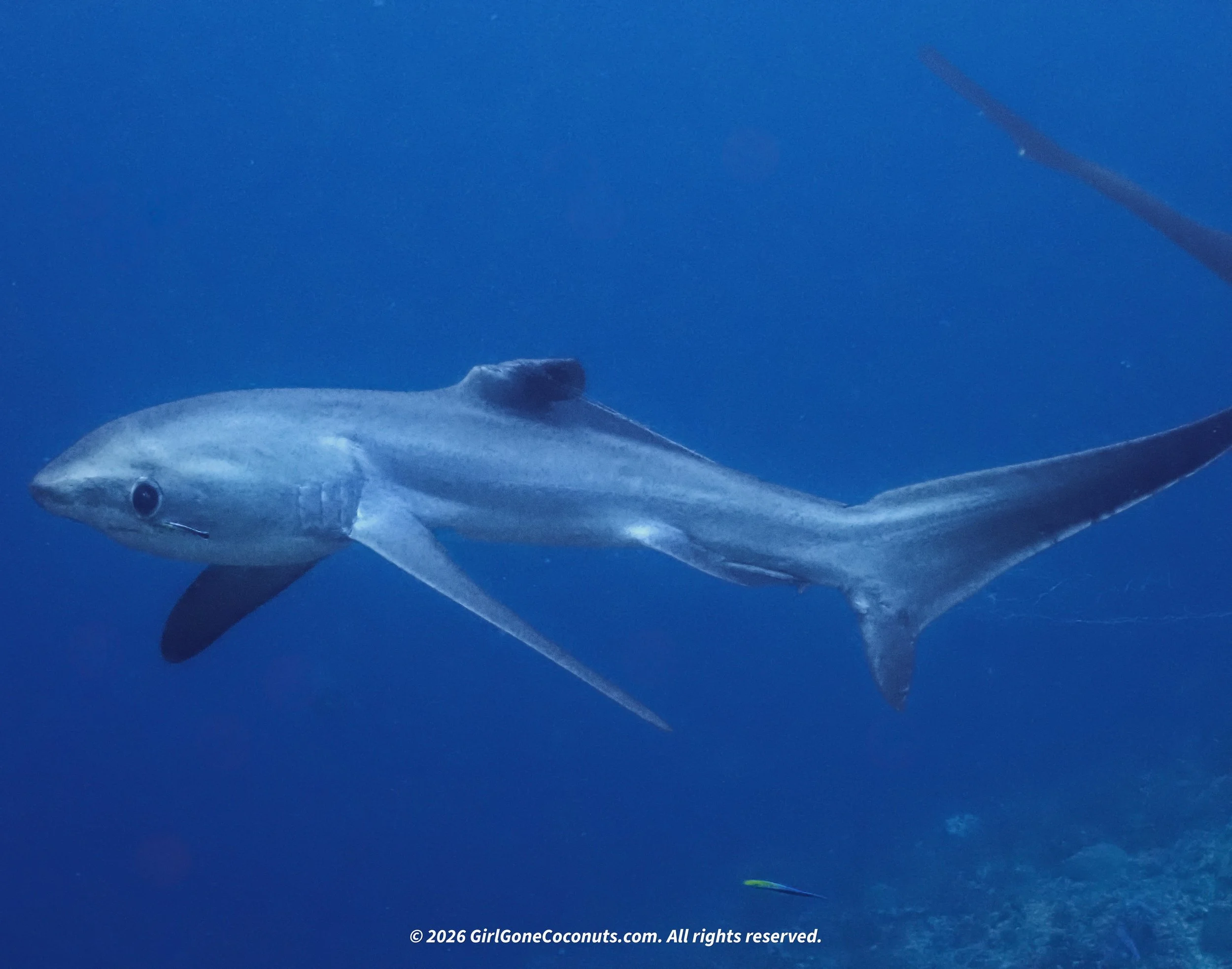
A thresher shark caught in fishing line at Monad Shoal in Malapascua.
Some of this might sound negative, but I want to be clear that seeing the thresher sharks is absolutely worth it. They are even more beautiful and impressive in person, and I would go back in a heartbeat. These are just some things that could have made my thresher shark dive in Malapascua better.
The water temperature. Like I said, when I went, it was around 24-25 degrees Celsius. I know this sounds warm, but you are also barely moving on the dive since you are watching the thresher sharks swim around you. On a cloudy, windy, rainy day, your surface interval is cold. The boat does not protect you from the wind, and you are already wet. Unless you bring a change of clothes and a thick, warm towel, you will not be able to escape the wind.
To bring my own dive gear to Malapascua. I am sure not every dive shop is the same, but the gear where I was was old and overworn, making my dive that much colder and slightly uncomfortable. I nearly did not go in for my second thresher shark dive because of how much I was shivering. At the very least, I suggest bringing your own mask, fins, and small bits like dive socks and gloves.
The lack of sustainable dive practices. Although many dive shops are doing their best to follow protocol and protect the thresher shark dive site at Kimud Shoal, there were so many people I saw grabbing onto coral, kicking the ground, resting on the ground, and chasing the sharks.
To do more research on the dive school and dive resort I went with. Mine felt very unorganized, chaotic, and unreliable. They even almost told us we might not be able to do the thresher shark dive because of a lack of space, even though we had messaged ahead of time and they told us to book when we arrived. It is also important to ask if your dive shop carries emergency oxygen onboard.
Malapascua has a major trash and litter problem. I have traveled a lot in Southeast Asia, and I know trash is an issue everywhere, especially as a result of tourism, but Malapascua has to be one of the worst I have seen. There was only one beach I could relax on that was not covered in trash. Even one of the thresher sharks was tangled in fishing line. It broke my heart.
The boat ride to Kimud Shoal is really long. I believe our ride was around 2 hours, and it is normally around 1.5 hours. The local boats are very slow-moving.
There are a lot of divers and boats at Kimud Shoal at the same time. There were at least 10 dive boats when we arrived, and even more when leaving. The dive site did not feel overcrowded, but you could always see at least two other dive groups, and they were always photobombing your photos. The second dive definitely felt more crowded than the first.
There are different ways to dive Kimud Shoal. You can drop down to the 14-meter island top and wait for threshers, or you can do a deeper dive around the island, hovering over a blue abyss.
It is always wavy at Kimud Shoal, no matter when you visit. Exiting the water can feel intense if you are a newer diver. You are essentially holding onto a ladder while your dive guide goes underwater to take your fins off. You have to keep your regulator in because you are constantly hit by waves while this is happening. It is all quite quick, and for a fit, confident diver, it is fine.
You essentially have no choice but to pay for all three dives. The 3-dive package includes two dives at Kimud Shoal and one at Monad Shoal, and even if you choose to sit one out, you will still pay for it. There is no two-dive option, so just be prepared to commit to the full day on the water.
→ If you are flying into Cebu before heading to Malapascua, I highly recommend spending a night in Mactan. I stayed at Dusit Thani Mactan Cebu before my trip and it was the perfect place to relax before the early drive north. You can read my full review here.
Frequently Asked Questions
When to see thresher sharks in Malapascua?
You can see thresher sharks year round in Malapascua, but the best diving conditions are between December and April.
Which island in Cebu is famous for thresher sharks?
Malapascua Island!
Is it safe to dive with thresher sharks?
Thresher sharks are considered to be one of the most timid and non-aggressive shark species in the ocean. They are not currently known to attack humans and will typically swim away if approached too closely. They are quite shy by nature. At Kimud Shoal, divers are asked to keep a respectful distance and avoid touching or chasing the sharks, both for your safety and theirs. As long as you follow the guidelines set by your dive shop, diving with thresher sharks is considered safe.
Are thresher sharks aggressive to humans?
Thresher sharks are quite shy. They are not known to attack humans and will typically swim away if approached too closely.
Is Malapascua safe for tourists?
Malapascua is generally safe for most tourists. I found it to be a quiet, small island with incredibly friendly locals. As with any destination, I suggest following basic safety rules, such as keeping an eye on your personal belongings. If you plan to swim, always be mindful of boat traffic in the water.
I also recommend staying up to date with your country’s travel advisories. Follow basic rules of safety while traveling, including:
Keep an eye on personal belongings and valuable items.
Always triple-check vaccination requirements and recommendations for countries. Some important ones include Typhoid, Rabies, and Hepatitis A.
Pack mosquito spray to protect yourself from Malaria.
DO NOT drink the tap water. Keep your mouth closed in the shower and even use bottled water when brushing your teeth, especially if you have a sensitive stomach like me!
Never travel without the right insurance in case of any sickness, injuries, or theft. Safety Wing is by far the best travel medical insurance. It has saved me numerous times by covering hospital visits when I was sick in Asia.
Get an eSIM—so you do not get lost navigating your way. I always use Airalo for my eSims.
Emergency Contact Number: 911