Las Vegas to Page Arizona Road Trip Itinerary & Travel Guide
When I first mapped out my Las Vegas to Page, Arizona road trip, I had no idea just how epic it would be. I thought it would be about the destinations, but the drive itself completely blew me away. We packed snacks, loaded up a road trip playlist (obviously some country vibes), and hit the road early, not realizing we were about to see some of the most unreal landscapes in the Southwest.
From cruising past Lake Mead and the Hoover Dam to getting lost in the magic of Valley of Fire, soaking in Zion’s insane views, hiking through Bryce Canyon’s iconic hoodoos, and catching the sunset at Horseshoe Bend — this road trip turned out to be one I will always look back on.
If you are planning a trip from Las Vegas to Page, Arizona, this guide covers everything you need to know: the best places to stop, how to structure your route, and a few road trip tips for a seamless journey!
Oh & as always, practice sustainable tourism while traveling, please :)
Disclaimer: This post contains affiliate links. If you click through and make a purchase, my blog may receive a commission at no additional cost to you.
Las Vegas to Page Arizona Drive: Routes, Stops & Travel Tips
Pin it for later!
Las Vegas to Page Arizona Drive: Distance, Time & Route Options
The drive from Las Vegas to Page, Arizona, is around 272 miles, or 4+ hours driving. With stops, you can extend this drive from just over 4 hours to up to 7 days long! I will get more into how to expand your trip and make it even more epic later on in the post.
If you do not have a vehicle, you can rent a car from one of the rental centers in Las Vegas. If you are reversing this route, you can rent a car from Page, Arizona!
The route I recommend for traveling from Las Vegas to Page, Arizona, is shown on the map below. I have also saved stops along the route for you to choose from! I will get into the nitty-gritty of the stop selections and how to lay out your trip in the itinerary section.
Pro Tip: There are no tolls along this route. Woot woot.
Best Time for a Las Vegas to Page Arizona Road Trip
You can do this Las Vegas to Page, Arizona road trip year-round, but the best time depends on your weather preferences and tolerance for crowds.
When I did this route in March, I experienced just about every kind of weather in one day: sun, snow, rain, wind, hail, and even a rainbow. The next morning? Full-on snowstorm. While the chaos added some excitement, I recommend doing this road trip between April and May or September to November, when temperatures are more stable and all major stops (like Zion, Bryce, and the South Rim of the Grand Canyon) are fully accessible.
Pro Tip: Arizona does not practice daylight saving time!
Spring (March-May)
Spring is one of the best seasons for this trip. The weather is warming up, wildflowers are blooming, and crowds are still manageable. That said, March can still bring snow, especially at higher elevations like Bryce Canyon and the Grand Canyon’s South Rim. I recommend packing layers if you are heading out in early spring.
The Grand Canyon begins warming up in spring, but March can still have chilly temperatures and snow. I suggest using those layers to accommodate the changing weather, especially in March. Mid-late spring is when the park starts to become more crowded. The Hermit Road (Red Bus Route) is closed to private vehicles from March 1 to November 30, meaning you must use the free shuttle system to access the viewpoints along the road.
Page, Arizona is ideal in Spring, with temperatures offering comfortable conditions for outdoor activities without the risk of overheating. Average temperatures during this time range from 60°F to 80°F (15°C to 27°C). There are fewer visitors during this period compared to summer, so it is perfect for hikes like Antelope Canyon and Horseshoe Bend.
Valley of Fire / Nevada: Expect daytime highs in the 70s–80s°F (21–27°C). Spring is ideal here — before the heat really kicks in. And by heat, I mean 100°F + in the Valley of Fire.
Summer (June-August)
Summer is HOT — especially in Nevada and Page, where temps regularly climb into the 100s (°F). If you plan to visit Valley of Fire State Park this time of year, go early in the morning or later in the evening. Midday heat here is brutal — like being afraid to leave your car air-conditioned car brutal. Hiking in the heat is not recommended unless you are properly prepared.
The Grand Canyon: expect hotter temperatures on the rim (where the viewpoints and visitor center are) and extremely hot conditions within the canyon—this is important to bear in mind if you plan to hike along the South Kaibab Trail, etc. This is also peak tourist season, so expect the park to be crowded! Be sure to pack sunscreen, hats, extra water, electrolytes, snacks, etc.
This is Page’s peak season and busiest time to visit, as it has the warmest temperatures. Summer can be HOT (upper 90°F and sometimes over 100°F). If you plan to visit during these months, pack plenty of water and sunscreen to stay hydrated and protected. Heatstroke is more common during this time, so always be prepared with a backpack of essentials like water, sunscreen, a hat, sunglasses, and sturdy footwear for hiking. Staying prepared will help ensure you enjoy your time safely in the heat.
Zion / Bryce: Zion will be very warm; Bryce, because of its higher elevation, is more bearable in the summer. I have hiked both in the summer and again in April. Both are bearable, just pack lots of water!
Fall (September-November)
Fall might just be my favorite season for this road trip. You get all the beauty and accessibility of summer but with fewer crowds and cooler temperatures.
The Grand Canyon: The weather begins to cool again along the rim and within the canyon. Snow is more likely (in November), especially on the rim, but it is not as intense as winter snowstorms. After Labor Day, you will notice that the high season will dwindle. Similar to spring, I suggest packing layers to accommodate changing temperatures.
Page offers similar temperatures to spring, with averages between 60°F to 85°F (15°C to 29°C), making it another great time to explore the area.
Valley of Fire: Early fall can still be hot, but by October, it becomes more manageable and beautiful.
Winter (December-February)
Winter is a much quieter time to do this road trip — but it comes with its own set of challenges. Snow, icy roads, and limited access to certain trails or roads may affect your plans, especially at higher elevations.
The Grand Canyon: cold and windy weather conditions with snowfall on the rim. Down in the canyon is chillier than in other seasons. The crowds are at their lowest, so it is ideal for those seeking solitude. This is the only time Hermit Road is open to private vehicles (December 1 to February 28/29). All shuttle services will be reduced during this time.
Page is chilly in the winter, with temperatures ranging from 20°F to 55°F (-7°C to 13°C) from December to February. Snow is rare, but light snowfall or rain can happen. Winter is a quieter time to visit and is great for hiking and sightseeing, but I suggest dressing in layers and checking the weather first.
Nevada stops like Valley of Fire and Hoover Dam: Winter brings mild daytime temps and chilly nights — very doable if you prefer cool-weather exploring.
If you want specific information on the weather and average temperatures, click the following links…
Deciding on where to stay for your road trip is dependent on how many nights you plan to spend in each place. I suggest spending at least one night in Page and one night near the Grand Canyon. Stays in the Grand Canyon book up quickly, so I recommend booking your accommodations months in advance.
If you want to see both Antelope Canyon and Horseshoe Bend in a day, this tour has you covered!
Las Vegas to Page Arizona Road Trip Itinerary
Welcome to your epic Las Vegas to Page, Arizona road trip itinerary! As mentioned, you can do as many or as few stops as you wish along this route.
Please note that all prices in this article are in USD.
Day 1: Depart Las Vegas, Explore Hoover Dam & The Valley of Fire State Park
On day 1, plan to depart Las Vegas early in the morning to leave plenty of time for the day’s adventure ahead. The first stop will be Hoover Dam, which is only around 40 minutes or so from downtown Las Vegas.
Stop #1: Hoover Dam & Lake Mead
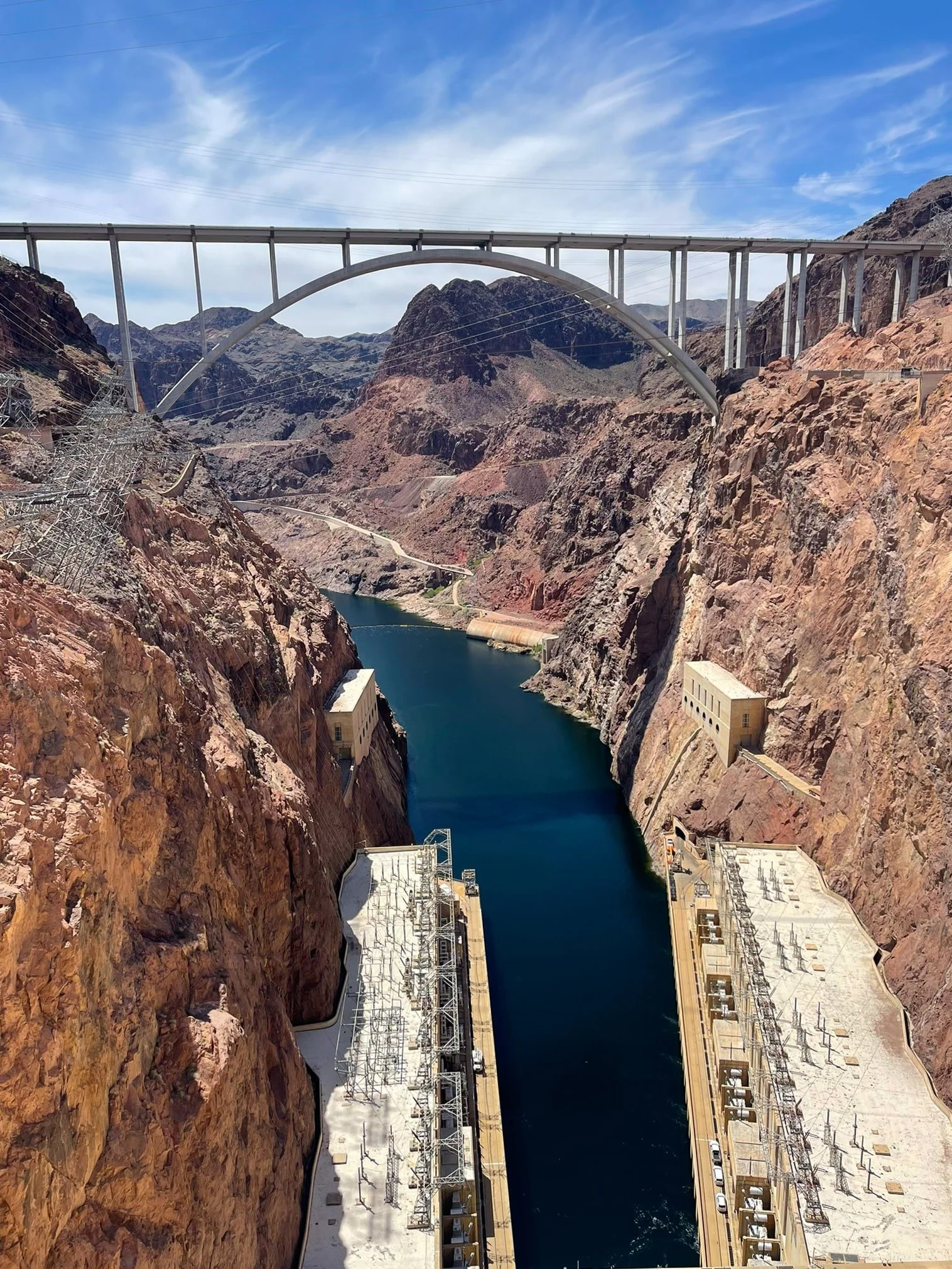
A view of the Hoover Dam near Las Vegas, Nevada.
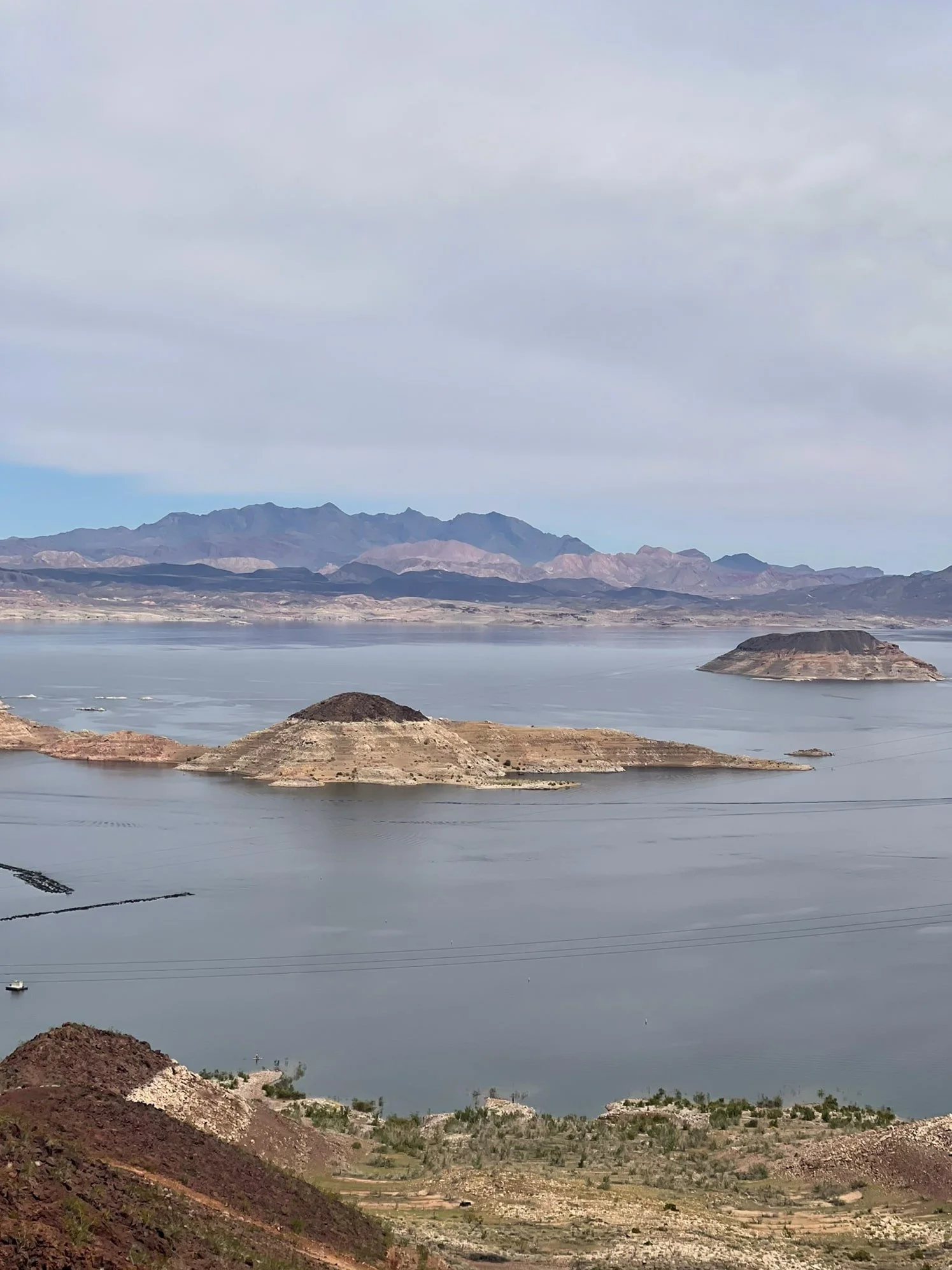
Lake Mead and all of its incredible natural beauty.
Why Visit Hoover Dam: Hoover Dam is a must-see stop that is an easy first stop to fit into your road trip. It is an insane feat of engineering, offers beautiful views of the Colorado River, and you can literally walk from Nevada into Arizona. Nearby, you will find some walking paths, biking paths, and some incredible views of Lake Mead.
Location: The Hoover Dam Parking Garage is located here. This is the easiest place to park for access to the Hoover Dam. However, there are also other parking lots located on the opposite side that are available.
Hours: 5:00 AM to 9:00 PM (PST). However, the Hoover Dam Visitor Center and tour hours are slightly different. They are open daily from 9:00 AM-5:00 PM, except on Thanksgiving and Christmas Day. Doors close at 4:15 PM, and the last tour departs at 4:10 PM
Entrance Fees & Permits: Free! Just pay for parking (10 USD). There is an additional fee to enter the Visitor Center and for a guided tour. But I believe neither is a must-do.
Facilities & Parking:
There are restrooms on-site.
A small cafe/gift store is on site.
A parking garage is located on the Nevada side of the dam near the Visitor Center; the fee is $10 per vehicle.
Oversized vehicles, rec. vehicles and vehicles with trailers must park on the Arizona side of the dam (Lot #9 has a fee of $10 per vehicle; #13 and #14 have no charge).
What Not To Miss & Tips:
Hoover Dam, of course! Stand in two places at once here—and two time zones! The Hoover Dam sits on the Nevada-Arizona border.
Walk along the Mike O'Callaghan–Pat Tillman Memorial Bridge, which runs over Hoover Dam, for even more epic views of the dam and the Colorado River.
Do not miss checking out the views of Lake Mead. If you have some time, I recommend taking a bike and riding along the Historic Railroad Tunnel Trail (it's electric bike-friendly, too).
Time Needed For Hoover Dam:
If you plan to take in Hoover Dam, snap some photos, and leave, you only need around 30 minutes - 1 hour. If you plan to ride the bike paths or walking trails, I suggest adding 2-3 hours to have time for a gentle ride, photo stops, etc. You can find the trail details on AllTrails!
Stop #2: Valley of Fire
After you finish exploring Hoover Dam, continue your road trip northeast 62.9 miles (1.15 hours) to the incredible Valley of Fire State Park!
Google Maps does claim there is a toll, but I have never driven through one… so please let me know if you come across one.
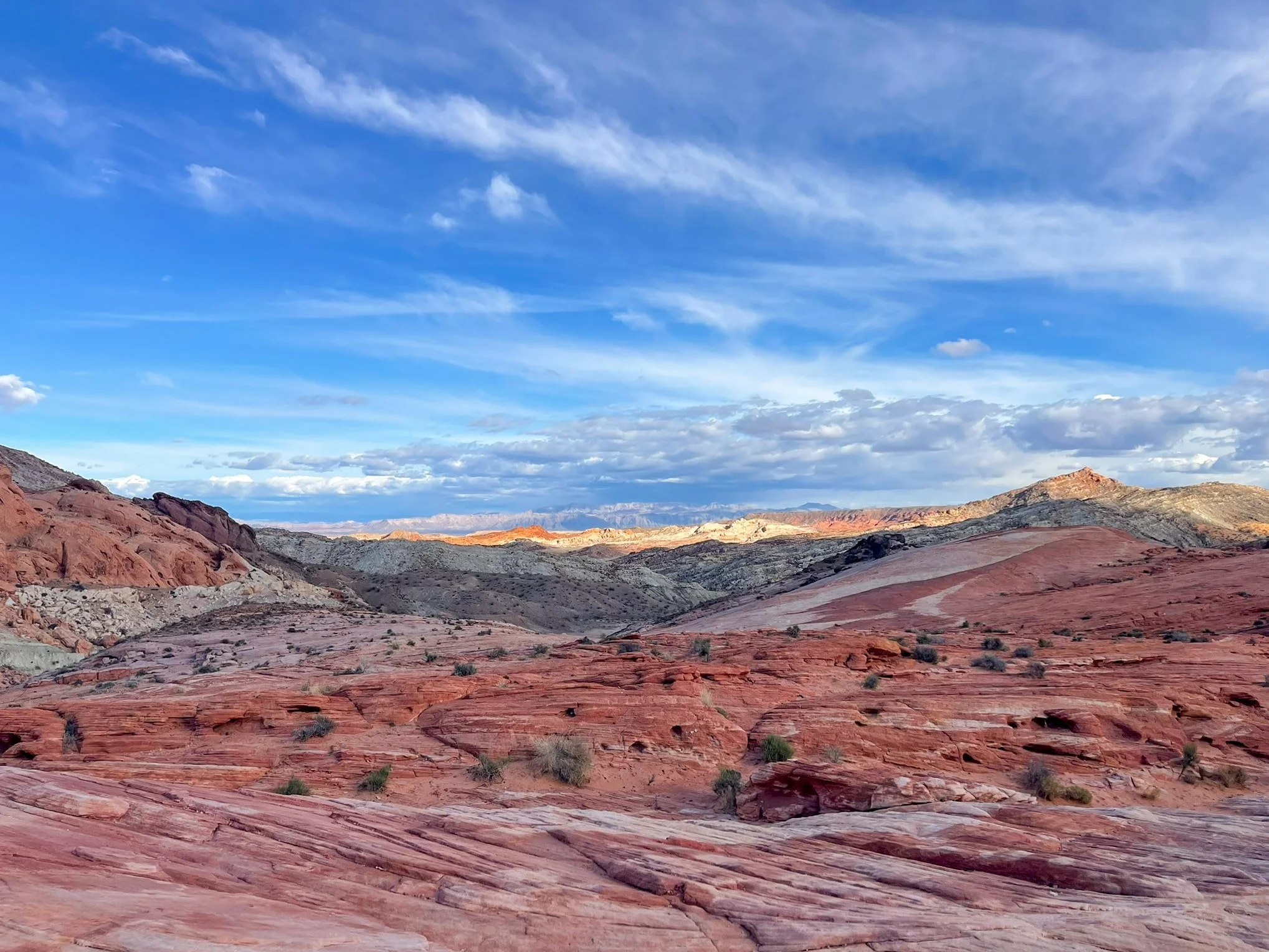
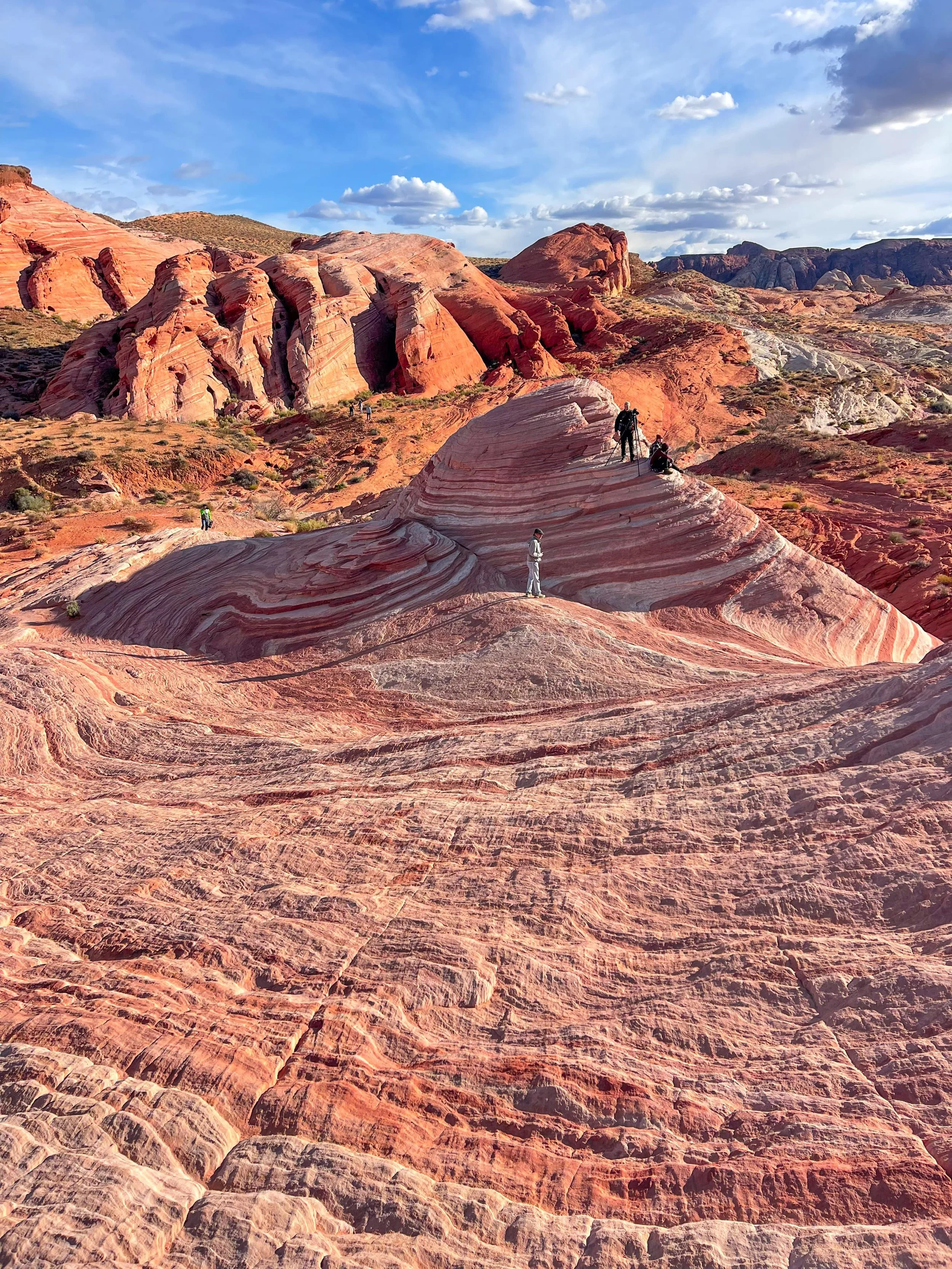
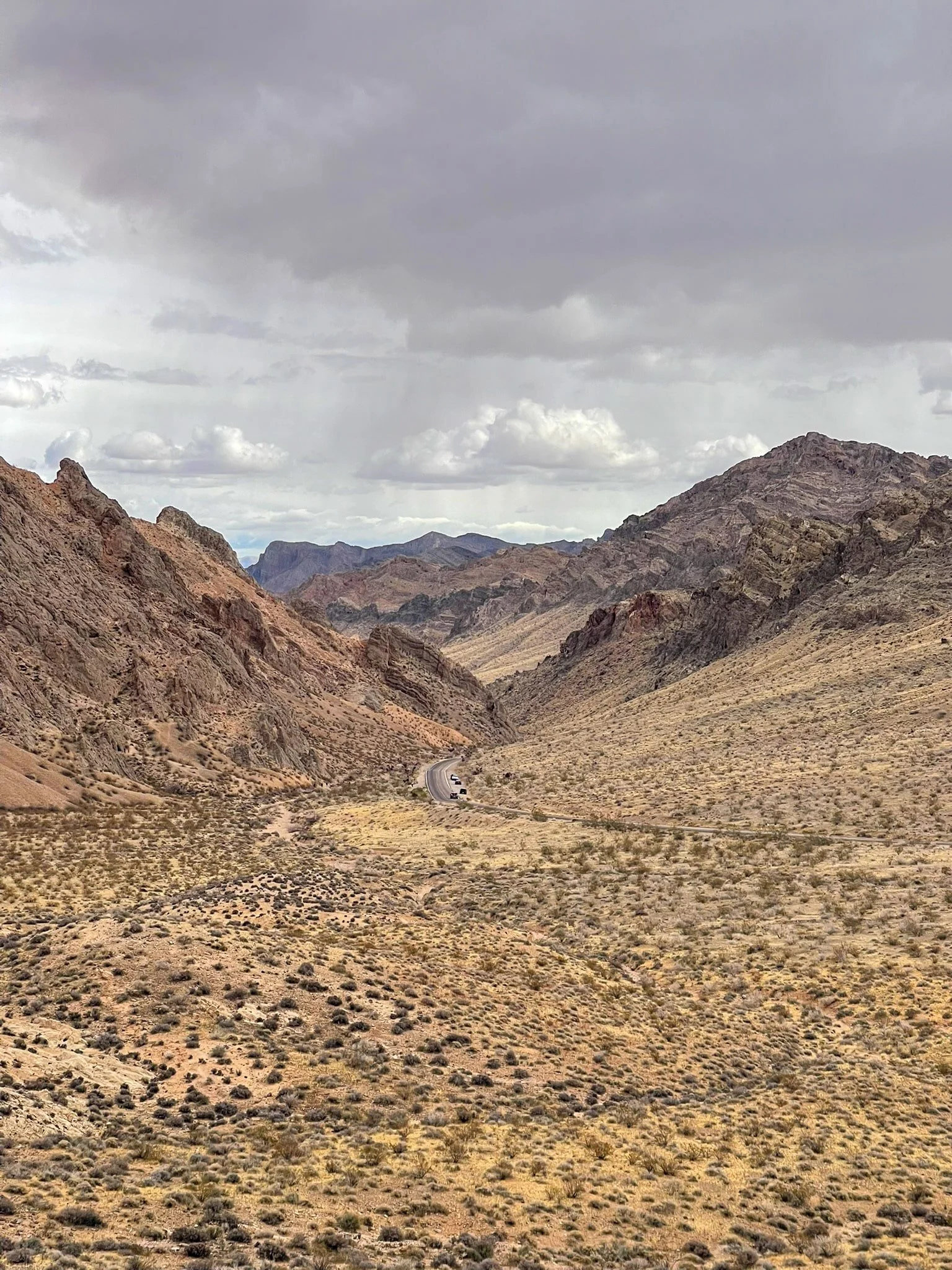
Views of Valley of Fire along the Fire Wave trail.
Why Visit Valley of Fire: Valley of Fire State Park is hands-down one of the most unique places I have ever explored. The colorful rock formations here are more vibrant and varied than any other park I have visited. Whether you are into quick viewpoints, short hikes, or longer trails, there is something for everyone. Plus, it is family-friendly, dog-friendly, and super easy to explore in just a few hours.
Location: The entrance / Valley of Fire sign is located here.
Hours: Sunrise to Sunset. Visitors must be out of the park or in their campsite by sunset.
Entrance Fees & Permits:
$10 per vehicle (Nevada residents)
$15 per vehicle (non-Nevada residents)
Camping Fees: You can book your camping reservation here.
$20 per night per vehicle (Nevada residents)
$25 per night per vehicle (non-Nevada residents)
Additional $10 per night for sites with utility hookups
Facilities & Parking:
Visitor Center with park information (9 AM—4 PM)
Two campgrounds—Atlatl and Arch Rock
Picnic & Drinking Water Areas
There are parking areas at each of the trailheads. Do not park on loose sand or gravel areas—stick to designated parking spots.
There are restrooms available at some of the trailheads.
Dogs are allowed on leash no longer than 6 feet on all trails. They cannot enter the visitor center.
What Not To Miss:
Fire Wave, White Domes, and Seven Wonders Loop! — think colorful rock formations, slot canyons, and a fire wave!
Atlatl Rock— a short trail to petroglyphs and an incredible view of the Valley of Fire from above!
Valley of Fire Quick Tips:
Summer (July-August) is HOT — almost too hot for exploring.
Cell service in the park is not ideal— I suggest downloading any maps you may need beforehand. If you do not have a US SIM card, download one here, so you have cell service. There are no gas stations or food services within the park.
Drones are not allowed in the park.
Be sure to know how far destinations are and where the closest gas station is to avoid running out in the middle of nowhere. There are no gas stations inside the state park.
Time Needed For Valley of Fire: I suggest allocating the rest of your day to the Valley of Fire, especially if you plan to hike. If you do not hike, you could likely explore the park in half a day or less.
Want more things to do in Valley of Fire and detailed info on the best trails? Check out this guide.
→ From Valley of Fire, drive your final 106 miles (1.45 hours) to Hurricane, a small desert town that is the gateway to Zion National Park & Bryce Canyon.
Day 2: Explore Zion National Park
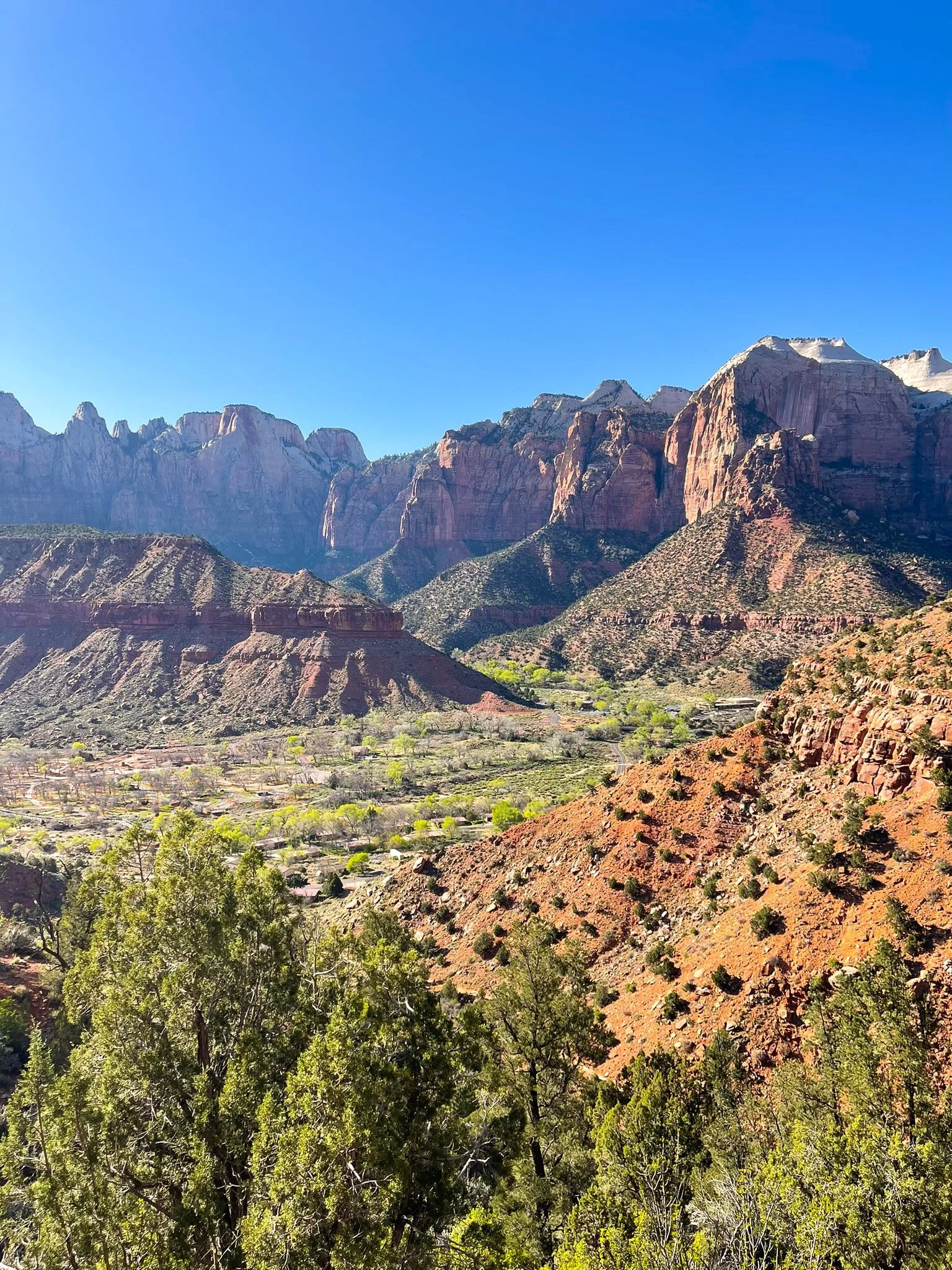
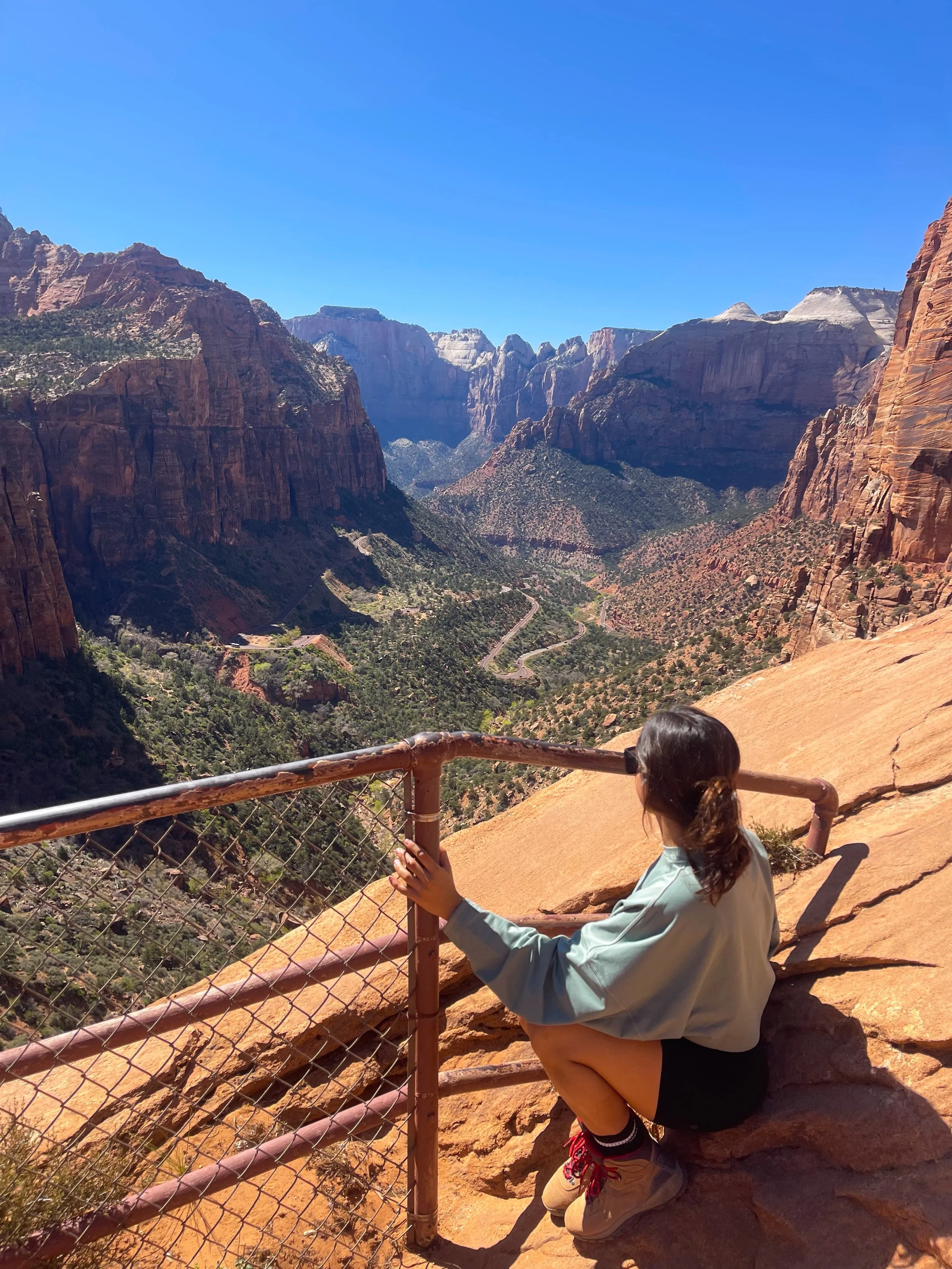
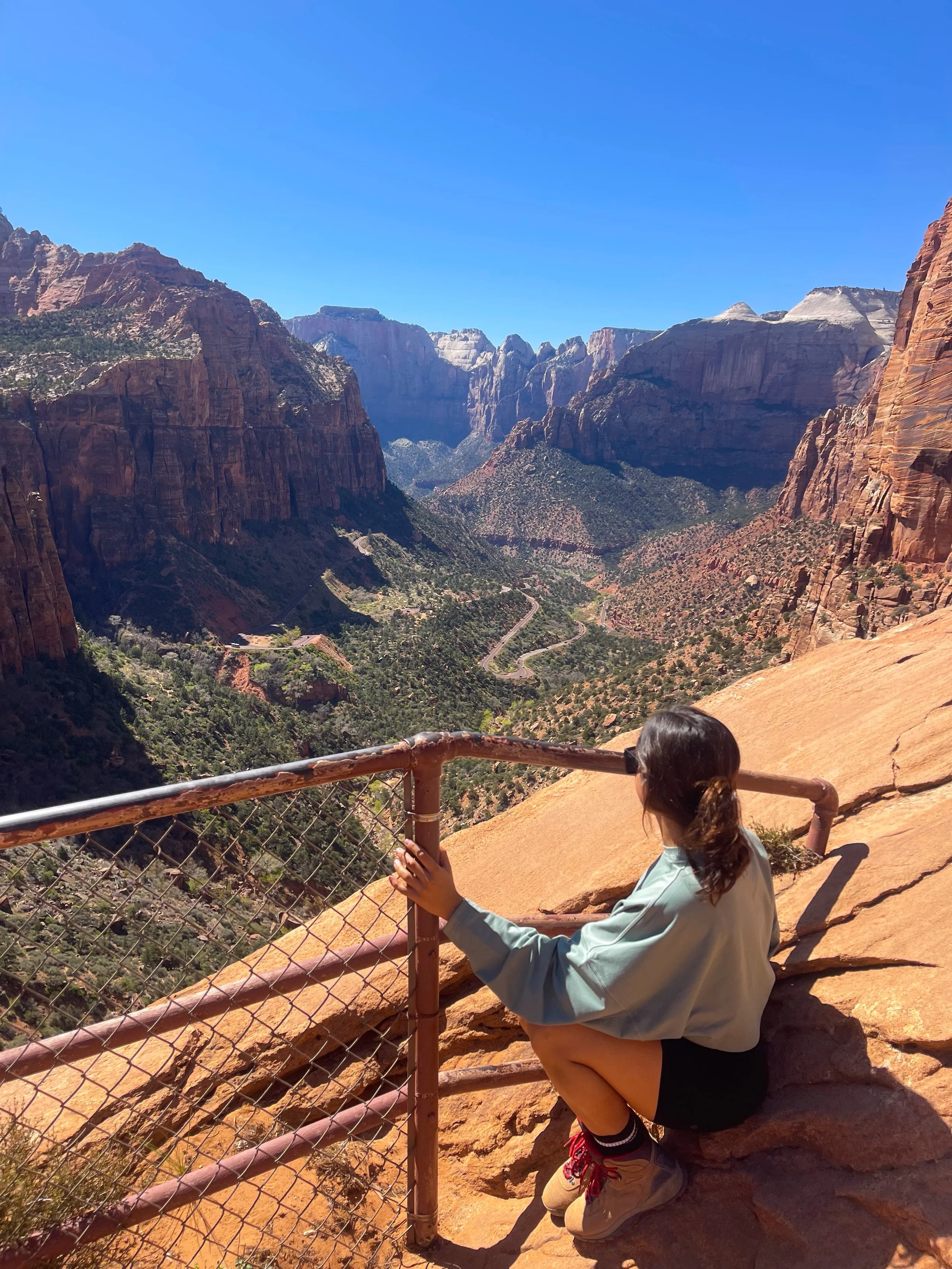
Zion National Park View from the trails.
A short 25-minute drive (21.7 miles) from Hurricane is the iconic Zion National Park! Spend your entire second day exploring the park from the inside out. If you have more time to spare, you could allocate two full days here and still not run out of things to do.
Why Visit: Zion National Park is known for its massive red rock cliffs that you can hike through, walk beside, and take in from every angle. Whether you are wading through the Narrows or sticking to something easier like the Pa’rus Trail, there is a route for every pace. Zion changes with the seasons—spring brings wildflowers, fall adds bursts of color, and winter gives everything a dusting of snow. It is a great stop for anyone wanting to experience the outdoors without going too far off the grid.
Location: The visitor center with parking is located here.
Hours: 24 hours, 365 days. The shuttle hours run on a different schedule. Find the complete schedule here.
Entrance Fees & Permits: $20 per person or $35 per vehicle.
America the Beautiful Passes are accepted.
Permits are required to hike Angel’s Landing.
If you plan to complete all 16 miles of the Narrows in a single day, then you will need to obtain a Wilderness permit for your group, for the date of your trip.
Facilities & Parking:
Visitor center with parking available. Parking at the visitor center fills up early, especially in peak season. If you are visiting during spring, summer, or fall, I recommend arriving before 8 AM or parking in Springdale and taking the free town shuttle in.
Shuttles run from spring through late fall (usually March to November), and it is the only way to access popular trailheads like Angel’s Landing and The Narrows.
Restrooms are available throughout the park.
Free wifi.
What Not To Miss & Tips:
For challenging hikes, I recommend The Narrows or Angel’s Landing (permit required).
For easier hikes, I recommend Pa’rus Trail and Zion Canyon Overlook.
Go early! This will help you secure parking, skip shuttle lines, and have less crowded trails.
Don’t miss the viewpoints and hikes along the Zion Mt. Carmel Highway.
Time Needed for Zion National Park: I suggest allocating anywhere from one to two days to Zion National Park, especially if you want to do both Angels Landing and the Narrows.
→ After exploring Zion National Park, continue your road trip with a one-hour (41-mile) drive to Kanab—a classic western town in southern Utah—where you will spend the next two nights.
Day 3: Explore Bryce Canyon
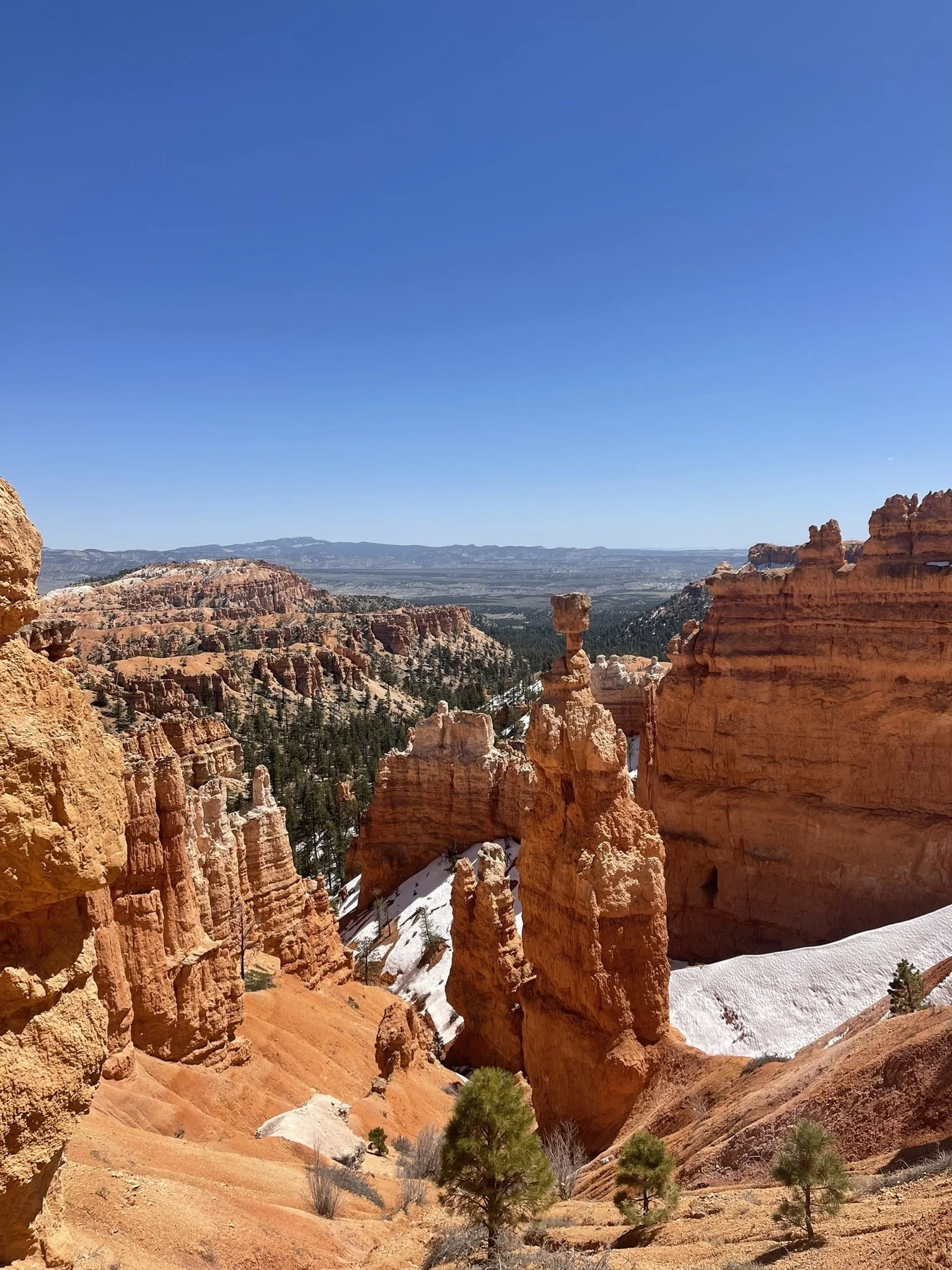
Bryce Canyon National Park in mid March.
Good morning day #3 on the epic Las Vegas to Page, Arizona road trip. Today, venture 1.5 hours (76.5 miles) to Bryce Canyon National Park for the day.
Why Visit Bryce Canyon: Stepping into Bryce feels like stepping into another world—or even straight into a fairytale. Picture yourself dropping down into the canyon, surrounded by hoodoos of all shapes and sizes. You wind through narrow paths, duck under arches, and weave your way around these surreal glowing orange rock formations.
Location:
Hours: 24 hours, 365 days
Visitor Center: Open year-round with varying seasonal hours:
Summer: 8 AM - 8 PM
Spring/Fall: 8 AM - 6 PM
Winter: 8 AM - 4:30 PM
Entrance Fees & Permits: $20 per person or $35 per vehicle.
America the Beautiful Passes are accepted.
Facilities & Parking:
Free parking is available throughout the park, including at the Visitor Center, trailheads, and viewpoints. Oversized vehicles and RV parking are available near the Visitor Center.
Restrooms are at the visitor center, most trailheads, and along the Peekaboo Trail.
A general store is available in the park but is closed January-March.
Free wifi at the visitor center.
What Not To Miss & Tips:
Some of my favorite hikes include the Navajo Loop to Peekaboo Loop (moderate) and the Navajo Loop to Queens Garden Loop (moderate).
If you prefer viewpoints, I recommend Yovimpa Point and Rainbow Point.
Day 4: Explore Kanab & Finish Your Journey To Page, Arizona
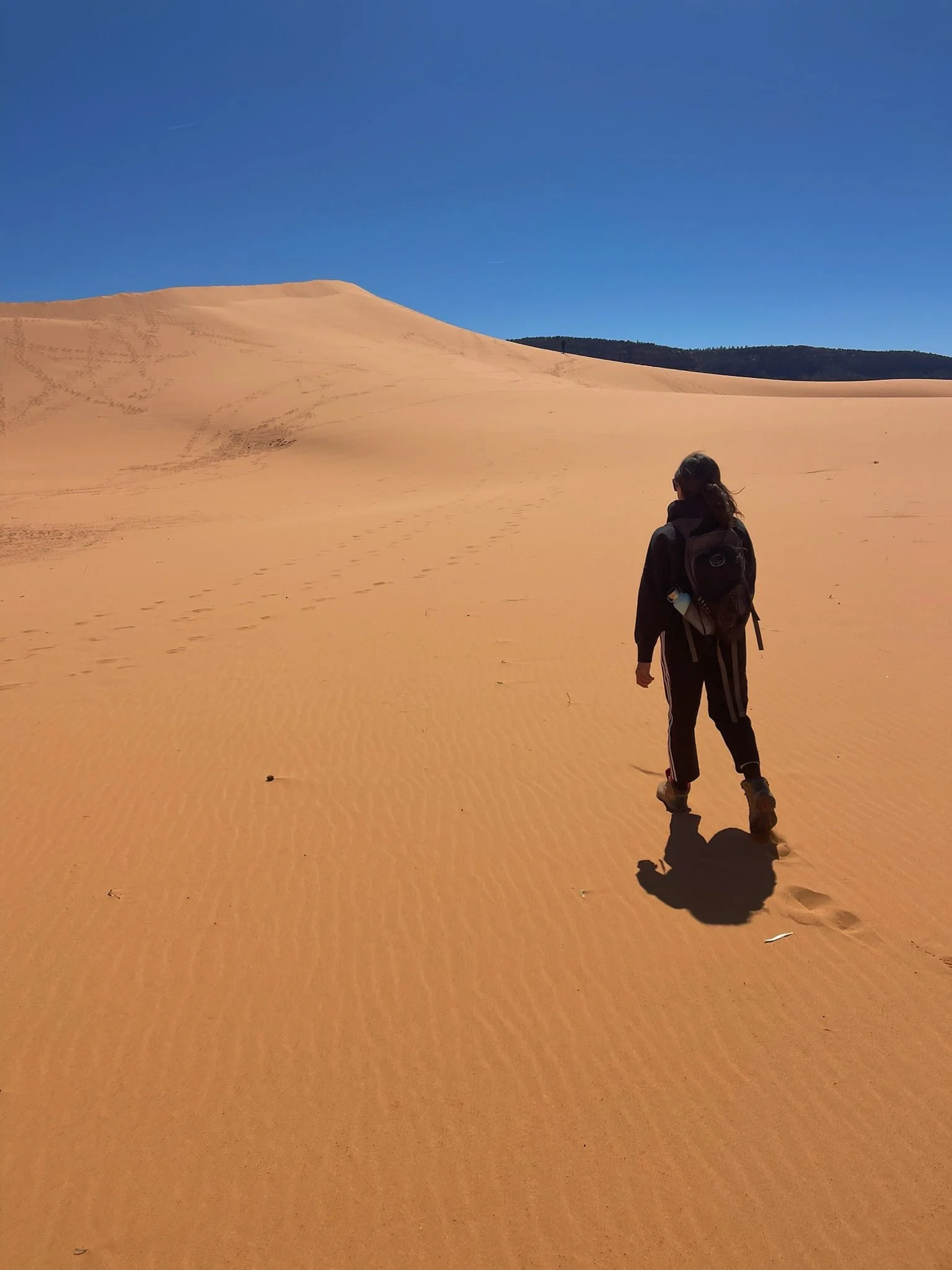
Me walking across the vast Coral Pink Sand Dunes in Utah.
Enjoy your final day of the road trip exploring Kanab’s highlights before heading off to the Toadstool Hoodoos, followed by Page, Arizona!
Kanab to Toadstool Hoodoos Distance: 44.9 miles | 41 minutes
Toadstool Hoodoos to Page, Arizona Distance: 29.2 miles | 31 minutes
Stop #1 in Kanab: Coral Pink Sand Dunes State Park
Coral Pink Sand Dunes is one of those places I keep coming back to—it is just that fun. Whether you are into hiking, sand sledding, or trying sandboarding for the first time, there is something here for everyone. The coral-colored dunes stretch out endlessly, and the soft sand makes wipeouts totally manageable (trust me, I have had a few). If you are nervous, start on the smaller slopes and work your way up. Feeling bold? Head to the bigger dunes and test your balance. And if sandboarding is not your thing, you can hop on a UTV tour and ride through the dunes that way instead—it is an adventure either way.
Plan to spend around 1-2 hours here.
Stop #2 in Kanab: The Sand Caves
Looking for some family fun? Not far from the Sand Dunes are the Sand Caves, sometimes referred to as Moqui Caverns. These man-made sand caves are perfect for those who want a fun little hike to add to their itinerary. The hike is an easy 1-1.2-mile through an old sand mine, filled with cool arches and rocky views. I suggest visiting at golden hour to experience the most unique light filtration through the caves. Parking is easily accessible off the main road, offering plenty of space.
Plan to spend 1-2 hours here.
Want even more bucket list things to do in Kanab? Check out the full guide here!
Stop #3 On the way from Kanab to Page: Toadstool Hoodoos
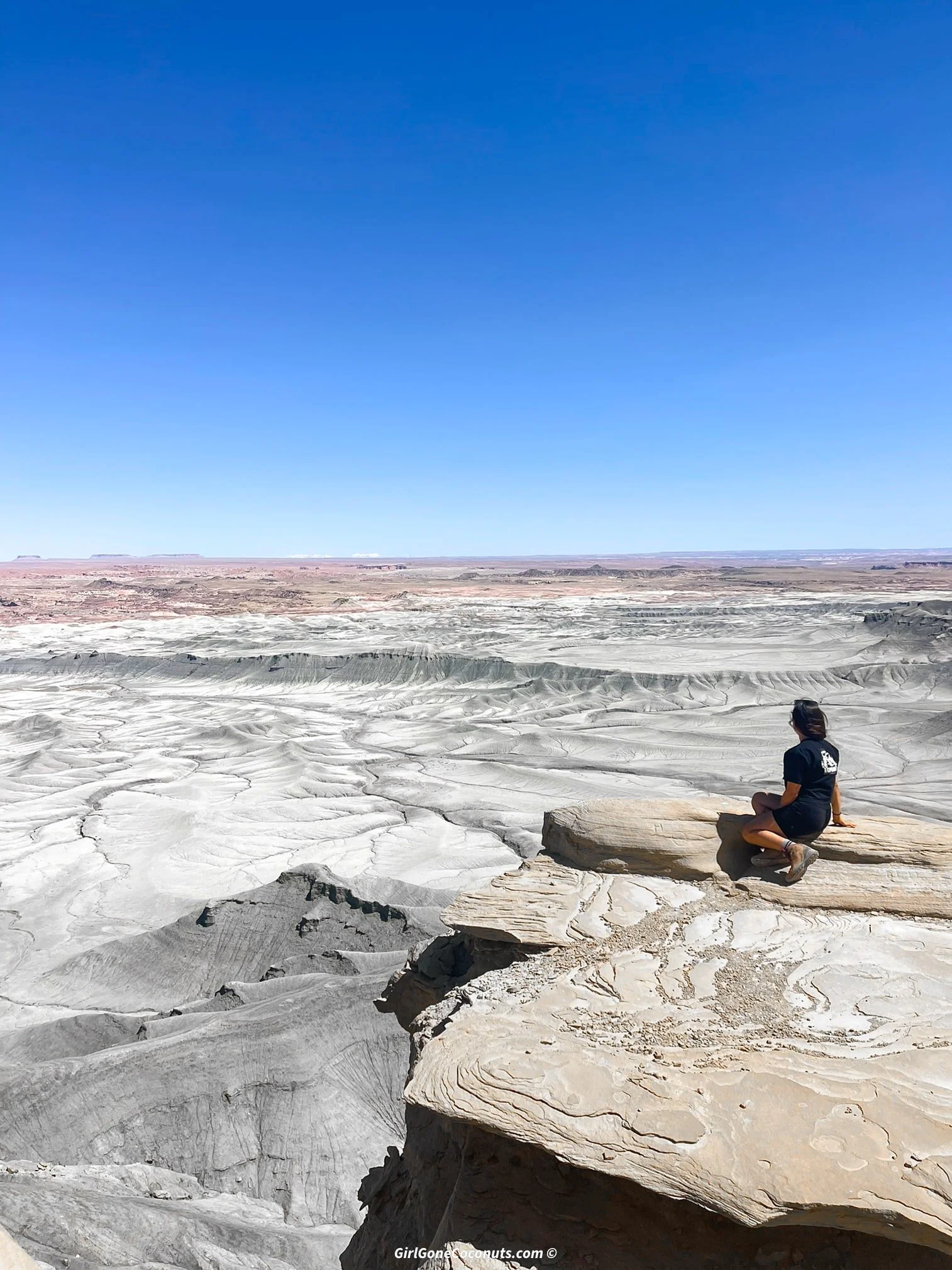
The Toadstool Hoodoos is one of my favorite hikes along the Arizona-Utah border! The 1.7-mile trail is easily accessible, with parking right off the main road. When you pull into the parking lot, you are welcomed by beautiful, rainbow-red sandstone rocks! The trail is easy and doable for all fitness levels and ages— even dogs are allowed!
The trail is far less crowded than other nearby trails and aside from the Toadstool Hoodoos, there are some other unique rock formations and landscapes to explore around them. Plan to spend around 1.5 hours here including the hike in and out! No reservation and no entrance fee is required. I would plan to spend around 1-1.5 hours here.
Stop #4: Arrive in Page, Arizona!
Woo! You made it. After an epic road trip from Las Vegas to Page, Arizona, it is time to soak it all in. If you are wondering what to do in Page, whether it is your first time here or you are coming back for more, I have rounded up all the best things to do below!
Want to continue your road trip to the Grand Canyon South Rim?
Check out my full two-day Grand Canyon itinerary here.
Looking for a Page, Arizona to Grand Canyon South Rim route?
I’ve got a full road trip itinerary just like this one here.
Best Things to Do in Page, Arizona
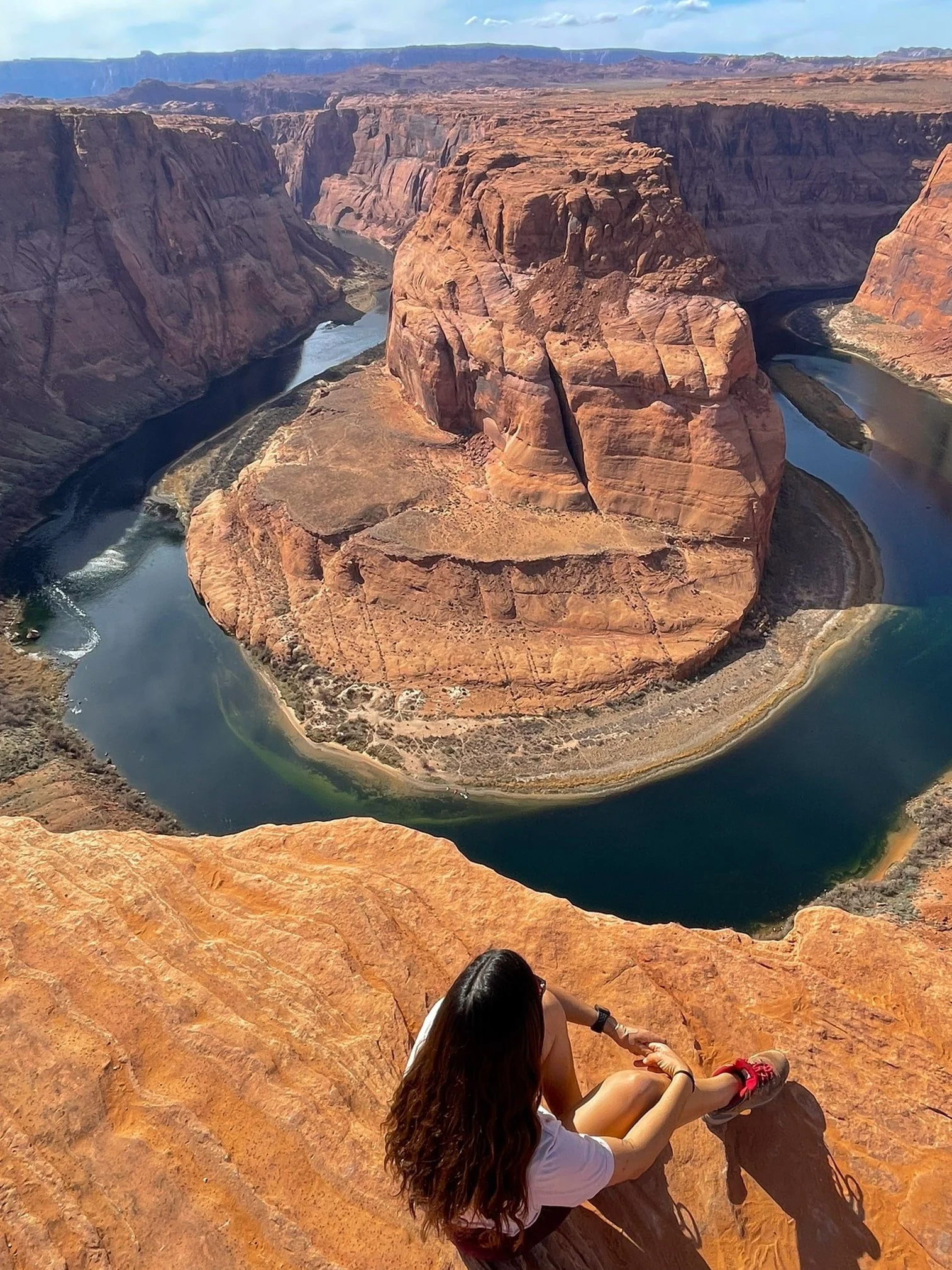
Me sitting in front of the iconic Horseshoe Bend in Page Arizona! This spot is a must-see.
Here is a quick list of some of the must-see spots in Page, Arizona. Discover even more top things to do in Page—plus extra tips for the spots mentioned below— here.
Horseshoe Bend: A famous spot in Glen Canyon, where the Colorado River curves around towering rock cliffs in a perfect horseshoe shape. Walk the easy 1.5-mile trail, leading to the overlook and prepare to be amazed.
Antelope Canyon: Antelope Canyon is the otherworldly famous slot canyon located in Page, Arizona. It is by far the most popular hike in Page and because of this, you can only access these slot canyons through private tours through its’ upper or lower sections.
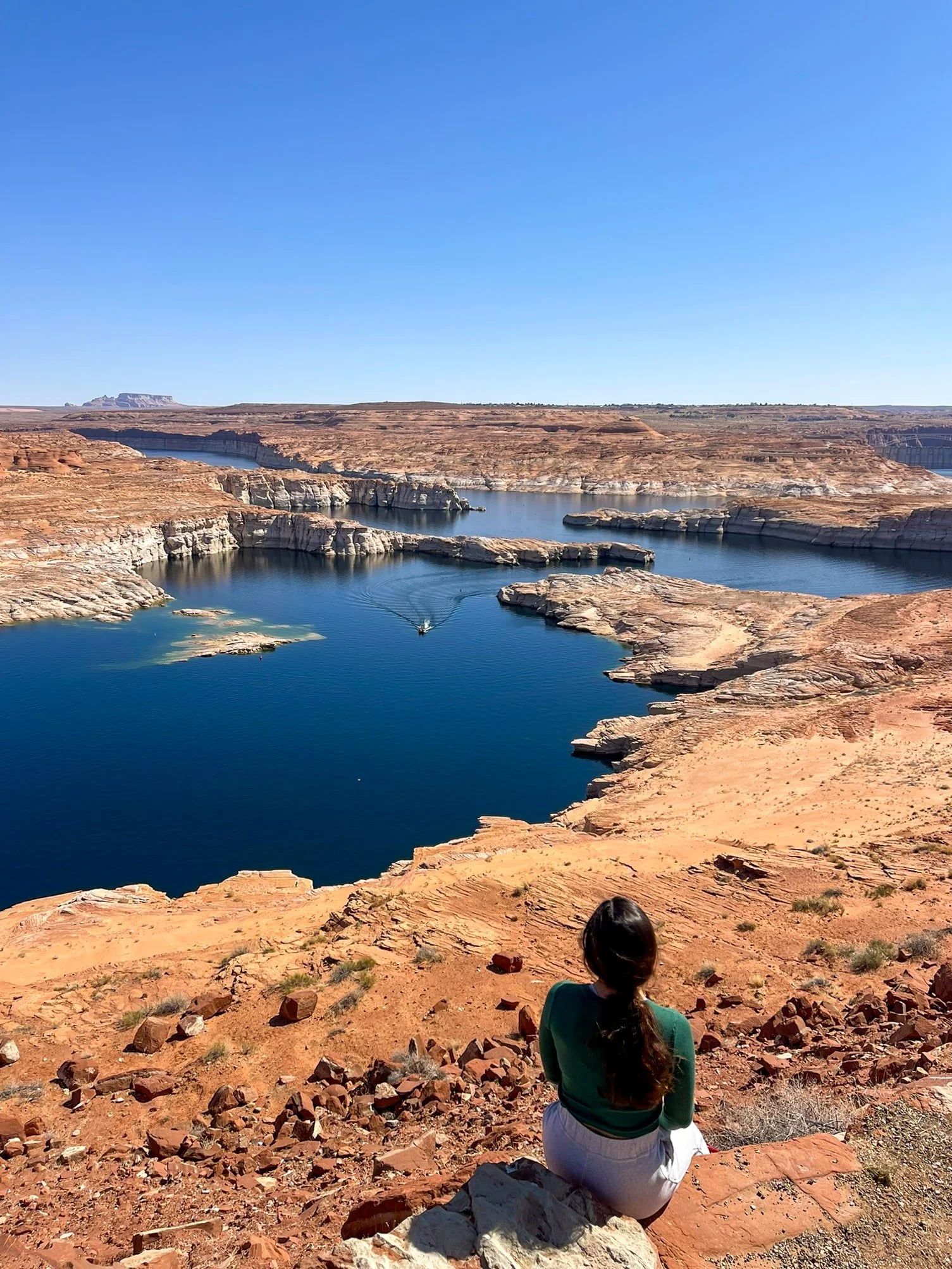
Wahweap Viewpoint has an incredible view over Lake Powell, Glen Canyon Dam, Tower Butte, Navajo Mountain, and many other famous landmarks.
Glen Canyon Dam: Hike this short 10-minute trail down some uneven sandstone stairs to an overlook of the 710-foot Glen Canyon Dam and the Colorado River.
Where to Stay on Your Las Vegas to Page Road Trip
Best Accommodation Options For Hurricane, Utah (Day 1):
Best Low-Budget: My Place Hotel or Sleep Inn and Suites Zion Park Area
Best Mid-Budget: Wingate by Wyndham or La Quinta by Wyndham La Verkin
Best High Budget: Fairfield Inn and Suites by Marriott or Zion Mountain Ranch
Glamping: Under Canvas Zion
Best Accommodation Options For Kanab, Utah (Day 2-4):
Best Low-Budget: Red Canyon Cabins or Parry Lodge
Best Mid-Budget: Comfort Suites
Best Higher-Mid Budget: La Quinta By Wyndham
Best High-End Budget: Best Friends Roadhouse and Mercantile
Best House Options: White Camel
Best Accommodation Options For Page:
- Best Low-Budget: Red Rock Motel
- Best Mid-Budget: Days Inn & Suites Wyndham (I stayed here!) or Tail Wind Life LLC
- Best Higher-Mid Budget: Hampton Inn & Suites or The Bear's Den BnB
- Best High-End Budget: Hyatt Place
- Best House Options: Sapphire Lake House or Deal Lake Powell
You can also find hotel deals at Agoda and Hostel World! You can help support my travel blog by clicking and booking through the links at no additional cost to you!
Road Trip Tips for Las Vegas to Page
Before You Go:
Always check the weather before booking your trip to make sure it aligns with your ideal conditions and so you know what to pack—especially during the hot summer months when extra water is essential and heat-related illnesses are more common. Bringing layers is the best way to stay comfortable since mornings and evenings can be chilly. Be sure to check the weather for each park specifically—conditions can vary a lot depending on altitude.
Use NPS (National Park Service) to stay up-to-date on closures throughout the National Parks due to weather, fires, and more.
Make sure to obtain any permits needed for hikes—i.e., The Wave, Angels Landing in Zion.
Be sure to book any tours ahead of time to avoid them selling out. This is especially true for both upper and lower Antelope Canyon.
If you plan to visit Glen Canyon, the Grand Canyon, Zion, Bryce, and other national parks within the same year, I suggest purchasing the America the Beautiful Pass for your trip. The pass will save you money on entrance fees, costing only $80 and even as little as $20 for those 62 years and older.
Packing Tips:
Bring plenty of water/a reusable water bottle.
Stock your car with snacks, water, and electrolytes to stay hydrated during your travels. Also, be sure to bring along a first aid kit, phone charger, offline map, a spare tire, and jumping cables, in the case of a breakdown or flat tire.
Mornings and evenings can be chilly, depending on what time of year you go, so it is best to pack layers you can easily add or remove as the day warms up. Of course, if venturing here in the warmer months, bringing sunscreen, hats, etc., is more important.
Pack sturdy hiking shoes to prevent falls, navigate slippery trails, and avoid injuries. If you are traveling from outside the US, purchase travel medical insurance in case of an emergency. My boyfriend (UK) uses Safety Wing’s US plan while he is here.
If you do not have a US SIM for your phone, I suggest downloading an eSIM such as Airalo to access maps, trails, and emergency phone calls during your trip.
Download AllTrails to your phone so you have access to the trail maps for the Grand Canyon!
Logistical Tips:
Start your day early to beat the heat, find parking easier, and enjoy the most popular spots without crowds.
Watch for wildlife along the roads—especially deer around dawn and dusk. They come out of nowhere.
Download offline maps—you will lose service in a lot of areas between parks.
Fill up on gas often—some stretches are remote with no stations for miles.
Know your time zones—Arizona does not observe Daylight Saving Time, which can be confusing when crossing state lines.
Frequently Asked Questions
What is the best time of year to do a Las Vegas to Page, Arizona road trip?
Because I prefer warmer temperatures in the 70s, I think the best time for this road trip is from April through mid-May or from September through October. These months also ensure all the destinations along the route are fully open and accessible.
How many days do you need for a road trip from Las Vegas to Page?
If you drive straight there, you only need half a day; however, I recommend setting aside 4 travel days minimum so you can enjoy all of the stop-off points I mentioned above.
What are the must-see stops between Las Vegas and Page, Arizona?
Zion, Bryce, Valley of Fire, Hoover Dam.
Is it safe to drive from Las Vegas to Page in winter?
Driving from Las Vegas to Page in winter is usually safe, but the weather can change quickly, especially near the Grand Canyon. Roads around Hoover Dam and Valley of Fire are typically well-kept, but up near the canyon, you might hit snow or ice.
My advice? Check the weather and road conditions before you go, bring winter tires or chains if snow is expected, and take your time driving on slippery roads. Give yourself extra time just in case. If you plan ahead and drive carefully, winter can actually be a beautiful time to make this trip.
Do you need a permit for Antelope Canyon or Horseshoe Bend?
Nope! But you do need to join a guided tour to visit Antelope Canyon. You cannot visit on your own.